

Ryan Gravenberch red card sparks debate as Carragher and Neville question Liverpool dismissal
For Liverpool, the decisive passage arrived in a matter of minutes. Ryan Gravenberch was dismissed, Manchester City found their opening and a competitive contest quickly became a defeat that left questions about both the refereeing and the response.
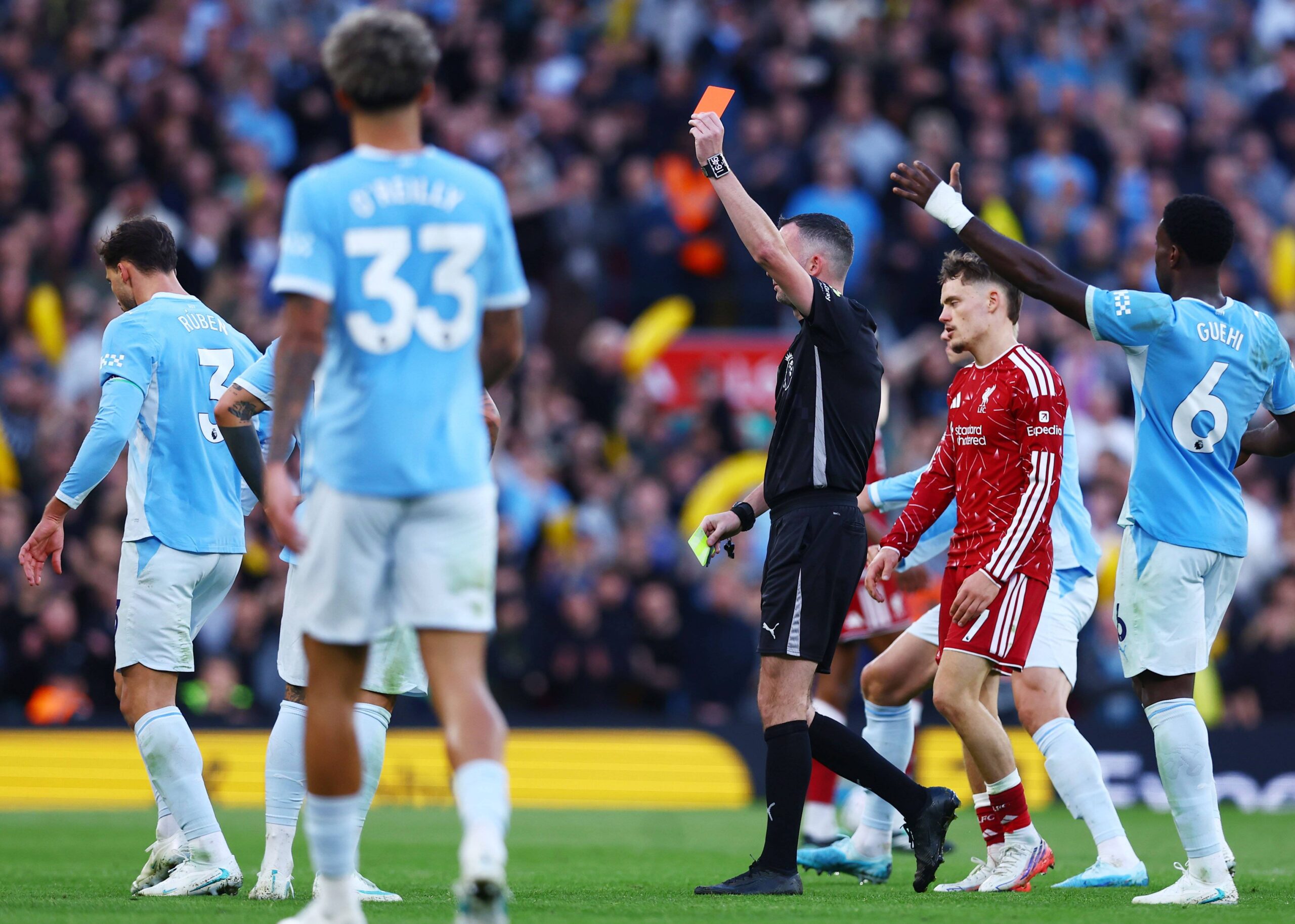
Jamie Carragher and Gary Neville were in agreement over the incident that changed the game. Both felt the Liverpool midfielder had been treated harshly after receiving two second-half yellow cards.
Gravenberch was first booked for a late challenge on Elliot Anderson before receiving his second caution for pulling back Jeremy Doku. City subsequently won 3-0, with their first two goals arriving within six minutes of the dismissal.
Ryan Gravenberch red card draws criticism
Carragher’s objection centred on whether the two incidents justified Liverpool losing a player, with particular attention paid to the initial booking.
“It feels really harsh when you think of the two challenges. The first challenge was not a card and the referee was far too quick to get the card out,” he told Sky Sports [via The Express].
Neville offered a shorter assessment: “That is very, very soft.”
Those comments captured the frustration surrounding a decision with consequences far beyond the individual challenges. Once Gravenberch received his second yellow, Liverpool had to reorganise against opponents equipped to exploit the spaces that followed.
The pundits’ views remain assessments of the decision, rather than proof that it was incorrect. Nevertheless, their agreement ensured the dismissal became a central talking point after the final whistle.
Liverpool chances offer context to sudden collapse
Before leaving the pitch, Gravenberch had contributed to Liverpool’s attacking threat. The Express report notes that he forced a strong save from Gianluigi Donnarumma, while Lewis Koumas and Alexis Mac Allister also went close.
That context matters when considering the final score. Liverpool had created opportunities before the sending-off, even if those moments brought no reward.
A 3-0 defeat can suggest a match spent entirely on the defensive. The account of those earlier chances presents a more complicated picture, with Liverpool still seeking the breakthrough before their numerical disadvantage changed the contest.
It does not establish that they would have won with 11 players. It does explain why the speed of what followed felt so significant.
Manchester City punish disrupted midfield
Andoni Iraola moved to prepare Trey Nyoni after Gravenberch’s dismissal, seeking to fill the gap in midfield. Before that substitution could be completed, Erling Haaland put City ahead.
The opening goal came within three minutes of the red card. Doku then added a second, leaving Liverpool two goals behind as well as a player short.
Doku had entered in the 56th minute for Iliman Ndiaye. His involvement in the second booking and his subsequent goal made him a decisive influence on the match.
For Liverpool, there was scarcely time to absorb one setback before another arrived. The attempt to restore their midfield was overtaken by City’s ability to turn the disruption into goals.
Carragher praises quality behind City’s third
Rayan Cherki completed the scoring after a flowing move which, the report states, involved every City player. Josko Gvardiol contributed a clever flick, while Cherki beat Jeremie Frimpong before finishing past Alisson.
Carragher praised the quality of the goal and was sharply critical of Frimpong’s defending.
That final sequence added another dimension to the discussion. Liverpool could question the severity of Gravenberch’s punishment while still examining how effectively they defended afterwards.
The dismissal was the turning point in the reported sequence of events. City’s response made it decisive. For Liverpool, the frustration lies in both the disputed judgement that reduced them to 10 men and the rapid loss of control that followed.