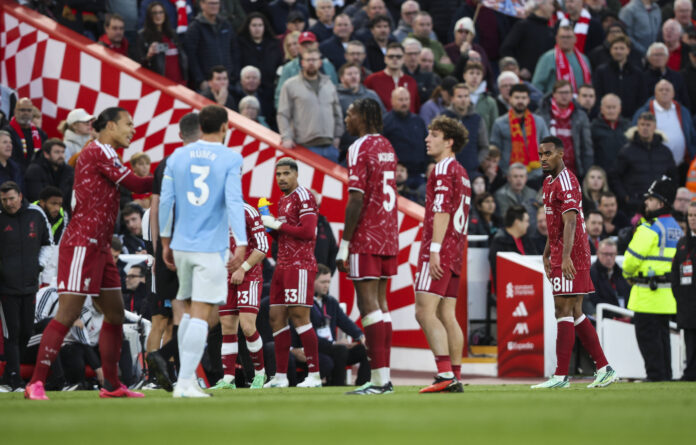

Andoni Iraola Left to Rue Red Card as Liverpool Fall 3-0 to Manchester City
Liverpool lost 3-0 to Manchester City at Anfield, and the scoreline tells only half the story. For just over an hour, this was a competitive game, tense and even, with the home side carrying more threat. Then Ryan Gravenberch was sent off, the match changed shape completely, and City did what elite sides do against 10 men. They took control and finished it.
Andoni Iraola saw it in simple terms. Before the dismissal, Liverpool were on top. After it, they were exposed. There is no need to dress it up. A red card against a team of City’s quality usually ends the argument. Liverpool found that out the hard way as Erling Haaland, Jeremy Doku and Rayan Cherki all scored in the second half.
Liverpool red card changed everything
Iraola’s post-match line was direct: “I think the analysis is quite clear. I think we played two different games – one until the red card and one from the red card until the end. I think we were the better team until the red card in the first 62 minutes. And they were better than us, obviously, after the red card and they scored the goals.” That sums it up. Liverpool had energy, crowd support and momentum, then lost all three in one moment.
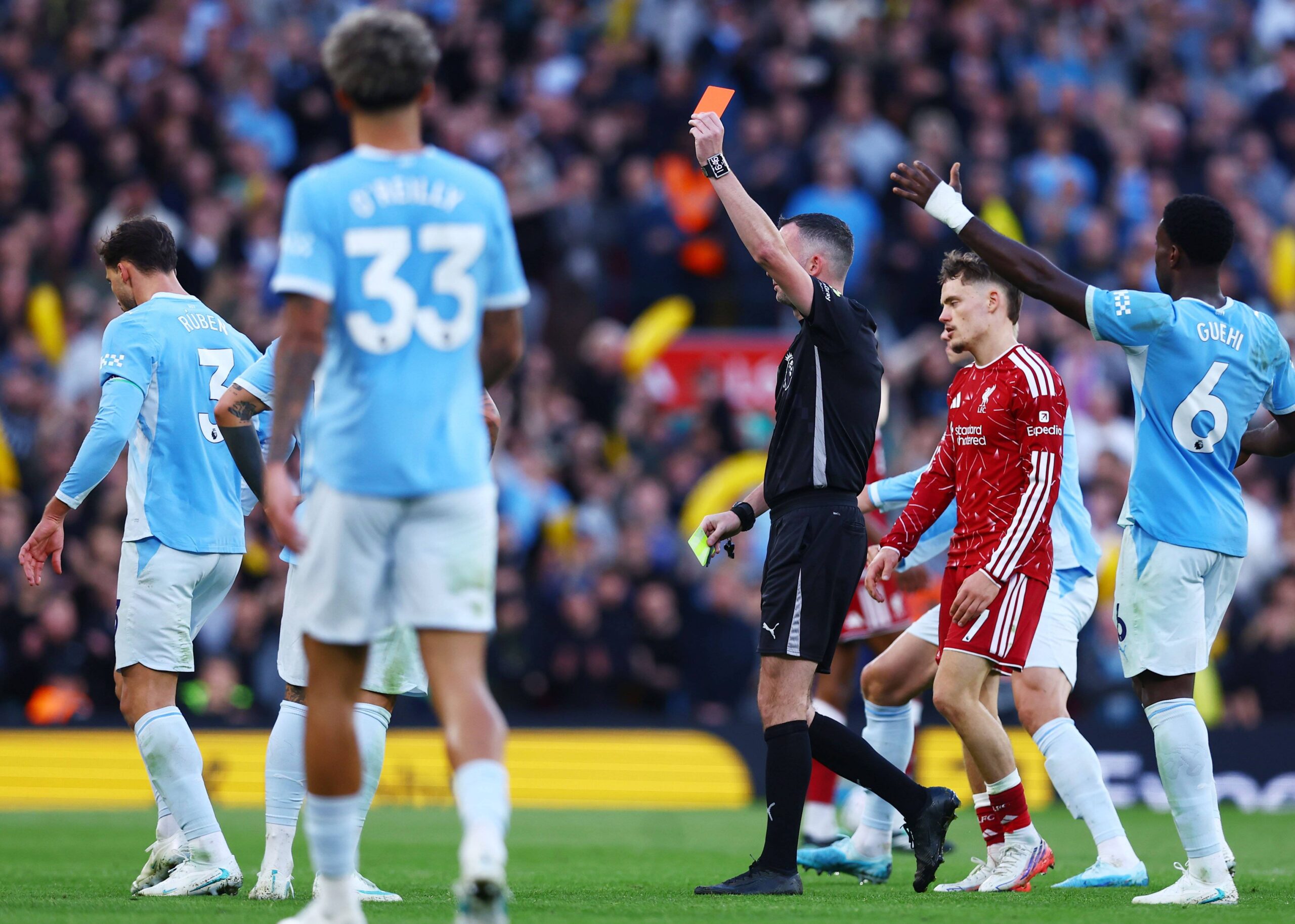
He also made clear that, in his view, the key refereeing decision was flawed. On Gravenberch’s first booking, Iraola said, “I think the first foul of Ryan is never a yellow card – never.” He went further, arguing the referee created a problem for himself early on with that caution and with Ronald Araujo’s booking. The wider point was obvious enough. In a game played on the edge, Liverpool felt they were being punished too quickly, and it narrowed their margin for error.
Whether that complaint lands with anyone is another matter. Managers argue these points after defeats all the time. The harder fact is that Gravenberch gave the referee a second decision to make later in the game, and from there Liverpool paid heavily.
Anfield support could not rescue Liverpool
There was no criticism from Iraola of his players’ effort. Quite the opposite. He praised both the team and the crowd, saying, “But I think the players deserve credit today because I think they’ve given everything. I think also the supporters have been fantastic today – fantastic before, during, after.” That is fair. Anfield was fully engaged and Liverpool responded to it for long spells. The problem was numerical, tactical and then physical.
Iraola was right to point to the stadium as a factor. Liverpool looked sharper and more aggressive before the sending-off, driven on by the occasion. Once they dropped to 10, the atmosphere could not alter the basic reality. City moved the ball, stretched the pitch and found the spaces.