
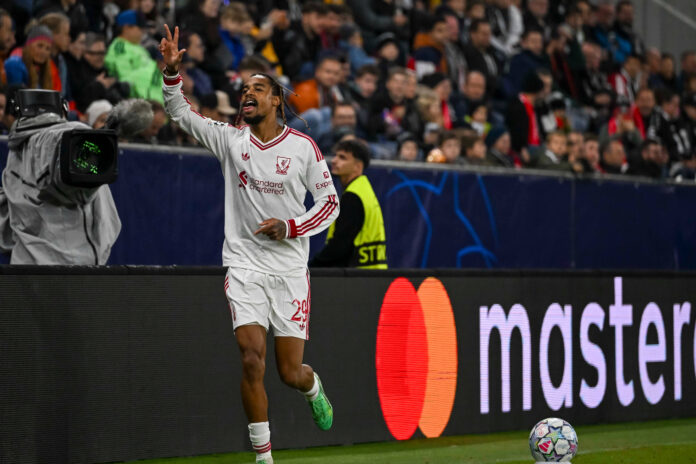

The uncertainty around Alexander Isak and Cody Gakpo has made Liverpool’s preparation for Manchester City more complicated than a simple choice between available forwards. If either is absent, Andoni Iraola must decide which attacking functions to preserve and which to change.
Anfield Index’s report on Iraola’s assessment before the City match set out the fitness concerns following international duty. Availability remains the first question. The second is how Liverpool can threaten City without asking a replacement to reproduce a different player’s game.
A centre forward does more than finish moves
The position of the central attacker influences the entire attack. A run behind the defence can create room for a midfielder to receive. A movement towards the ball can offer a passing connection, but it may also allow the defensive line to step forward.
Liverpool need to decide which response they want from City. If the aim is to make the centre-backs retreat, the threat beyond them must remain credible. If the aim is to draw a defender out, someone else needs to attack the space that movement creates.
That second movement is essential. A forward dropping deep can look involved while leaving nobody close enough to finish the move. The team may gain another passer and lose the reason for making the pass in the first place.
Selection changes the meaning of an attacking market
The same problem appears when a player’s scoring record is used without considering his role. Minutes matter, but so does the position from which those minutes are played. A forward spending much of a match connecting midfield and attack will not necessarily receive the opportunities associated with a traditional penalty-area role.
For player-related football betting, the starting position, likely minutes and participation rules all form part of the assessment. That is the relevant context for Betway football betting while Liverpool’s attacking selection remains unsettled. A reputation for scoring does not answer whether the player will start, where he will operate or what happens to a selection if he does not participate under the stated rules.
Liverpool can avoid a similar analytical mistake by building the attack around the available combination. The question is what those players can do together, rather than which individual most closely resembles an absent starter.
Width needs a purpose
If Liverpool change the central role, the wide players’ decisions must change with it. Holding width can stretch City’s defensive line, but only if a receiver inside can use the resulting space. Moving infield can add a finishing option, but it also requires another player to provide an outside route.
Those exchanges need to be timed. A full-back moving forward before possession is secure may offer width at the cost of defensive protection. A winger coming inside too early can make the central area easier to crowd.
The most useful attacking sequence may therefore begin with restraint. Keep a player wide, draw an opponent towards the ball and make the inside run once the pass can actually be delivered.
PlaybookWire’s guide to sports analytics distinguishes the recorded action from the positional information around it. That helps explain why a shot total alone cannot settle whether a revised forward line is functioning. The quality of the movements producing those shots matters too.
Build the plan around the available players
Liverpool should not be judged solely on whether a replacement scores. More revealing signs would include defenders being moved out of comfortable positions, midfielders finding receivers between the lines and enough players remaining connected after possession changes.
If Isak or Gakpo recovers in time, the available options expand. If not, Liverpool still need a clear account of who stretches the defence, who connects the play and who arrives to finish. The names can change. Those jobs cannot be left unassigned.