
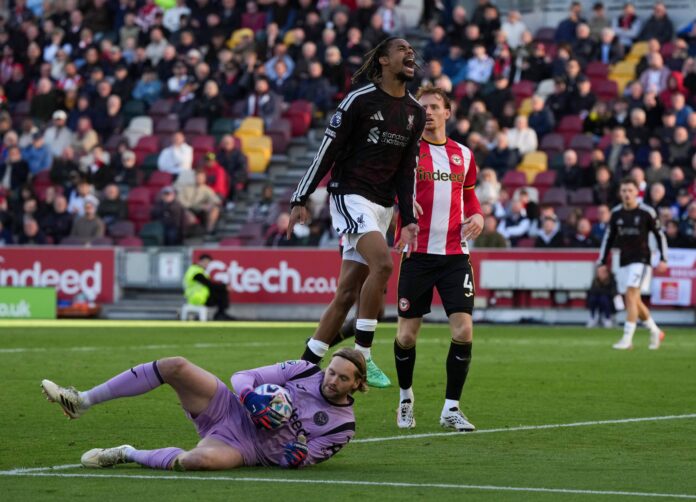

Bradley Barcola’s Liverpool Performance: David Lynch Weighs Up the Positives and Missed Chances
Bradley Barcola produced contrasting performances across Liverpool’s victories over LASK and Brentford, scoring a hat-trick in the 6-3 win against LASK before missing several important opportunities in the Premier League. Speaking on Anfield Index’s Media Matters podcast, journalist David Lynch discussed Barcola’s finishing, his contribution against Brentford and why there were still encouraging signs despite the missed chances.
Liverpool’s win at Brentford saw Barcola get into promising positions, but his inability to convert those opportunities became a talking point in the discussion with host Dave Davis. Lynch acknowledged the frustration surrounding the missed chances while highlighting aspects of the forward’s performance that deserved recognition.
David Lynch Explains Why Bradley Barcola’s Brentford Performance Was Encouraging
Barcola’s missed opportunities were a clear focus of the conversation. Davis referred to the forward’s four shots and raised the issue of a particularly disappointing chance late in the match.
Lynch agreed that Barcola could have done better with that opportunity, explaining that he needed to take a touch across his opponent or open his body more effectively before shooting.
However, Lynch was keen to put the missed chances into the wider context of Barcola’s display.
“The thing is with Barcola is I am massively encouraged by that performance,” Lynch said.
His assessment reflected the importance of evaluating the positions a forward reaches, rather than judging an entire performance solely on whether every opportunity ends in a goal. Barcola had been able to get shots away and threaten Brentford, even if his finishing did not match the quality of those opportunities.
Barcola’s Assist Shows His Contribution Against Brentford
Lynch also highlighted Barcola’s contribution to Liverpool’s attacking play, pointing to the assist he provided during the match.
He praised the awareness behind the move and the execution of the header, describing it as a well-worked attacking sequence. Liverpool’s approach involved a run towards the front post that helped create space for Barcola to knock the ball down towards Alexander Isak.
Lynch said he loved the patience Liverpool showed in that moment, identifying the move as an example of the team’s attacking play working as intended.
That contribution formed an important part of his overall assessment. Despite Barcola missing chances, he had still helped create a scoring opportunity for a teammate and contributed to Liverpool’s victory.
The discussion therefore went beyond the final outcome of Barcola’s own shots. Lynch saw value in the forward’s movement, his ability to get into shooting positions and the contribution he made to the team’s attacking patterns.

Why Barcola’s Finishing Remains an Important Talking Point
Lynch discussed the relationship between getting shots away and scoring goals, referring to the importance of consistently reaching shooting positions. He explained that, over time, players who regularly get opportunities will generally score goals.
He also considered Barcola’s finishing record across his career, saying that the forward had generally finished reasonably close to his expected goals.
That context informed Lynch’s encouragement. The Brentford performance featured missed opportunities that Barcola could have handled better, but Lynch did not view those misses as sufficient reason to dismiss the positives.
The distinction matters for a forward whose contribution includes creating opportunities through movement and positioning. Getting into dangerous areas gives a player the chance to score, although taking those chances remains essential.
Barcola’s hat-trick against LASK had demonstrated his ability to finish opportunities, while the Brentford match presented a different challenge. The contrast between the two performances made his finishing a natural focus of the discussion.
Liverpool Can Take Positives from Barcola’s Performance
Lynch’s verdict on Barcola’s display at Brentford was encouraging, even with the missed chances taken into account. He praised the assist, the attacking movement behind the move and the forward’s ability to get shots away.
The conversation with Davis recognised that Barcola could have made more of his opportunities, particularly the late chance he failed to convert. At the same time, Lynch’s assessment showed why the wider performance deserved consideration.
For Liverpool, the immediate point is that Barcola contributed to the win while leaving opportunities to improve his finishing. His hat-trick against LASK and his assist against Brentford provide different examples of his attacking contribution across the two matches.
Lynch’s analysis ultimately placed emphasis on both sides of the performance: Barcola needs to make more of his chances, but his involvement in Liverpool’s attack offered genuine reasons for encouragement.