


Can Liverpool Break the Low Block Under Arne Slot?
Liverpool’s season has come to be defined by control without incision. Possession is plentiful, territory routinely claimed, yet goals have often proved elusive when opponents retreat into a low block and dare Arne Slot’s side to find a way through. It is a paradox that sits at the heart of their campaign: dominance that flatters to deceive.
As Paul Joyce of The Times observed when analysing Liverpool’s recent struggles, “pre-match game plans have largely been consigned to the bin” as rivals increasingly tailor their approach specifically to stifle Slot’s side. The low block has become both a defensive refuge for opponents and a psychological test for Liverpool, one that demands patience, imagination and, above all, variation.
This is not a new problem in football, but it is one that has taken on fresh urgency at Anfield.
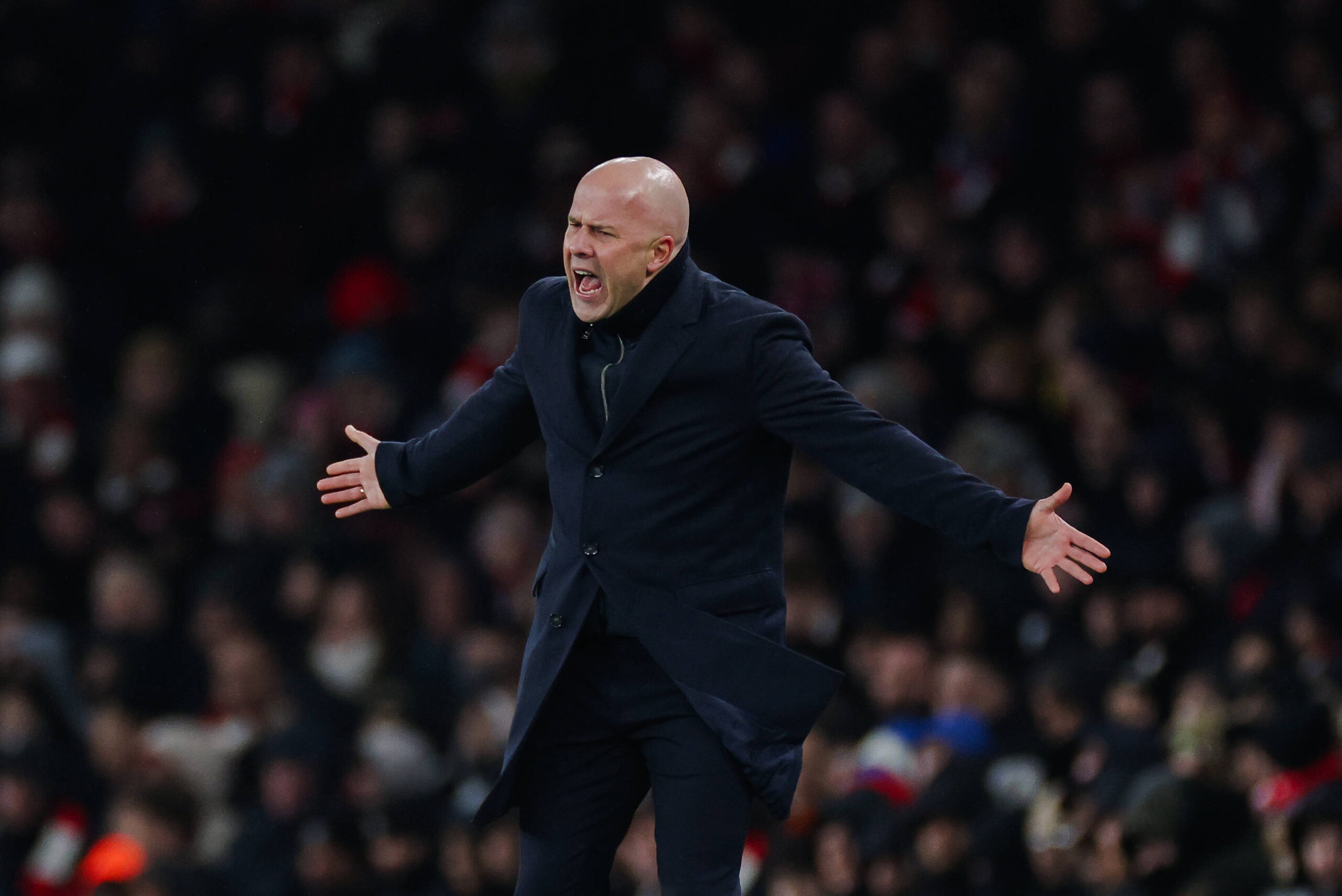
Patterns of Possession, Shortage of Threat
Liverpool are among the most ball-dominant teams in the Premier League. They circulate possession relentlessly, probing from side to side, yet that fluency has not translated into chance creation at the expected rate. Joyce notes that “only Manchester City have played more passes this season, but Liverpool rank in the middle of the pack for expected goals,” a statistical quirk that underlines the issue.
In matches where opponents sink deep, Liverpool often find themselves facing two compact defensive lines, space rationed and time on the ball a poisoned gift. Joyce described one such performance as “lots of passes, fewer chances”, a phrase that neatly captures the imbalance between control and consequence.
Without early breakthroughs, anxiety seeps into the stadium. The tempo drops, the crowd tightens, and the low block becomes harder to shift.
Long-Range Shooting as a Tactical Release Valve
One answer lies not in intricate passing but in calculated disruption. Long-range shooting has emerged as a necessary threat, not merely to score, but to force defenders to step out of position. Joyce highlighted this clearly, writing that “to create chances against a low block, you need pace and individual special moments to create an overload”.
When midfielders are willing to strike from distance, defenders are compelled to engage rather than simply hold their shape. This, in turn, opens channels for runners and creates the kind of second-phase chaos that low blocks are designed to avoid.
Liverpool have the players capable of this, but the willingness to take responsibility from range has been inconsistent. When it appears, the effect is immediate.
Florian Wirtz and Central Imagination
Much of the creative burden has fallen on Florian Wirtz, whose influence has grown steadily as the season has progressed. Joyce noted that Wirtz is now “averaging significantly more touches in the final third and the opposition box”, a sign that Liverpool are consciously funnelling play through him.
Wirtz offers something subtly different: an ability to receive between the lines, to turn quickly, and to commit defenders rather than simply circulate possession. Against a low block, that willingness to dribble into congestion can be as valuable as a perfectly weighted pass.
As Joyce put it, “Liverpool have the most touches in the final third in the league, but far fewer in the penalty area”, a discrepancy that highlights why players like Wirtz are so crucial. He represents intent as much as invention.
Set Pieces and Tempo as Untapped Weapons
Another recurring theme in Joyce’s analysis is Liverpool’s inefficiency from set pieces. “Dead-ball situations have been an issue all season,” he wrote, pointing out that goals from such moments have dried up compared to previous campaigns.
Against a low block, set pieces are not a bonus; they are a necessity. Corners and free kicks offer structured opportunities to disrupt packed defences, especially when open play becomes predictable.
Tempo, too, matters. Joyce remarked that Liverpool have become “slow starters”, allowing opponents to settle into their defensive rhythm. Faster beginnings, sharper pressing, and earlier shots can all contribute to unsettling a low block before it fully forms.
Conclusion
Breaking down a low block is as much a mental challenge as a tactical one. It requires patience without passivity, bravery without recklessness. Liverpool’s numbers suggest a team in control, but control alone is not enough.
As Paul Joyce’s reporting makes clear, the solutions are already present: long-range shooting, central creativity, improved set-piece execution and greater intensity from the first whistle. The task for Slot is not to reinvent Liverpool, but to encourage them to embrace disorder when order no longer works.