
Anfield in 2026: Progress, Pressure and the Price of Change
Queues reshaping the matchday ritual
“Shocking these queues, mate.” The line lands with the weary inevitability of gallows humour, overheard as supporters snake their way towards Turnstile E with kick-off looming. In 2026, this has become an increasingly familiar opening scene at Anfield. As Andy Jones reports in his piece on the Athletic, fans arriving with time to spare are instead confronted by a process that feels at odds with decades of ingrained routine. At 7.17pm, with less than half an hour before an FA Cup tie, it was already “clear that some of these fans are not going to see the game begin”.
The cause is not mystery but policy. Since November, every supporter entering Anfield has been subject to a search, part of enhanced security measures ahead of the full rollout of Martyn’s Law. The logic is hard to argue with; the execution has been harder to absorb. “The mood among fans stuck outside never boils over,” Jones writes, “but there is clear frustration.” The queues are long, the explanations often arrive late, and the emotional tone of arrival has shifted from anticipation to calculation.
Supporter groups have not rejected the principle. Gareth Roberts of Spirit of Shankly told Jones that “their aim is to improve security and safety so their reasons are understandable but maybe it has been introduced too quickly before the necessary logistics were in place”. It is a telling phrase: too quickly, before the ground was ready for the change.
A redeveloped stadium with growing pains
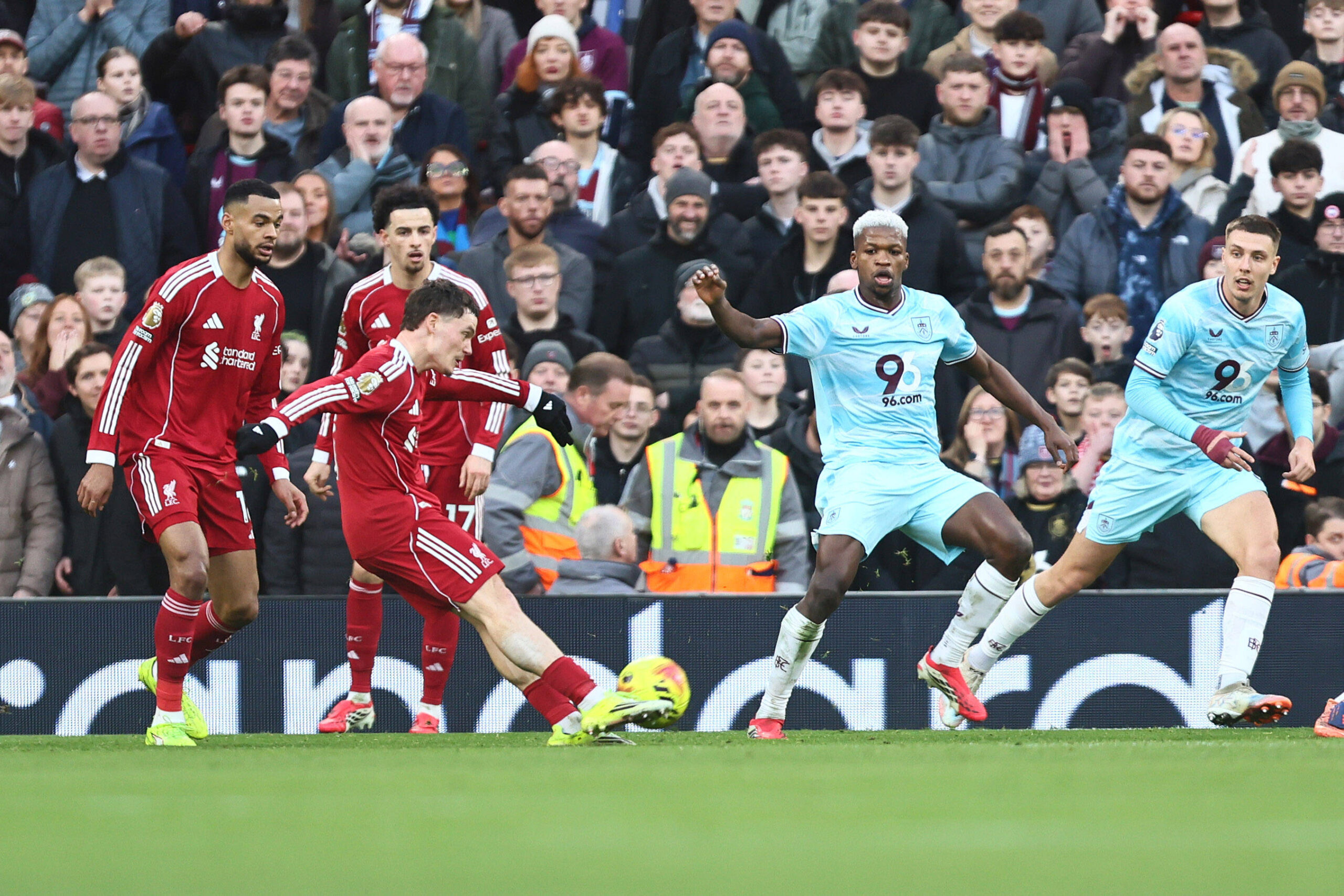
In purely physical terms, Anfield has rarely looked better. Capacity has risen to more than 61,000, concourses have been modernised and facilities upgraded. Jones notes that Liverpool’s home has been “transformed under the ownership of Fenway Sports Group”, with investment that has reshaped both the Main Stand and the Anfield Road End. The stadium is more comfortable, more lucrative and more in tune with the demands of a global brand.
Yet progress has introduced new tensions. Corporate seating now occupies a significant section of the Anfield Road Stand, a “key revenue driver” in a self-sustaining financial model that has helped make Liverpool England’s most profitable club. The trade-off is visual as well as cultural. As Jones observes, look up at the start of a second half and “the wide open spaces — left by fans still enjoying the facilities inside — are obvious”.
This version of Anfield is efficient, polished and commercially astute. It is also different. The balance between tradition and transformation remains fragile.
Atmosphere, tourists and who fills the seats
Debate about atmosphere is nothing new, but in 2026 it has acquired sharper edges. Anfield still rises for the biggest nights, still crackles when the moment demands it. But for more routine fixtures, Jones reports that it can feel “a lot more sedate”. Social media amplifies the complaints, often framing them around the idea of tourists and casual fans.
That framing is contested. John Gibbons of The Anfield Wrap argues that “there is a false nostalgia with the atmosphere”. A Liverpool crowd, he says, “is a crowd that steps up when the team needs us”. The issue, instead, is logistical disruption. “The queues are affecting the atmosphere if not everyone is there when the team is coming out,” Gibbons explains. Fans arrive annoyed, seats are disrupted, and the first minutes are lost to movement rather than noise. “It’s a domino effect,” he adds, one that shapes the emotional temperature inside the ground.
Liverpool’s relatively low number of season ticket holders and tighter rules on ticket forwarding have also altered the crowd profile. More tickets circulate on the open market, often at inflated prices, feeding a sense that Anfield is becoming harder to access for regulars even as it welcomes more one-off visitors.
Community, commerce and an uncertain balance
The impact does not stop at the turnstiles. Local pubs and hotels have felt the change keenly. Jones spoke to publicans who described matchday crowds leaving earlier than ever. “For the Barnsley game, it was emptying out around 7pm for a 7.45pm kick-off,” said Robert Rogers of The Twelfth Man. Others spoke of financial strain and disrupted staffing, a reminder that Anfield’s ecosystem extends well beyond the stadium walls.
Liverpool insist improvements are coming. Chief operating officer Paul Cuttill told Jones that “this is an ongoing process, and we are seeing continuous improvements match by match”, citing reduced waiting times and increased stewarding. Data suggests progress, but habits are slow to reset. As Roberts puts it, “people are creatures of habit”, and matchday routines carry emotional weight built over decades.
Ultimately, Jones returns to a familiar truth. Atmosphere, patience and goodwill are shaped most powerfully by what happens on the pitch. As fans filed out after a disappointing draw, frustration lingered. In 2026, Anfield remains iconic, evolving and contested. The challenge for Liverpool is ensuring that necessary change does not erode the feeling that has always made the place more than just a stadium.