
Only 13 teams have ever completed a UEFA Champions League group stage with maximum points.
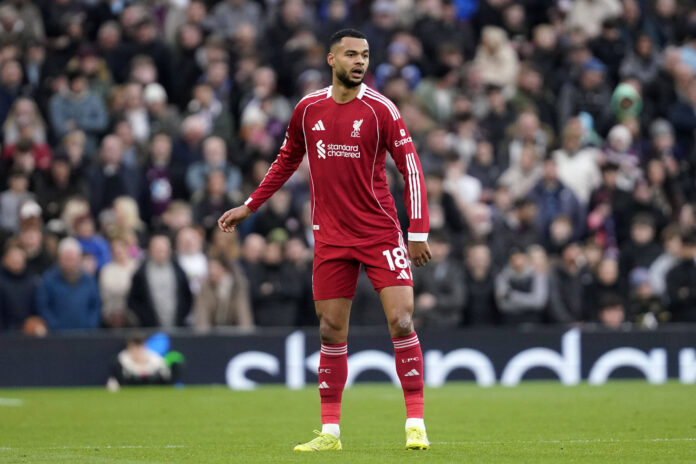
Liverpool now have a chance to do the same in the first-ever league stage of the competition. Such campaigns are built on consistency, discipline, and smart decision-making. Small details often decide success, both in football and in other competitive settings. This kind of calculated approach is familiar to fans who explore offers like a Reveryplay Casino no deposit bonus, where timing and restraint matter.
Below is a look at the teams that have already achieved this rare Champions League milestone.
AC Milan (1992/93)
6 wins, goal difference 11–1
Milan were the dominant force in the early years of the UEFA Champions League. They reached the group stage after four qualifying victories against NK Olimpija Ljubljana and ŠK Slovan Bratislava. In the group, they opened with a 4–0 win over IFK Göteborg, followed by four narrow one-goal victories: away at PSV Eindhoven, twice against FC Porto, and away again at IFK Göteborg. The campaign was completed with a 2–0 win over PSV at San Siro. Despite their perfect group stage, Milan went on to lose the final in Munich, falling 1–0 to Olympique de Marseille.
Paris Saint-Germain (1994/95)
6 wins, goal difference 12–3
George Weah and Daniel Bravo were on the scoresheet as Paris Saint-Germain opened their campaign with a 2–0 win against Bayern Munich. This was followed by 2–1 away victories against Spartak Moscow and Dynamo Kyiv. Weah scored the decisive goal both at home against Dynamo and away in Munich. The sixth and final group-stage win came in a convincing 4–1 victory over Spartak. PSG advanced to the semi-finals, where they were eliminated by Milan after a 1–0 home defeat and a 2–0 loss away.
Spartak Moscow (1995/96)
6 wins, goal difference 15–4
Spartak Moscow opened their campaign with two narrow victories: away at Blackburn Rovers and at home against Legia Warsaw. They then recorded more comfortable wins against Rosenborg BK, 4–2 and 4–1 in the two matches. After a 3–0 win over Blackburn at home, Spartak secured a 1–0 victory away at Legia. Despite a perfect group stage, the Russians failed to progress past the quarter-finals, losing 2–0 away and drawing 2–2 at home against FC Nantes.
Barcelona (2002/03)
6 wins, goal difference 13–4
Barcelona began with a 3–2 win against Club Brugge KV, laying the foundation for nine consecutive victories—a UEFA Champions League record at the time, which stood until Bayern Munich surpassed it in the 2013/14 season. Barcelona’s other group-stage opponents were Galatasaray and FC Lokomotiv Moscow. In the second group stage, they secured further wins against Bayer Leverkusen, Newcastle United, and Inter Milan, before a 0–0 draw at Inter ended the streak. Barcelona were eventually eliminated by Juventus in the quarter-finals.
Real Madrid (2011/12)
6 wins, goal difference 19–2
Real Madrid opened with a 1–0 victory away at GNK Dinamo Zagreb before going on a scoring spree. At the Santiago Bernabéu, José Mourinho’s side defeated AFC Ajax 3–0 and Olympique Lyonnais 4–0. A 2–0 win in Lyon was followed by a 6–2 victory against Dinamo Zagreb and another 3–0 win in Amsterdam. Despite the perfect group stage, Madrid were eliminated in the semi-finals by FC Bayern Munich on penalties.
Real Madrid (2014/15)
6 wins, goal difference 16–2
Carlo Ancelotti’s team, winners of their tenth European title in 2014, started with a 5–1 victory at home against Basel. Their second match was tougher, with a late Karim Benzema goal securing a 2–1 win at Ludogorets Razgrad. Madrid then won 3–0 in Liverpool, and consecutive 1–0 victories against Liverpool and Basel followed, thanks to goals from Benzema and Cristiano Ronaldo. They became the first team to win all six group-stage matches in the UEFA Champions League twice after a 4–0 home win against Ludogorets—also marking their 19th consecutive win in 22 competitive games. Real advanced to the semi-finals but were eliminated by Juventus.
Bayern Munich (2019/20)
6 wins, goal difference 25–5
Bayern Munich surpassed all their predecessors with the best goal difference in UEFA Champions League group-stage history, scoring a record 16 away goals. Robert Lewandowski contributed eight of those, finishing with ten goals in the group stage—the second-highest tally ever. They opened with a 3–0 home win against Crvena zvezda, followed by a 7–2 victory at Tottenham Hotspur. Bayern then defeated Olympiacos 3–2 away and 2–0 at home, before Lewandowski scored four goals in a 6–0 win at Crvena zvezda. They concluded the group stage with a 3–1 win against Tottenham.
Ajax (2021/22)
6 wins, goal difference 20–5
Ajax began the campaign with a stunning 5–1 win at Sporting CP on matchday 1, with Champions League debutant Sébastien Haller scoring four goals. Remarkably, Haller scored in all six group-stage games, a feat only previously achieved by Cristiano Ronaldo in 2017/18. Ajax also impressed against Borussia Dortmund, beating them 4–0 at home and 3–1 away.
Liverpool (2021/22)
6 wins, goal difference 17–6
In a challenging group featuring Atlético de Madrid, AC Milan, and Porto, Jürgen Klopp’s Liverpool showed their quality from the start. They opened with a 3–2 win against Milan at Anfield and followed it up with another 3–2 victory in Madrid, where a late Mohamed Salah penalty made the difference. Liverpool also defeated Atlético 2–0 at home and scored seven goals across two games against Porto. They concluded the group with a 2–1 win in Milan, topping the group with an 11-point lead over second place.
Bayern Munich (2021/22)
6 wins, goal difference 22–3
Just two years after their previous perfect group stage, Bayern Munich demonstrated their dominance again. Barcelona suffered twice at the hands of the Germans, both times losing 3–0. Dynamo Kyiv and Benfica were also beaten convincingly. Once again, Robert Lewandowski played a major role as Bayern’s top scorer during the group stage.
Bayern Munich (2022/23)
6 wins, goal difference 18–2
Bayern completed the group stage with a perfect record for the third time in four years. Despite arguably facing one of the toughest groups in recent memory, they won 2–0 at Inter Milan in the opening match and repeated the scoreline at home against Lewandowski’s new club. Julian Nagelsmann’s side then secured two comfortable wins over Viktoria Plzeň (5–0 at home, 4–2 away) before sealing qualification early with a 3–0 victory at Camp Nou. Bayern finished the group stage by defeating Inter 2–0 once again, becoming the first team to earn 18 points from six games three times in UEFA Champions League history.
Real Madrid (2023/24)
6 wins, goal difference 16–7
Carlo Ancelotti’s side secured qualification to the last 16 after just four games, but the road was far from easy. On matchday 1, they only managed a win against Union Berlin in extra time. Real also trailed Napoli and faced challenges in Braga, winning all three of these games by just a single goal.
The return leg against Braga was more comfortable, before the 14-time European champions sealed a 4–2 victory over Napoli and scored a late winner in the 89th minute at Union Berlin after initially falling behind. Jude Bellingham was a standout, scoring four goals across the six group-stage wins.
Manchester City (2023/24)
6 wins, goal difference 18–7
Defending champions Manchester City became only the second English team to win all six group-stage games. Remarkably, they scored three goals in every single match, including a 3–2 victory at Crvena zvezda on matchday 6 despite using a heavily rotated squad.
Not everything was smooth for Pep Guardiola’s side. On matchday 5, City were 2–0 down at home to RB Leipzig before mounting a dramatic comeback with three goals in the second half. Erling Haaland finished the group stage with five goals, while Julián Álvarez contributed four.