
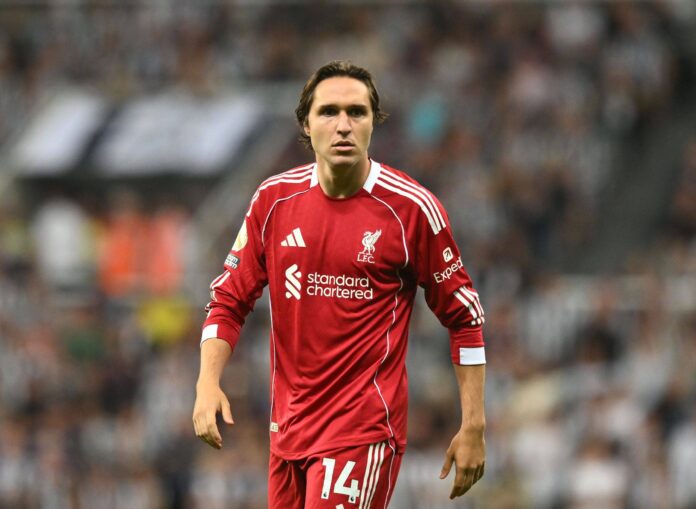

Chiesa Injury Update: Slot’s Caution, Liverpool’s Balance and a Season in Motion
Liverpool’s season, already rich in momentum and narrative, briefly paused in Marseille when Federico Chiesa failed to make the matchday squad despite being named on the bench. A late withdrawal, a quiet warm-up struggle, and a manager’s calm explanation combined to form a familiar Premier League subplot: talent, timing, and restraint.
According to Liverpool’s official website, in a report by Glenn Price published following the Champions League victory in France, Arne Slot confirmed that Chiesa had stepped out of training shortly before the match and was unable to recover in time. The club chose caution over urgency. In modern elite football, that decision often says more than any medical bulletin.
This was not simply an injury update. It was a snapshot of how Liverpool, under Slot, are learning to manage their resources, their ambitions, and their vulnerabilities.
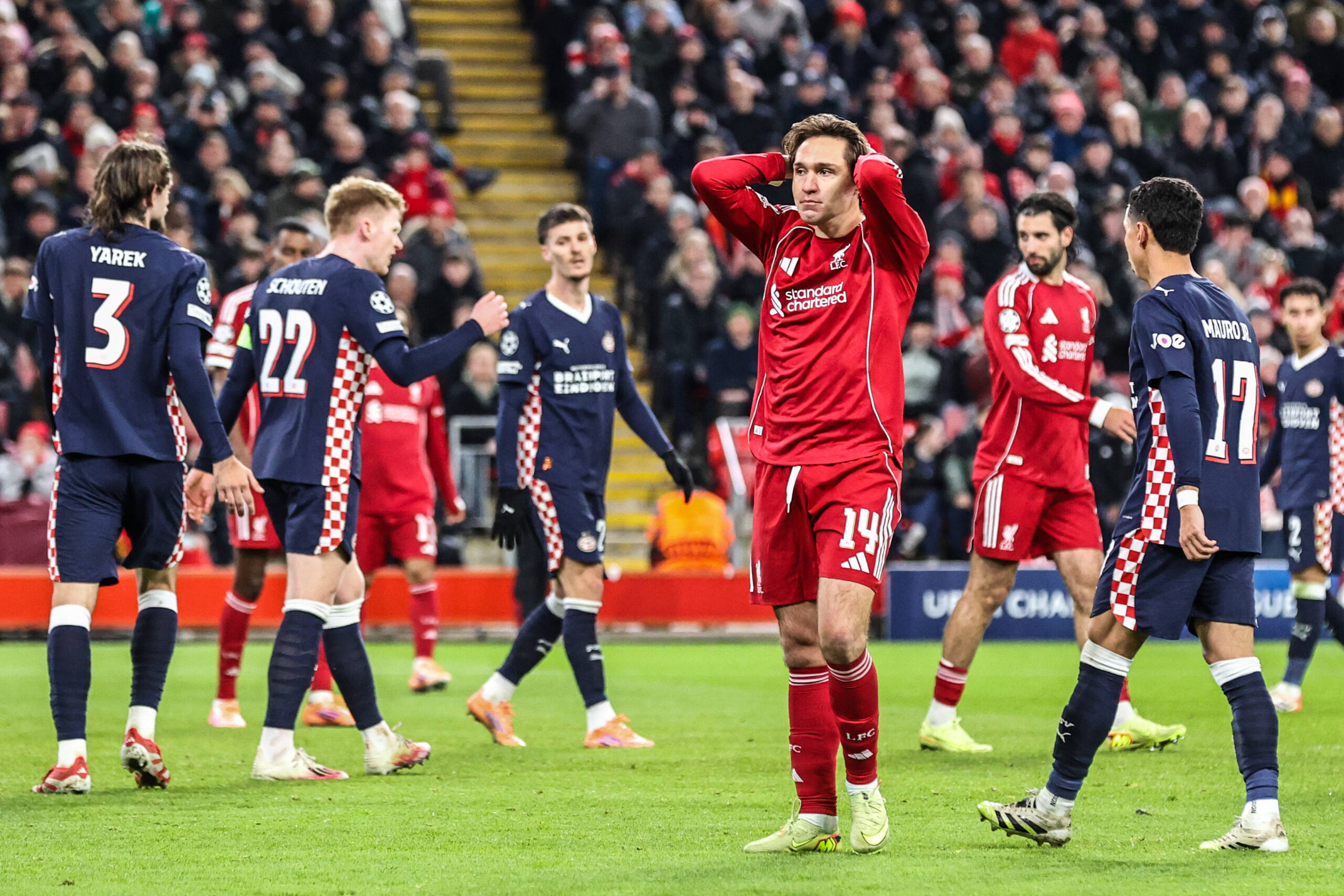
Chiesa Injury Raises Questions Over Squad Rhythm
Federico Chiesa arrived at Liverpool with a reputation built on acceleration, incision, and moments of controlled chaos. He is a player who thrives on sharpness, rhythm, and physical confidence. Even minor setbacks can disrupt that delicate balance.
Slot revealed that Chiesa stepped out of training just minutes after media duties had finished, suggesting the problem emerged late and unexpectedly. Liverpool still travelled with him, hopeful that treatment and rest might be enough. It was not.
“He tried in the warm-up and he wasn’t able to play,” Slot explained. “That’s why he wasn’t on the bench.”
This detail matters. It tells us Chiesa was close. Not injured enough to stay behind, not fit enough to contribute. These are the most frustrating moments for players and coaches alike.
For Liverpool, the challenge is not just getting Chiesa back. It is reintegrating him into a system built on tempo and collective movement. Fitness is only the first step. Sharpness takes longer.
Slot’s Calm Approach Reflects Long-Term Thinking
There was no drama in Slot’s explanation. No hint of frustration. No sense of crisis. Instead, there was patience.
“We don’t expect it to be a long-term injury,” he said, reinforcing the idea that Liverpool are playing a longer game.
This approach marks a shift in tone from previous eras. Slot’s Liverpool are not governed by emergency solutions or short-term gambles. They are governed by structure.
Keeping Chiesa in France for treatment was not about desperation. It was about continuity. Medical staff, recovery routines, and familiar environments matter at this level. Small details shape big outcomes.
Slot understands that forcing players back early rarely brings rewards. It brings relapses, uncertainty, and disrupted momentum. His restraint reflects a manager who sees beyond the next fixture.
Liverpool’s Depth Tested by Setbacks and Rotation
Chiesa’s absence in Marseille did not derail Liverpool’s performance. They won, controlled key phases, and demonstrated resilience. That in itself is significant.
Depth is not just about numbers. It is about adaptability. Liverpool’s squad now contains players capable of shifting roles and responsibilities without dismantling the system.
However, repeated minor injuries can erode that stability over time. One absence is manageable. Several become problematic.
Chiesa occupies a unique tactical space. He offers directness in wide areas, diagonal running, and a willingness to take defenders on. Without him, Liverpool become more structured, sometimes more predictable.
Slot must therefore balance protection with necessity. Over-managing injuries can limit rhythm. Under-managing them invites chaos. The sweet spot lies somewhere in between.
What Chiesa’s Recovery Means for Liverpool’s Season
If Slot is right, and this is not a long-term problem, then Chiesa’s situation becomes a short chapter in a much longer story.
But timing matters. With domestic and European competitions converging, Liverpool need all their attacking options available. Margins tighten. Rotation becomes essential.
Chiesa’s recovery will determine how flexible Slot can be in the coming weeks. A fully fit Chiesa allows Liverpool to stretch opponents, vary their attacking patterns, and manage workloads more effectively.
There is also the psychological element. Players returning from minor injuries often need reassurance. Confidence in the body precedes confidence in performance.
Liverpool’s medical team, coaching staff, and analysts will monitor every sprint, every change of direction, every recovery session. This is elite sport in micro-detail.
For now, the message is clear: patience over panic. Structure over speculation. Slot’s Liverpool are building something measured and sustainable, and Chiesa’s careful handling fits that philosophy.