
Is Liverpool’s Performance Against Marseille Papering Over Cracks?
Liverpool’s performance in France was exactly what this group needed — and exactly what it has always been good at. An open game, an aggressive opponent, and space to attack. Marseille, coached by Roberto De Zerbi, played with the same conviction and bravery he once instilled at Brighton: front-foot football, high lines, and a belief that you can hurt anyone if you commit bodies forward. Against that, Liverpool looked comfortable, controlled, and dangerous.
That should not surprise anyone.
This squad is packed with players who thrive in chaos and transition. Szoboszlai, Wirtz, Salah, Frimpong — they all want space, movement, broken structure. Give them room and they will punish you. The 3–0 win was deserved, well-managed, and professional. But it was also familiar in a way that should cause concern rather than reassurance.
Because Europe does not represent the weekly reality Liverpool faces anymore.
The Premier League has adjusted. Deep blocks, compact shapes, numerical superiority between the lines — these are no longer reactive measures, they are the default. And Liverpool’s struggles are not a mystery, nor are they temporary. They are structural.
The danger is mistaking comfort for correction.
Steven Gerrard on Arne Slot:
"I'm really pleased for him. It can't be easy when you're under that pressure. His tactics were spot on tonight. He deserves a lot of praise and credit. He needs to stop mentioning low blocks. Low blocks have been happening against Liverpool since I… pic.twitter.com/ERlhRFSlka
— DaveOCKOP (@DaveOCKOP) January 21, 2026
Low Blocks, Loud Complaints, and a Closing Window
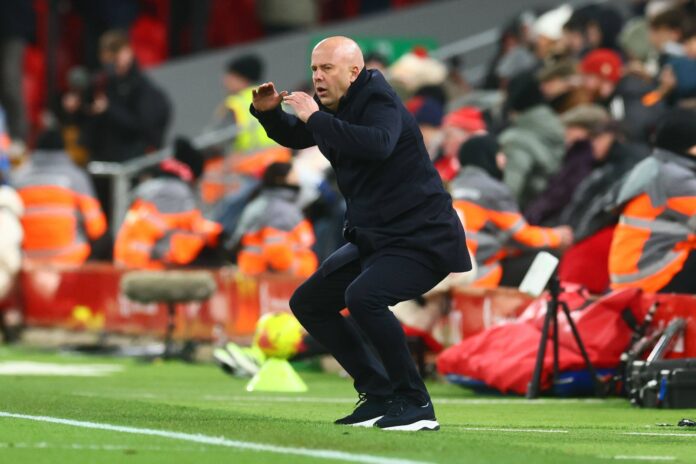
What is becoming increasingly alarming is not just Liverpool’s inability to consistently break down deep defences — it is the reaction to it. Arne Slot’s repeated complaints about how teams “set up against us” feel increasingly hollow. This is not a novelty. This is not disrespect or a flash in the pan. This is how champions are treated, given their stature. And more importantly, it is how champions must respond.
Instead, Liverpool too often looks coached not to lose rather than built to win.
The Bournemouth trip feels ominous in that context. This is a side that will sit in, deny central access, protect zones, and wait. There will be no generosity. No openness. No invitation. And if Liverpool’s response is slow circulation, predictable wide rotations, and isolation of creative players, then the frustration will return — quickly and loudly.
We’ve seen this script too many times already this season.
The concern is not just about points dropped. It’s about imagination lost. When Wirtz receives the ball with no runners ahead of him, when Szoboszlai is asked to recycle rather than penetrate, when Salah is forced into crowded corridors, Liverpool becomes sterile. Possession without incision. Territory without threat.
That is when Anfield turns.
If this weekend produces another performance defined by control but lacking courage, the conversation accelerates. Not because of emotion, but because of inevitability. The squad is too good to look this limited. The players are too talented to appear so constrained.
Which brings us back to the looming figure in the background.
If Slot cannot solve the low block — cannot evolve beyond complaints and find solutions — then the idea of waiting until summer becomes harder to justify. Especially with a manager expected to arrive who specialises in structure, positional clarity, and control with purpose.
The Marseille win was impressive. But it may yet prove to be a reminder of what Liverpool are — not what they need to become.
And that distinction could decide how long this era truly lasts.