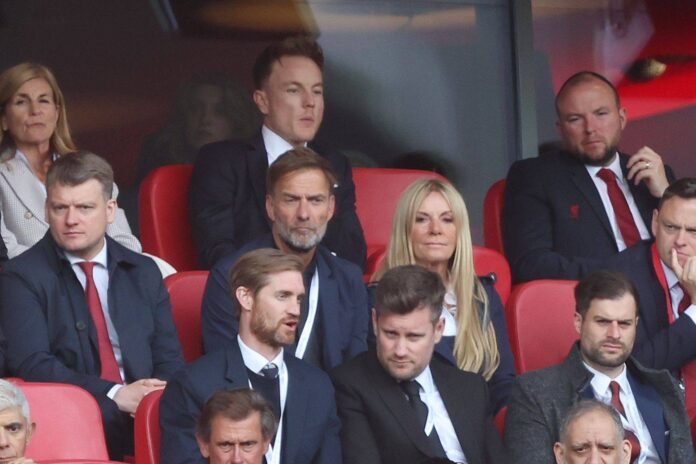
Slot, Klopp and Liverpool: Why Anfield’s Emotional Transition Remains Unfinished
Liverpool’s transition from the Jürgen Klopp era was always destined to be complex. Replacing a manager who reshaped a club’s identity, culture, and emotional rhythm is rarely a smooth process. Yet, as Jonathan Northcroft wrote in The Times, Arne Slot’s greatest challenge may not be tactical or structural — it is personal.
“His biggest problem is he is simply not Klopp,” Northcroft observed, capturing the essence of the dilemma facing Liverpool’s current head coach. Despite strong results and a Premier League title, Slot continues to operate under the shadow of his predecessor, judged against an idealised past rather than present realities.
This article draws on Northcroft’s original reporting to examine why Slot’s tenure remains divisive, how expectations have evolved, and what the future may hold for Liverpool.
Slot’s Inheritance at Liverpool
Slot did not inherit a rebuilding project. He inherited a functioning elite team, a passionate supporter base, and a legacy rooted in emotional connection. Klopp’s Liverpool was defined by intensity, personality, and shared identity.
Northcroft recalled an iconic moment from 2018, when Andy Robertson’s relentless pressing against Manchester City symbolised Klopp’s philosophy: “The swelling, guttural cheers around Anfield… were the sound heard when sport grabs people’s guts and hearts.”
That connection became central to Liverpool’s modern identity. Supporters did not merely watch Klopp’s team; they felt part of it. His “heavy metal football” fostered a sense of collective purpose that extended beyond tactics.
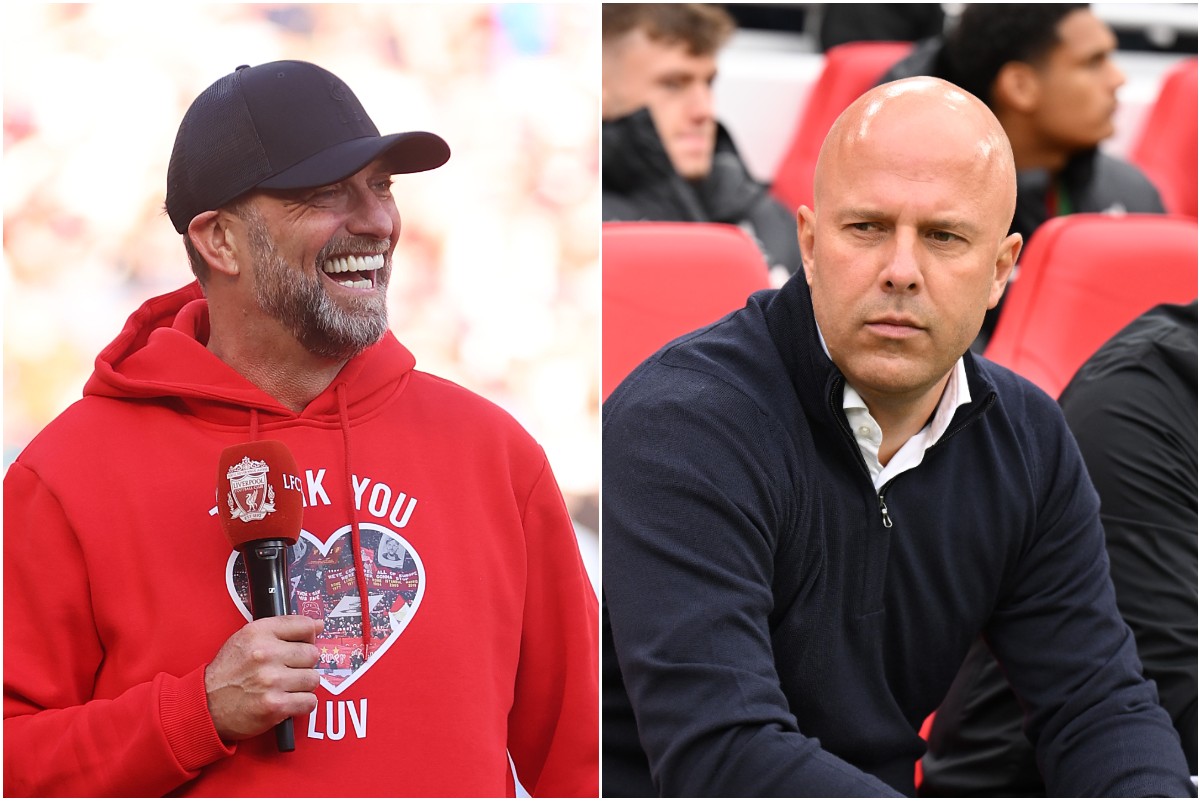
Slot’s arrival marked a stylistic shift. More measured. More analytical. Less performative. Northcroft described him as “smoothly professional, away from the pitch a tactics student and laptop geek.” In contrast to Klopp’s emotional magnetism, Slot’s approach is restrained and methodical.
The result is that even success can feel muted by comparison.
Klopp’s Lasting Influence on Expectations
Klopp’s departure created what Northcroft termed a “delayed reaction” among supporters. During Slot’s first season, Liverpool’s title challenge masked underlying emotional adjustment. It is only now, during a more uneven campaign, that reflection has intensified.
Inside the club, Northcroft reported, there is an awareness that fans are beginning to process what has been lost. One long-time Anfield observer explained the mood: “Last season, because Liverpool were in a title race, the focus was on getting behind the team. Whereas this one… it’s: ‘Let’s think about what we lost.’”
Memories of Klopp’s difficult periods have faded. His final seasons included inconsistent runs and public frustrations, yet nostalgia now dominates discourse.
Northcroft noted the selective nature of recollection: “Memories are selective,” he wrote, reminding readers that Klopp’s reign was not without turbulence.
Slot is therefore judged not against Klopp’s reality, but against a mythologised version of it.
Performance Metrics and Playing Style Debate
On the pitch, Liverpool remain competitive. Northcroft highlighted that Slot is “the only manager apart from Guardiola to actually win the Premier League in this decade” and still holds “the best win percentage of any Liverpool boss.”
Underlying statistics also offer encouragement. Opta data suggests Liverpool’s current style closely resembles Klopp’s 2019–20 title-winning side. Yet perception continues to dominate analysis.
Supporters have labelled Slot’s team “sideways” and “slow”, despite evidence to the contrary. Northcroft addressed this directly, writing that “the numbers suggest their way of playing is extraordinarily similar to Klopp’s title winners.”
He also pointed to contextual factors: injuries, squad transition, and structural change. “There are obvious external issues,” he noted, that help explain fluctuations in form.
Slot himself has spoken openly about tactical obstacles. In a club-produced interview, he explained: “Intensity gets harder for the simple reason the other team tries everything to have as less intensity in the game as possible.”
Time-wasting, deeper defensive blocks, and reduced ball-in-play time have disrupted Liverpool’s pressing model. These trends complicate evaluation of Slot’s methods.
Patience, Legacy and Liverpool’s Long-Term Vision
Liverpool’s leadership remains firmly behind Slot. Recruitment strategy has prioritised youth, technical quality, and long-term sustainability. Northcroft highlighted that the club deliberately went young, aiming to complete “three windows in one” during the recent rebuild.
The average age of new signings was just 21.2, compared with a European title-winning average of 26.5. This reflects a long-term project rather than immediate consolidation.
Historically, Liverpool have faced similar transitions. Northcroft drew parallels with Bob Paisley’s succession of Bill Shankly, recalling that early scepticism once surrounded one of the club’s most successful managers.
He quoted former Daily Mail journalist Jeff Powell, who wrote during Paisley’s early reign: “Something vital, urgent, alive and irresistible has gone.” The echoes are unmistakable.
Northcroft concluded that Slot may face an unusual burden: “having to win the title twice… before he is fully accepted.”
A senior club figure summed up the internal view: “He’s a fantastic human being. His work ethic is incredible… Be patient. No one wants to be patient. There were bad spells under Jürgen too.”
Slot understands the scale of his task. “I knew which club I went into,” he said. “This club has a model of signing talented younger players. I have always liked to work in that way.”
For now, Liverpool exist in a space between memory and reality. Between nostalgia and evolution. Between Klopp’s emotional legacy and Slot’s strategic future.
As Northcroft wrote, “That’s not Slot’s fault, but he has to live with it.”