
Liverpool, Last-Minute Goals Conceded and Fading Aura of Mentality
For years, Liverpool carried an identity that felt almost mythological. They were relentless, defiant, immune to panic and, perhaps most importantly, masters of decisive moments. Matches that drifted into their closing seconds often bent to Liverpool’s will. Lately, though, that story has twisted into something far less flattering.
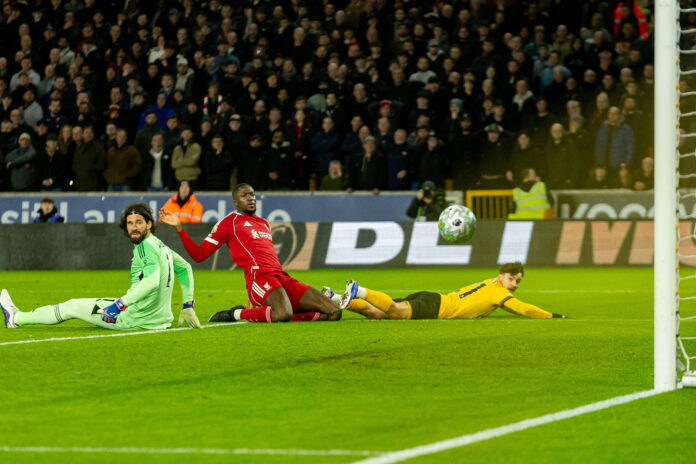
A worrying trend has emerged across the current Premier League campaign: Liverpool conceding a last minute goal. Not once or twice, but repeatedly. It is no longer an anomaly or a momentary lapse. Instead, it has become a pattern that raises uncomfortable questions about Liverpool, their mentality, and the broader condition of the team.
According to statistics highlighted by Opta and discussed by journalists Dave Davis and David Lynch, the issue is historically significant. As Davis noted when referencing the data: “Opta Joe put this out. Liverpool have lost five games thanks to ninetieth minute goals in the Premier League this season. That’s the most of any side in a single campaign in the competition’s history.”
For a club once celebrated for late drama in its favour, that statistic feels almost surreal.
Last-Minute Goals Conceded: Alarming Pattern
Football narratives are often built on moments, but patterns carry far more weight. Five defeats caused by a last minute goal conceded tells a story that cannot be brushed aside as mere misfortune.
For Liverpool supporters, the phrase “mentality monsters” once symbolised resilience. It implied that, when pressure peaked, Liverpool would rise above it. Now, the opposite seems to be happening.
Davis himself hinted at the uncomfortable contrast when reflecting on the statistic: “We used to talk about this side as mentality monsters… that’s a pretty damning stat, isn’t it?”
It certainly feels that way.
Yet statistics rarely exist in isolation. A last minute goal conceded might suggest fragile mentality, but it can also reveal deeper structural issues within a team.
Mentality Debate Around Liverpool
It is tempting to frame Liverpool’s problem purely as psychological. Late goals often appear to be moments when concentration slips or nerves creep in.
David Lynch, however, pushed back against that simplistic interpretation. His argument was both blunt and revealing.
“Yeah, but I mean it speaks to… when you see a stat like that your immediate instinct is to go ‘oh it’s mental weakness’ but there’s more to it than that.”
His reasoning cuts to the heart of the issue. Teams do not concede last minute winners unless the match is still alive in the closing seconds.
In Lynch’s words: “You can’t concede last minute winners if you are not in a game that’s being drawn in the last minute… a game that’s in the balance.”
This perspective reframes Liverpool’s problem. It suggests the late collapse is less about sudden weakness and more about an inability to control matches earlier.
Tactical Balance Keeping Games Alive
At their peak, Liverpool were ruthless closers. Once they established a lead, matches tended to slip beyond reach. Opponents chased shadows while Liverpool dictated tempo.
That dominance now appears less assured.
Lynch explained the dynamic clearly: “The fact that Liverpool always find themselves in that situation is because they play this brand of football where they can’t get themselves a two-goal lead, they can’t be out of sight.”
Matches remain open. Opponents remain hopeful. And hope, in football, is often enough.
When a team fails to create separation on the scoreboard, pressure accumulates. A single mistake, a moment of defensive uncertainty, or a late surge from the opposition becomes decisive.
Liverpool’s football, for all its attacking intent, has not consistently produced the margin of control required to avoid late drama.
Squad Depth and Physical Questions
Late goals are rarely caused by one factor alone. They tend to emerge from a convergence of fatigue, tactics, and personnel.
Lynch raised uncomfortable questions that many observers have begun to echo.
“And then of course there is the element… where’s the fitness up to and how much do they train. I think they’re fair questions to ask.”
Physical sharpness matters most when games stretch into their final minutes. Legs grow heavy, reactions slow, and defensive structure begins to fray.
Beyond that, squad depth plays its part. Fresh legs from the bench can protect a lead or shift momentum. Liverpool, according to Lynch, may not possess the options required.
“Also then squad depth… why does the bench look so bad and why can’t they rotate more?”
In elite football, the margins between victory and defeat are narrow. Depth, conditioning and tactical adaptability often determine those margins.
Lynch’s conclusion was stark: “It’s deeper than just mentality… it’s a mix of mentality, fitness, squad depth, management approach.”
And perhaps, as he bluntly added, “they all add up to Liverpool not being very, very good.”
That judgement may feel harsh. Yet Liverpool’s repeated last minute goal conceded problem forces the club to confront uncomfortable truths. Football’s mythology fades quickly when results begin to contradict it.
For Liverpool, restoring that once-famous mentality will require more than rhetoric. It will require control, authority and the ability to make matches safe long before the clock ticks towards ninety.