
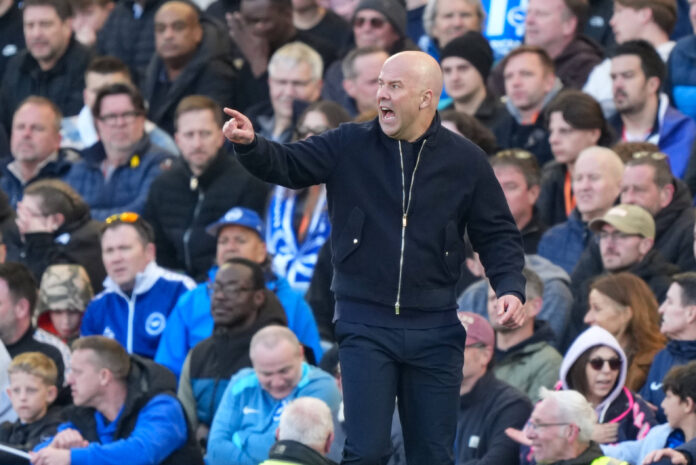

Brighton seize control in decisive second half
There are matches that drift, and then there are matches that twist. This one, played under a restless sky on the south coast, belonged firmly to the latter. Brighton found clarity when it mattered most, while Liverpool, for all their flashes, were left grappling with familiar frailties under Arne Slot.
The first half had carried the hum of balance. As noted in the original source, “there is nothing to separate the sides,” and that rang true both statistically and visually. Liverpool edged expected goals (0.81 to 0.68), yet Brighton looked the more coherent unit, their patterns sharper, their threat more deliberate.
Danny Welbeck, enjoying a season that refuses to dim with age, struck first. His movement was instinctive, his finish simple but exacting — a striker in tune with the moment. It was his 11th league goal of the campaign, and it set the tone for a Brighton side increasingly comfortable in their own skin.
Liverpool’s response came not through orchestration but opportunism. A defensive lapse from Lewis Dunk allowed Milos Kerkez to pounce, the full-back reacting quickest to lift the ball over Bart Verbruggen. As one observer put it in the original source: “It’s horrible from Brighton, but brilliant from Kerkez because he makes the run from deep.” That balance — error and anticipation — defined Liverpool’s equaliser.
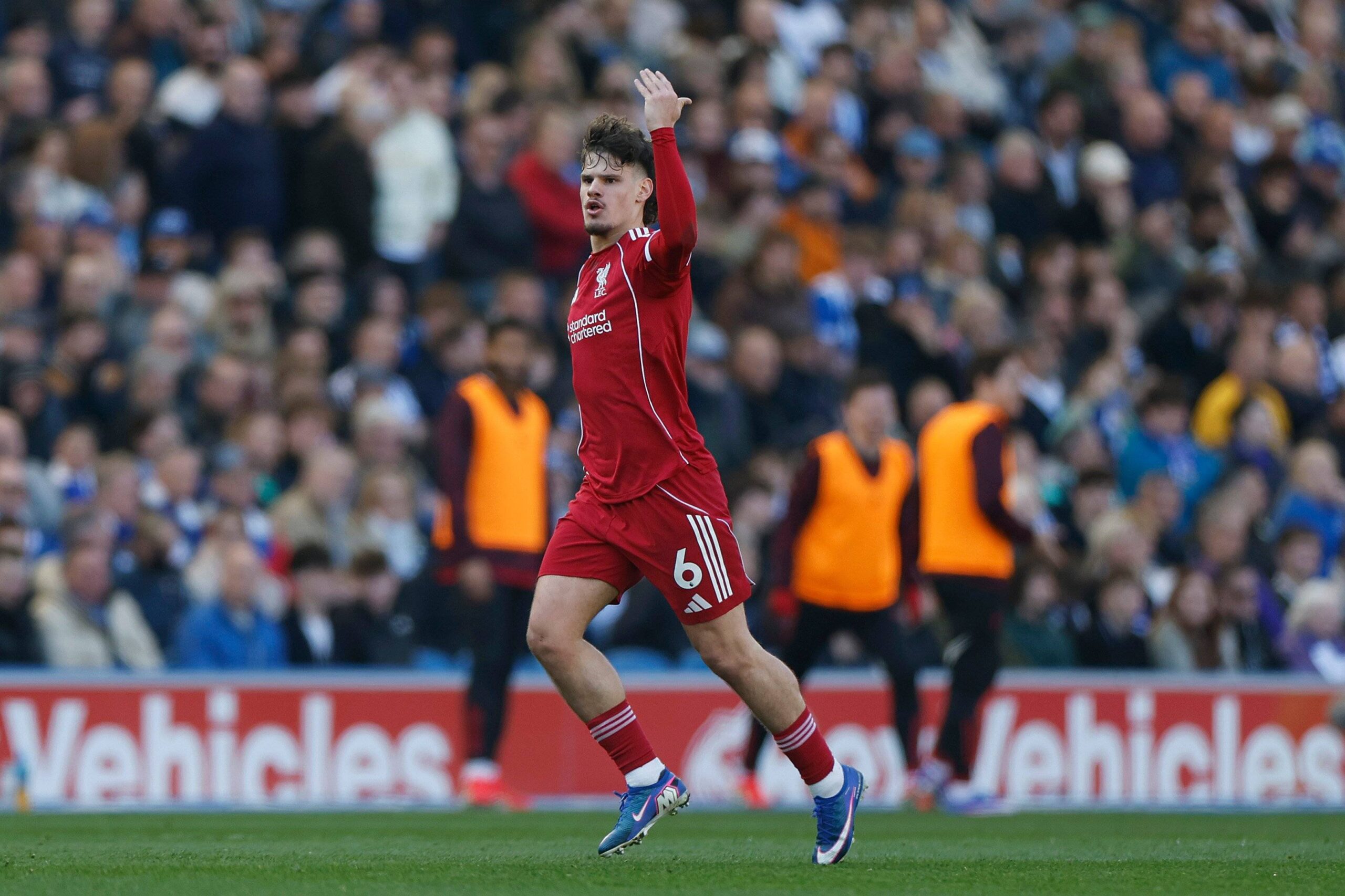
Slot’s Liverpool struggle for control
For Slot, this was a game that exposed both potential and limitation. His Liverpool side, youthful and energetic, never quite imposed themselves. Their press flickered rather than burned, and in midfield, Brighton repeatedly found pockets to exploit.
The disruption began early, with an enforced change after just eight minutes, and never quite settled. Even when Liverpool advanced, there was a sense of fragility — transitions that lacked precision, attacks that dissolved before they could properly form.
Brighton, by contrast, carried a sharper edge. Their wide players stretched the pitch intelligently, while their midfield rotated with purpose. As the second half unfolded, the balance tilted further.
Welbeck’s second goal — his 12th of the Premier League season and a personal best — arrived as both reward and warning. Brighton moved the ball with patience before delivering the decisive incision, Hinshelwood teeing up the veteran striker to finish into an empty net. The VAR check delayed celebration, but not the inevitability of the outcome.
Brighton resilience meets Liverpool urgency
Liverpool did respond, as teams with ambition tend to do. There were moments — a curling effort from Cody Gakpo, a driven attempt from Curtis Jones — that hinted at a comeback. Verbruggen, alert and composed, denied them with authority.
At the other end, Brighton threatened to close the contest entirely. Their transitions were crisp, their substitutions timely. As highlighted in the original source, “Brighton arguably have a stronger bench than Liverpool today,” and that depth told in the closing stages.
Slot turned to his bench, introducing fresh legs and attacking options, but the cohesion never quite followed. Even as Andrew Robertson combined neatly with Dominik Szoboszlai late on, Brighton’s defensive structure held firm, repelling crosses and clearing danger with conviction.
Late drama underlines Brighton superiority
The final minutes carried tension, but not quite belief for Liverpool. Cynical fouls, yellow cards, and broken momentum punctuated their efforts. Brighton managed the game with a maturity that belied their league position.
One telling statistic from the original source lingered: Brighton have conceded just 17 second-half goals this season, fewer than all but the league leaders. It spoke to their organisation — and to Liverpool’s uphill task.
As stoppage time ticked away, the Seagulls introduced reinforcements, tightened their shape, and saw out a result that felt both hard-earned and deserved.
For Liverpool, attention now turns elsewhere. A congested fixture list looms, with domestic and European ambitions still alive. Yet performances like this raise questions. Slot’s project is in motion, but not yet in control.
Brighton, meanwhile, edge closer to relevance again. A fourth win in five lifts belief and hints at a late push towards the European places. On this evidence, they are a side rediscovering rhythm — and one capable of unsettling even the league’s most storied names.