

Liverpool succession planning intensifies after Salah signal
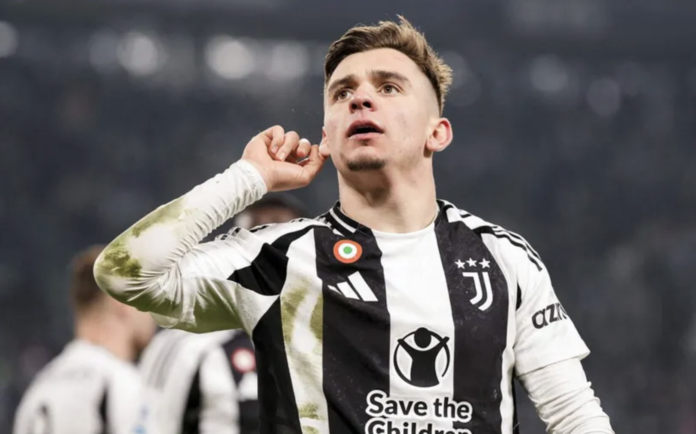
Liverpool’s long-term planning is shifting into sharper focus as the club begin to map out life beyond Mohamed Salah, with Juventus winger Conceicao emerging as a name under serious consideration.
According to Fabrice Hawkins, Liverpool have “added Francisco Conceicao to their transfer shortlist to replace Mo Salah this summer,” a move that reflects both urgency and realism inside the club’s recruitment structure. Salah’s contract situation, with his current deal running towards its final stretch, has prompted decision-makers to act early rather than react late.
Replacing Salah is not a conventional transfer task. It is a structural challenge. His output, durability and decisive influence have defined an era. Liverpool are not simply looking for a winger; they are searching for a player capable of reshaping an attacking identity.
Conceicao profile highlights attacking traits Liverpool admire
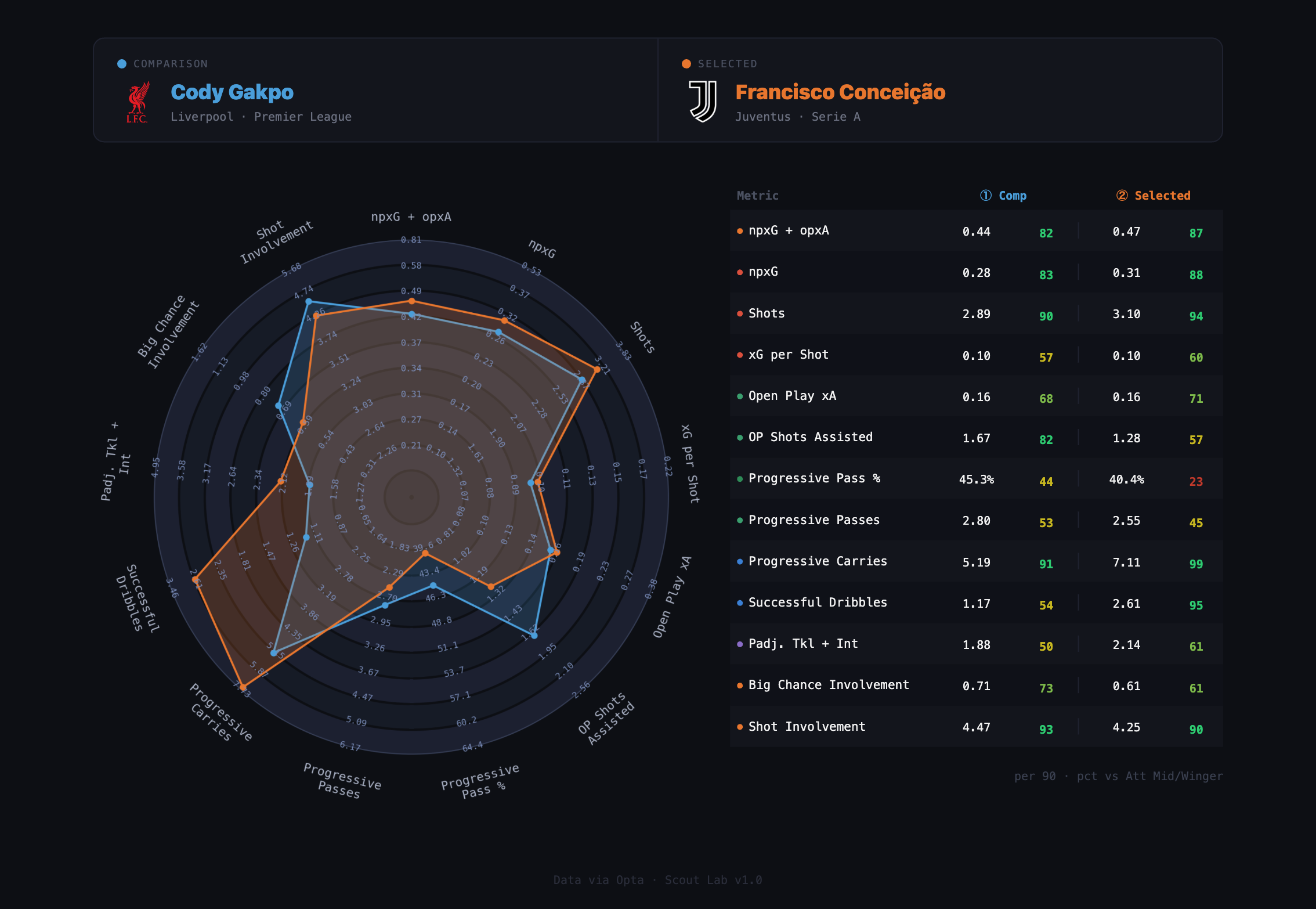
Conceicao’s statistical profile suggests a player who thrives in high-risk, high-reward attacking zones. The Portuguese winger, currently plying his trade in Serie A, has produced modest headline numbers this season, with four goals and three assists across all competitions. Yet those raw figures only tell part of the story.
Dig deeper and the data reveals why Liverpool’s analysts are paying attention. Conceicao ranks in the 93rd percentile for non-penalty expected goals, while his dribbling volume and efficiency place him among the league’s most dangerous ball carriers. Crucially, he averages 7.71 touches in the opposition box per 90 minutes, a figure sitting in the 96th percentile.
That metric alone explains the appeal. Liverpool’s system has long relied on wide forwards who can consistently penetrate central scoring areas. Conceicao, like Salah in his prime, operates less as a touchline winger and more as a penalty-box disruptor.
His left-footed profile on the right flank mirrors Salah stylistically, allowing for natural inside runs and shooting angles. It is not a coincidence; it is a deliberate alignment with Liverpool’s tactical DNA.
Output gap raises questions over immediate impact
However, the comparison with Salah quickly exposes a significant gap. Even allowing for context and development curves, the disparity in output is stark.
In Salah’s final season in Italy before joining Liverpool, he delivered 19 goals and 14 assists with significantly higher minutes. By contrast, even a projected doubling of Conceicao’s current numbers would fall well short of that benchmark.
This is where Liverpool’s recruitment philosophy will be tested. Do they prioritise immediate output, or invest in a player whose underlying metrics suggest untapped ceiling?
The original source casts doubt on Conceicao’s readiness, noting that “we’re not sure the young winger has developed enough to have a good go at stepping in for one of the top attackers of the last decade.” That assessment reflects a broader concern: replacing Salah is not just about talent, but about timing.
Transfer strategy shaped by market realities
Liverpool’s interest in Conceicao must also be viewed through the prism of market dynamics. Alternative targets such as Michael Olise are widely admired, but their availability is far from guaranteed. Clubs are increasingly resistant to losing elite attacking assets, particularly those tied to long-term contracts.
Conceicao, while still under contract until 2030, may represent a more attainable option within a constrained market. Yet “attainable” does not equate to inexpensive, nor does it guarantee suitability.
Liverpool’s recruitment model has historically balanced data with character, trajectory and adaptability. Conceicao ticks several analytical boxes, particularly in terms of ball progression and attacking aggression. What remains uncertain is whether he can translate those qualities into consistent end product at Premier League level.
Future beyond Salah demands calculated risk
Liverpool are entering a transitional phase that demands both courage and precision. The post-Salah era cannot be defined by a like-for-like replacement; it will require a reimagining of roles, responsibilities and attacking patterns.
Conceicao represents one possible pathway. He is dynamic, technically assured and statistically promising. Yet he is also unproven at the level Liverpool will demand.
The decision, ultimately, is not whether he can replace Salah overnight. It is whether he can evolve into a player capable of carrying that weight over time.
For Liverpool, the margin for error is narrow. The succession plan must not only acknowledge Salah’s legacy but also anticipate the next evolution of the team.