

Liverpool at a Crossroads: FSG Strategy, Alonso Links and Slot Uncertainty
Liverpool’s season may still be unfolding on the pitch, but behind the scenes, the campaign is already being dissected and, in many respects, written off. The priority is stark: secure Champions League qualification and stabilise the club’s trajectory. Everything else has been parked.
What emerges from the original source Romain Molina is a club in strategic flux. Fenway Sports Group (FSG) had, until recently, pursued an ambitious multi-club ownership model. The return of Michael Edwards in an overarching football role was designed to drive that vision. Yet, as the source outlines, that structure now looks increasingly redundant without additional clubs under the umbrella.
The reality is blunt. More than 25 clubs were assessed, from France to Spain, with negotiations reportedly advancing in some cases. However, financial prudence ultimately prevailed. The reluctance to invest heavily in loss-making clubs reflects a broader recalibration within FSG—less speculative expansion, more controlled sustainability.
That tension has created a structural overlap. With both a director of football and a sporting director in place, questions are being asked internally about efficiency and purpose. Contracts running until 2027 add another layer of urgency, particularly as dissatisfaction begins to leak into the public domain.
Alonso Emerges as Central Figure
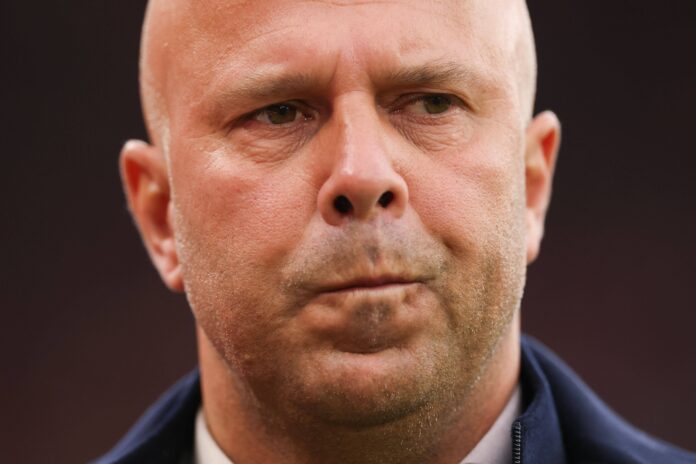
Attention is already shifting towards the dugout. Arne Slot’s position, while supported publicly, appears increasingly fragile in the longer term. The hierarchy’s admiration for Xabi Alonso is no secret, and the groundwork for a potential transition has been laid over time.
Romain Molina’s insight from the original source captures the situation clearly:
“Liverpool already know that the current project will not continue as it is. There is a desire to move towards something different, and that includes the coach. Internally, they have been convinced for a long time by Xabi Alonso. They believe that with the current squad, its versatility and potential, he would be the ideal figure to take control. Slot, in all likelihood, will not be on the bench next season.”
That statement underscores a fundamental shift. This is not merely about results—it is about identity. Alonso represents a stylistic evolution, one aligned with a more fluid, tactically adaptable squad.
Recruitment Strategy Signals Shift
Liverpool’s recruitment approach is also under review. The previous window, while not a failure outright, has been criticised internally for lacking balance. Certain positions remain under-resourced, particularly in defence and defensive midfield, while others appear overcrowded.
Injuries have exposed those weaknesses. Overreliance on key players has led to physical strain and inconsistency, forcing the club to rethink squad composition. The intention now is twofold: reinforce critical areas and streamline surplus options.
There is also a renewed emphasis on youth. The club had explored signing younger prospects, but Brexit-related restrictions have complicated that pipeline. This partly explains the push for a feeder club within a multi-club system—an idea now on hold.
Instead, Liverpool are expected to target players aged 18–20 who can develop within the first-team environment. This represents a subtle but important shift away from purely established signings towards a hybrid model of immediate impact and long-term growth.
Champions League Stakes Shape Decisions
Everything ultimately hinges on Champions League qualification. Financially and competitively, it remains non-negotiable. Missing out would not only limit transfer flexibility but also weaken Liverpool’s appeal in the market.
As the original source puts it, the club does not expect miracles this season, particularly in Europe, but finishing strongly in the league is essential. It is about preserving momentum and ensuring that a transitional year does not spiral into a damaging one.
FSG’s measured approach reflects that reality. Investment will come—but only within a framework that guarantees return and sustainability. This is not a club preparing for reckless overhaul; it is one attempting to recalibrate with precision.
The coming months, therefore, will be decisive. From boardroom restructuring to managerial succession and squad evolution, Liverpool are entering a defining phase. The noise from behind the scenes suggests one thing clearly: change is not just possible—it is already in motion.