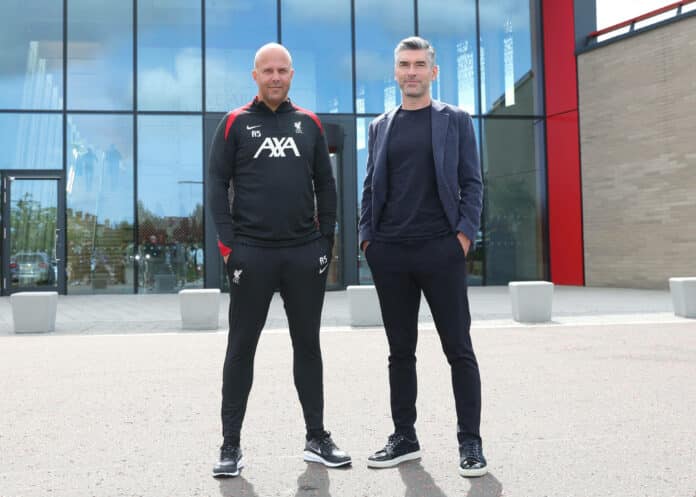

Richard Hughes future questioned in Liverpool discussion
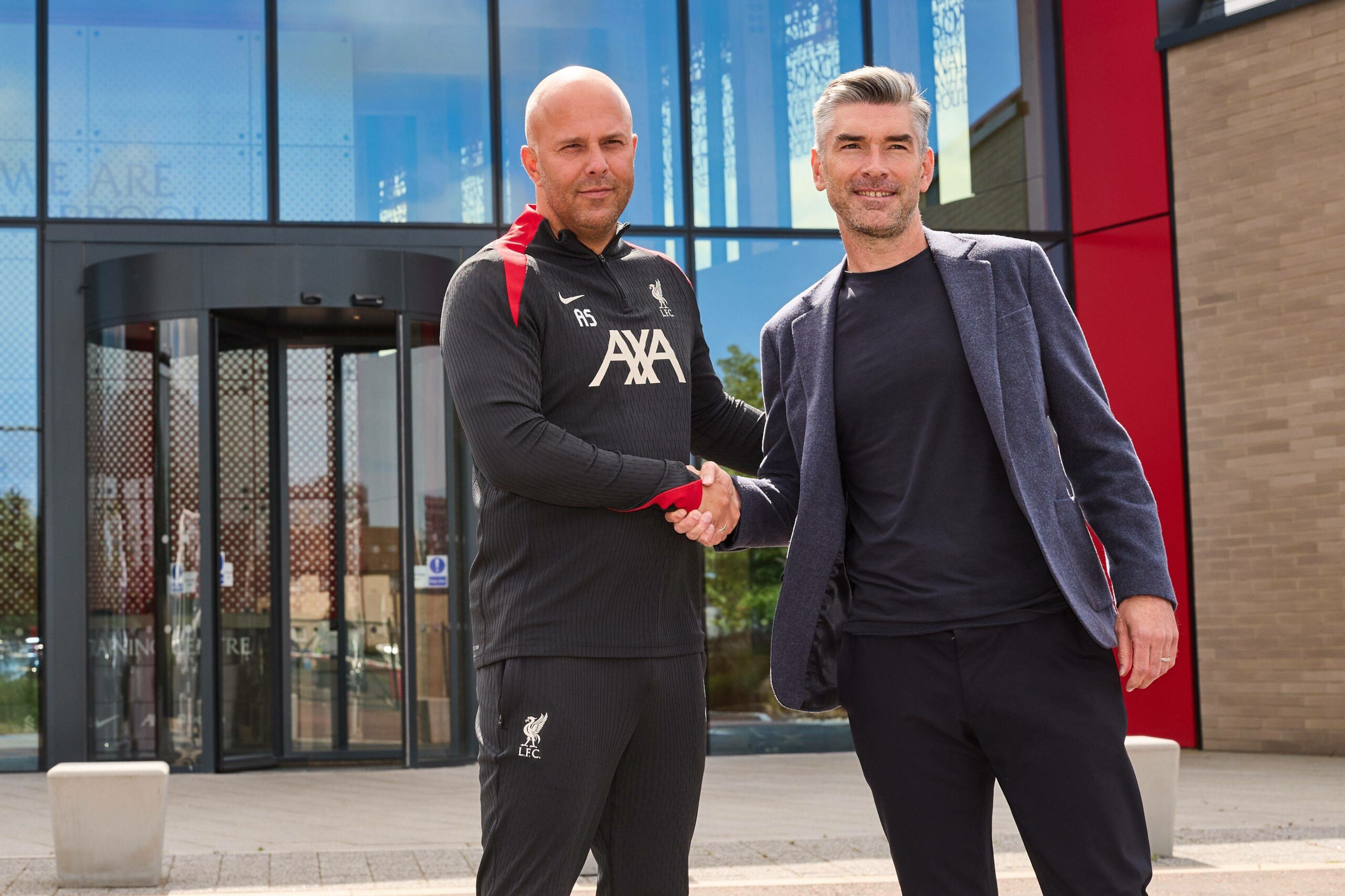
Uncertainty around Richard Hughes’ long term role at Liverpool has emerged as a talking point following comments analysed on the Anfield Index Media Matters podcast.
Featuring Dave Davis and David Lynch, the discussion explored reports suggesting Hughes may only remain at the club for a fixed period, raising wider questions about continuity and long term planning.
Concerns over short term structure
Reacting to reports that senior figures could be working on limited contracts, Lynch admitted his uncertainty. “It’s an interesting one,” he said, before questioning the broader logic behind such an approach.
His main concern centred on stability. “Surely we talk about the idea of the sporting director is supposed to bring consistency,” Lynch explained, highlighting the traditional purpose of the role within modern football structures.
If Hughes were to depart after a short spell, that consistency could be undermined. Lynch asked, “how does that work then if you’re changing your sporting director after three years”.
Liverpool planning and continuity doubts
The issue becomes more significant when viewed in the context of Liverpool’s current transition. With Arne Slot leading a new era, the expectation would typically be for alignment between manager and sporting director over a longer cycle.
Lynch raised exactly that concern, questioning “where’s the consistency?” if key figures are rotated frequently. For a club aiming to build sustainably, that lack of continuity could create instability in recruitment and squad development.
He expanded further, suggesting that constant change at executive level risks disrupting long term planning. “You might as well just have a manager overseeing it,” he said, pointing out the contradiction in maintaining a structure that does not deliver stability.
Uncertainty around Liverpool leadership model
The discussion also touched on how unusual such an arrangement would be. Lynch described the idea of a fixed term sporting director as “very very strange”, particularly given the expectation that the role should provide a steady strategic direction.
While acknowledging that reports may hold some truth, he remained sceptical about the long term implications. “I don’t really understand that,” he admitted, reflecting the lack of clarity around Liverpool’s internal planning.
There is also the question of succession. If Hughes were to leave after a defined period, Liverpool would face another transition at executive level, potentially resetting relationships and recruitment strategies.
Wider implications for Liverpool strategy
For Liverpool, this debate is not just about one individual. It reflects a broader question about how the club intends to structure its leadership moving forward.
Lynch highlighted the risk of inconsistency, warning that frequent changes could lead to shifting ideas and priorities. “The new person will think a different thing and then you’ve got to build a new relationship with the new manager”.
Such a cycle could slow progress at a time when clarity and direction are essential. With squad evolution, recruitment, and performance all under scrutiny, stability behind the scenes becomes increasingly valuable.