

Leadership vacuum growing at Anfield
Liverpool stand on the brink of a subtle but significant transition. Leadership, that invisible architecture underpinning elite teams, is shifting, thinning, and in places, eroding. According to reporting from the Athletic, where James Pearce has closely tracked developments, the club are already preparing for the departure of two influential figures in the dressing room. That reality alone sharpens the focus on Alisson and his role within the squad.
Pearce notes that “leadership is not something you can simply replace in a transfer window”, a sentiment that cuts to the heart of Liverpool’s current dilemma. In modern football, armbands and slogans carry less weight than presence, consistency, and trust. Liverpool’s recent success was built on a spine of personalities who drove standards daily. Remove too many of those voices at once, and the consequences ripple far beyond tactics.
This is where Alisson becomes central. Not merely a goalkeeper of elite reflexes and composure, but a cultural anchor. Letting him leave, in the current climate, would not just weaken Liverpool between the posts, it would risk destabilising the dressing room hierarchy.
Alisson’s influence beyond goalkeeping
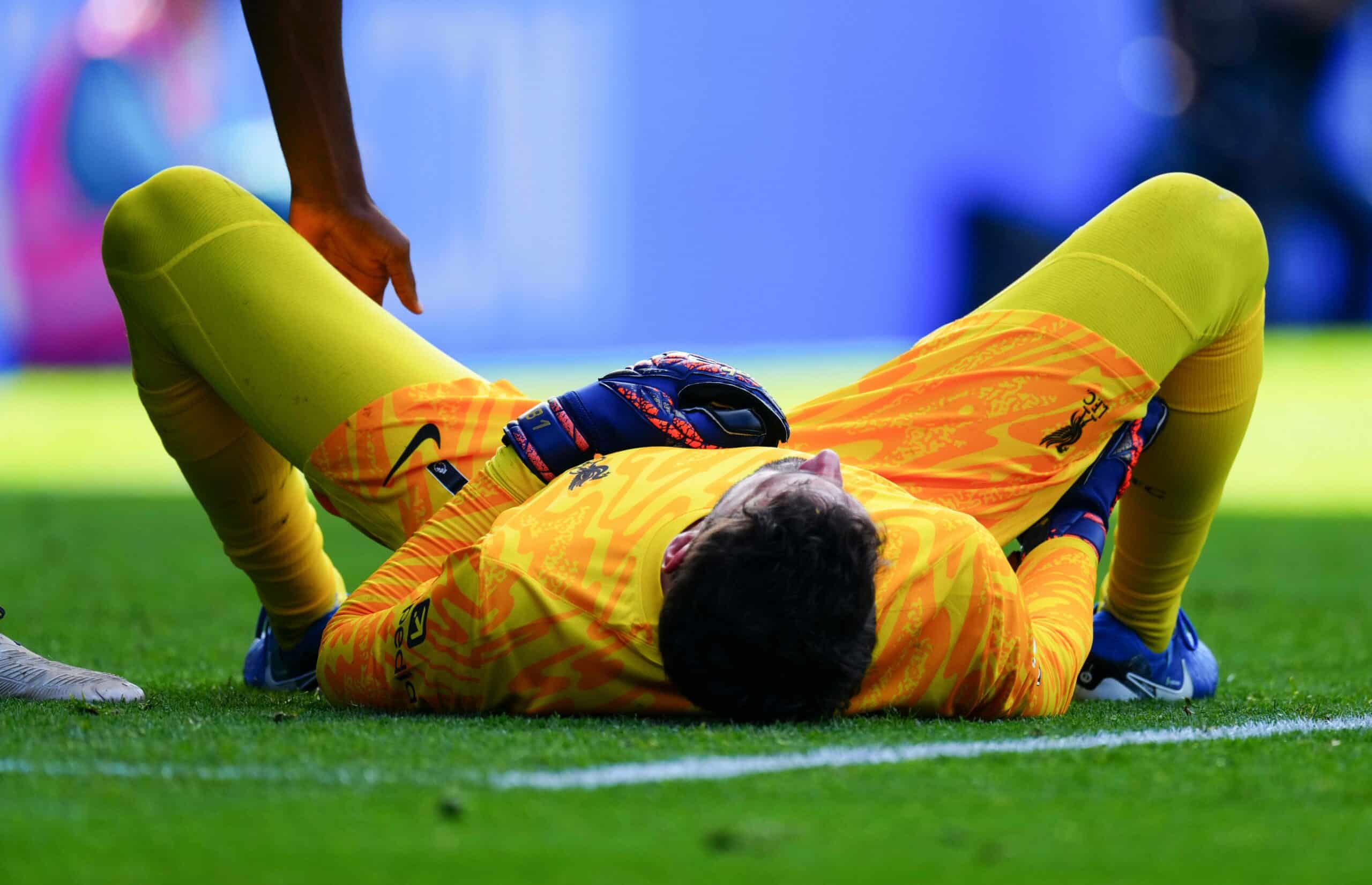
Alisson’s contribution has long transcended shot-stopping. He is, as Pearce describes, “a calming authority, someone whose presence settles those around him”. That influence is particularly vital in high-pressure moments, where leadership is expressed not in speeches, but in composure.
Goalkeepers often operate on the periphery of leadership conversations, yet at Liverpool, Alisson has been integral. He communicates relentlessly, organises the defensive line, and sets emotional tone. When matches tilt towards chaos, he restores order. These are not easily quantifiable attributes, but they are decisive.
Pearce highlights that “within the squad, Alisson is viewed as one of the natural leaders, regardless of official titles”. That insight underscores why any consideration of his departure carries risk. Leadership is not simply about replacing a player with similar ability. It is about replicating influence, and that is far more complex.
Liverpool’s recruitment model excels at identifying talent, but even the most sophisticated data cannot fully measure personality, resilience, or authority. Those qualities reveal themselves over time, through adversity and success alike. Alisson has already proven his.
Strategic risks of allowing departure
Allowing Alisson to leave in the same window as other senior figures would represent a strategic gamble. Football history is littered with examples of teams that underestimated the cumulative effect of losing leaders. Performance dips often follow, not immediately, but insidiously.
Pearce warns that “losing multiple leaders at once can create a void that takes years to fill”. This is particularly relevant for Liverpool, whose recent identity has been shaped by collective belief and internal accountability. Strip away too many experienced voices, and younger players are forced into leadership roles prematurely.
There is also the tactical dimension. Alisson’s style enables Liverpool’s defensive structure. His ability with the ball at his feet supports build-up play, while his positioning allows a higher defensive line. Replacing him is not simply a case of finding another top goalkeeper, it requires recalibrating the entire system.
From a squad-building perspective, continuity matters. Leadership transitions are most effective when staggered, allowing new figures to emerge organically. Compress that process into a single summer, and instability becomes a genuine concern.
Pearce perspective on squad evolution
James Pearce’s analysis in the New York Times’ Athletic offers a clear warning. “Liverpool must be careful not to undervalue what Alisson brings off the pitch as well as on it,” he writes. That dual contribution is precisely what makes this decision so consequential.
Pearce also points out that “elite teams manage succession gradually, not abruptly”. It is a principle observed at the most successful clubs across Europe. Evolution, not revolution, tends to sustain competitiveness.
For Liverpool, the question is not whether change is necessary. It is inevitable. The question is timing and balance. Retaining Alisson, at least in the short term, would provide stability while the next generation of leaders matures. It would buy time, something invaluable in football’s relentless cycle.
In the broader narrative of Liverpool’s future, this is a defining moment. Leadership cannot be rushed, nor easily replaced. Alisson embodies both performance and presence, a rare combination. Letting that go, particularly now, would not just be a transfer decision. It would be a statement about how Liverpool intend to navigate their next chapter.