

No More Hiding: The Excuses Must End at Old Trafford
There comes a point in every failing season where context no longer matters. Injuries, transition, and adaptation—these are all valid explanations in isolation. But when repeated endlessly, they become something else entirely.
They become excuses.
Heading into this clash with Manchester United, Liverpool will be without Mohamed Salah, Hugo Ekitike, and Conor Bradley. That is not insignificant. Salah, in particular, is irreplaceable in terms of output and influence. But even with those absences, what remains available to Arne Slot is far from a weakened, unrecognisable squad.
This is still a team packed with international quality.
Alisson Becker is expected to return, restoring authority between the posts. The back line, led by Virgil van Dijk and Ibrahima Konaté, is first-choice. The midfield—Alexis Mac Allister, Ryan Gravenberch, Dominik Szoboszlai—has been consistently available. And the forward line could still feature Alexander Isak, Florian Wirtz, and Cody Gakpo.
That is not a team crippled by injury.
That is a team expected to compete—and more than compete—at Old Trafford.
Which is why the narrative being pushed simply does not hold.
This idea of a “transitional season” has been stretched far beyond credibility. Transition does not excuse poor structure. It does not excuse a lack of patterns of play. And it certainly does not excuse a side that looks less coached as the months pass.
The reality is uncomfortable, but it is unavoidable. Liverpool has regressed. And the manager must own that.
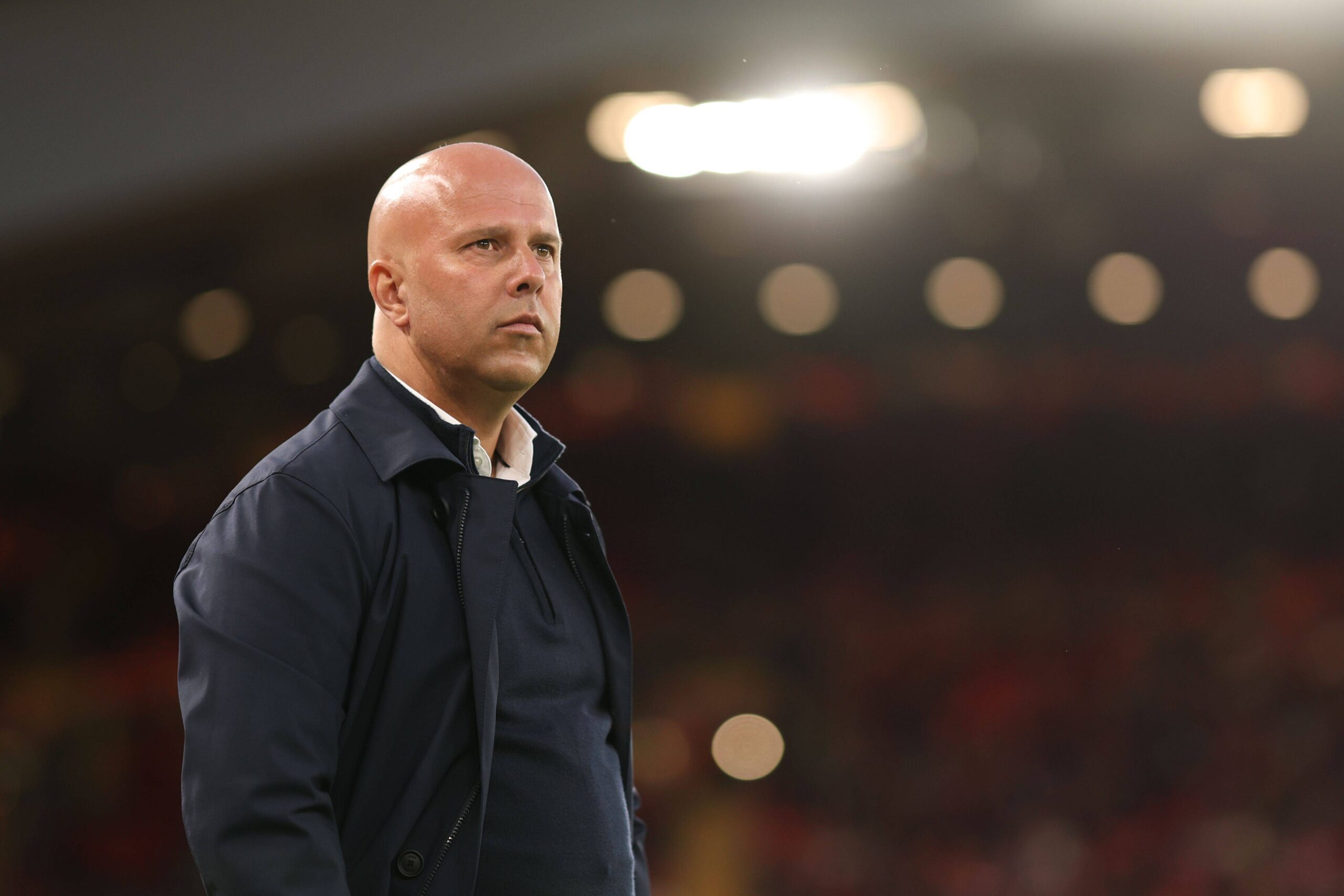
A Line in the Sand for Arne Slot
This is no longer about long-term planning. It is about present-day accountability.
Arne Slot has now had over a year to implement his ideas, his structure, his identity. Yet what we continue to see is a team that looks disconnected, underprepared, and uncertain in almost every phase of play. The spacing is wrong. The pressing is inconsistent. The build-up lacks cohesion.
These are coaching issues. And they have persisted for far too long.
Even more concerning is the messaging. The press conferences, the repeated references to transition, to injuries, to needing time—these no longer resonate. Supporters are not blind. They can see the quality available. They can see the lack of progression. And they are growing tired of hearing the same explanations.
This fixture, therefore, becomes something far more significant than just another league game. It is a test of credibility.
Manchester United, under interim leadership, have shown organisation, fight, and clarity—qualities Liverpool once embodied under Jürgen Klopp. If Liverpool go to Old Trafford and are once again outrun, outworked, and outclassed, then the questions surrounding Slot will no longer be theoretical.
They will be definitive. Because this is not a one-off scenario. This is a pattern.
Heavy defeats to elite sides. Disjointed performances. A visible lack of tactical identity. These are not symptoms of transition—they are indicators of something deeper.
And if that continues here, against a direct rival, in a high-stakes environment, then the decision-makers above him will have little choice.
This is why the excuses must end now.
Liverpool is not the underdog in the way they are being framed. Not with this squad. Not with this history. Not after dominating this fixture for years under the previous regime.
They should be competitive. They should be organised. And they should be capable of winning.
Anything less—particularly another passive or chaotic performance—will only reinforce what many are already beginning to accept.
That this tenure is nearing its end. This is not about being “Slot out.” It is about being “Liverpool in.”
About demanding standards. About expecting more from a group that is capable of far better. About refusing to accept regression dressed up as transition. The time for words has passed. At Old Trafford, only actions matter.
And if those actions fall short once again, then the consequences should—and likely will—follow.