Mohamed Salah’s Liverpool Warning Cuts Through Old Trafford Defeat
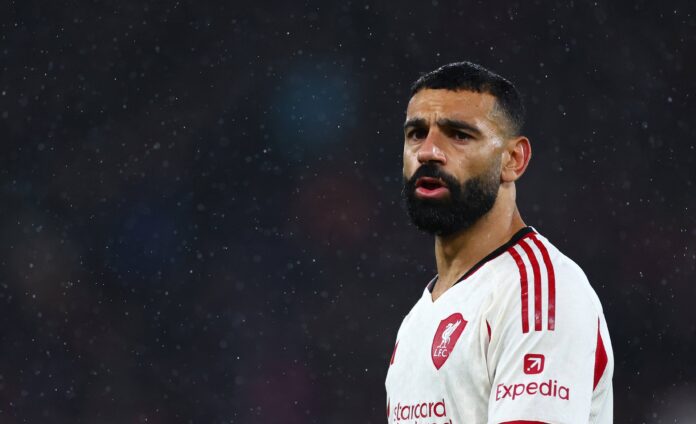
Mohamed Salah’s final weeks as a Liverpool player are beginning to feel less like a farewell tour and more like a warning siren. His appearance at Old Trafford, late, injured and watching from the directors’ box, carried a symbolism no Liverpool supporter could miss.
As Paul Joyce of The Times noted, Salah “would have instinctively known what the noise pursuing him out of Old Trafford meant.” That noise was the sound of another Liverpool collapse, another damaging defeat, another reminder that standards have slipped alarmingly.
Liverpool’s 3-2 defeat to Manchester United was their 18th loss of a chaotic campaign, their highest total across all competitions since 2014-15. For a club that once treated defeat as an affront, that number feels brutal.
Salah’s Standards Question Feels Damning
Salah’s concern about who becomes the “example” after his departure should land heavily inside Anfield. Joyce wrote that the Egyptian has “already voiced” those worries to Liverpool’s hierarchy, particularly around “who, if anyone, will step up” once he leaves.
That phrase matters. This was not simply a superstar talking wistfully at the end of an era. It sounded like a player looking around the dressing room and wondering whether enough of Liverpool’s winning culture remains.
Joyce’s line that Salah “cast doubt on whether an entire culture is ebbing away” felt especially sharp. Liverpool’s best years were built on talent, yes, but also on standards passed from player to player. When that chain breaks, results can unravel quickly.
Old Trafford Exposed Familiar Weaknesses
Arne Slot said Liverpool “fell into a trap” when they conceded early goals to Matheus Cunha and Benjamin Sesko. That may explain some of the tactical chaos, but not all of it.
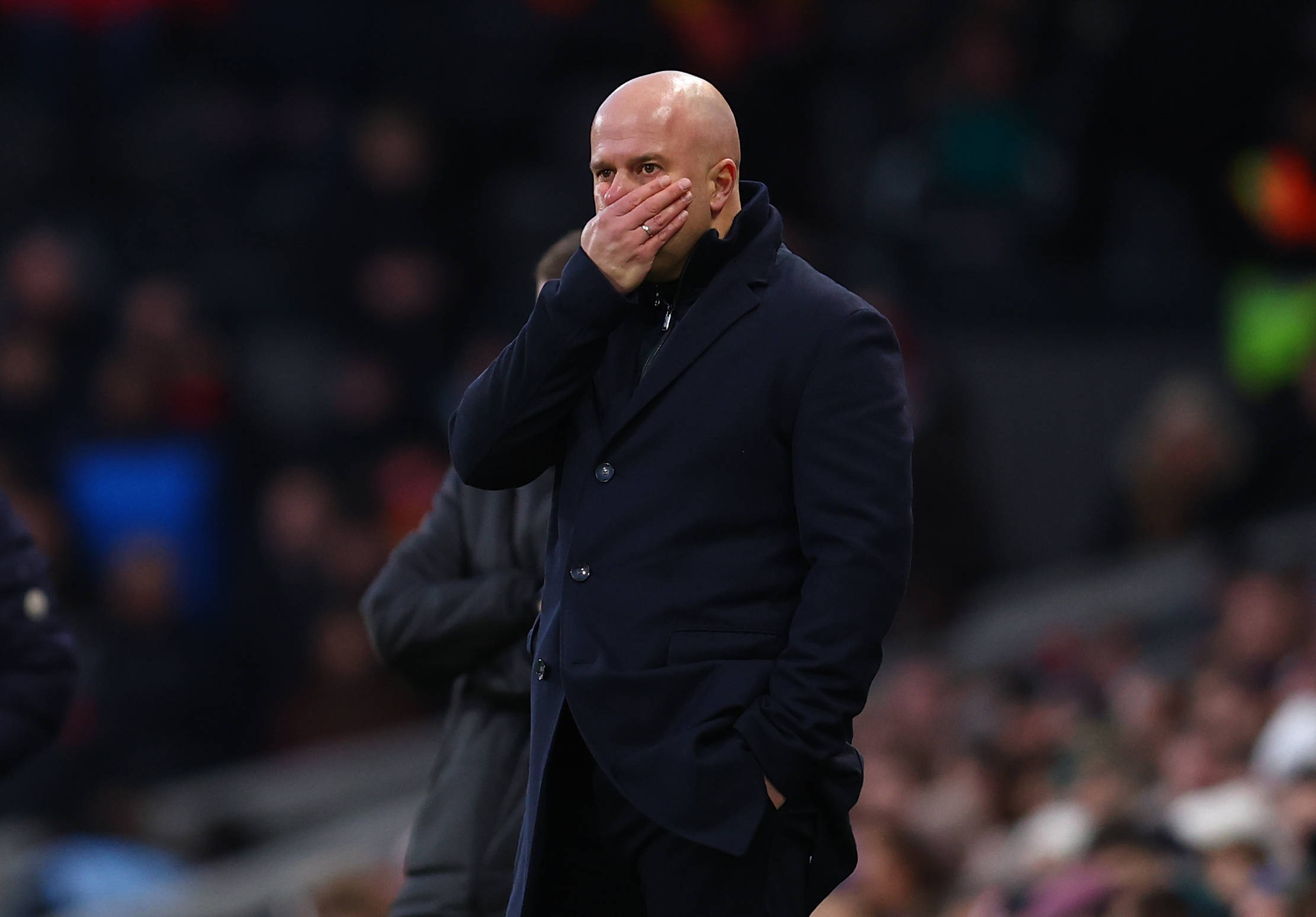
Joyce was right to point out that United were “breaking forward at will in the opening 45 minutes.” That is not merely a structural issue. It is about concentration, anticipation and aggression.
Slot later lamented his players “not picking up the second balls”, and that phrase almost summarises Liverpool’s season. Second balls are not glamorous. They are not about clever patterns or stylish football. They are about appetite. Too often, Liverpool have looked short of it.
Brief Revival Could Not Mask Fragility
There was a flicker after half time. Dominik Szoboszlai’s slaloming run and finish lifted the mood. Cody Gakpo’s equaliser brought Salah to his feet. For a moment, Liverpool looked like they might find something from the wreckage.
Then the old flaws returned.
Joyce observed that “all of that renewed optimism vanished” soon after Salah left his seat. That felt almost too neat, yet painfully fitting. Liverpool’s belief seemed to drain away with him.
The most troubling statistic is that Liverpool have fallen behind, equalised and then lost seven times in the league, eight overall. That points to fragility, poor control and an absence of leadership when matches reach their decisive moments.
Slot Faces Cultural Rebuild
Injuries have clearly hurt Liverpool. Alexander Isak’s absence mattered, as did the wider lack of attacking options. Yet Joyce’s broader conclusion was impossible to dismiss: “there is also a lack of quality. In defence, in midfield and in attacking areas.”
That is the real scale of Slot’s challenge. He does not simply need a tactical reset. He needs leaders, authority and a dressing room capable of setting its own standards.
Salah leaving removes goals, aura and fear factor. More worryingly, it may remove one of the last players who truly understands what elite Liverpool looked like from the inside.
Our View – Anfield Index Analysis
From a Liverpool fan’s perspective, Joyce’s analysis hurts because it feels true. The issue is not simply losing at Old Trafford. Supporters can absorb defeats when there is fight, clarity and direction. What is harder to accept is the sense of drift.
Salah’s comments about the “bond of the team” changing feel huge. He has been inside the culture that made Liverpool champions of England, Europe and the world. If he is worried about standards, then fans have every right to be worried too.
The most alarming part is how often Liverpool respond, briefly recover, then still lose. That is not bad luck. That is a team without control when the pressure rises. Seven league defeats after equalising is a statistic that screams softness, but also confusion.
Slot deserves context. Injuries have been cruel. The death of Diogo Jota clearly cast a shadow over the season. But Liverpool still need to look brutally at the squad. Who leads? Who demands more? Who sets the tone when Van Dijk and Salah are no longer the reference points?
Salah leaving was always going to hurt emotionally. The bigger fear is that Liverpool are losing more than a forward. They are losing a standard bearer, and nobody has yet looked ready to inherit that responsibility.