

Identity crisis deepens after Man Utd clash
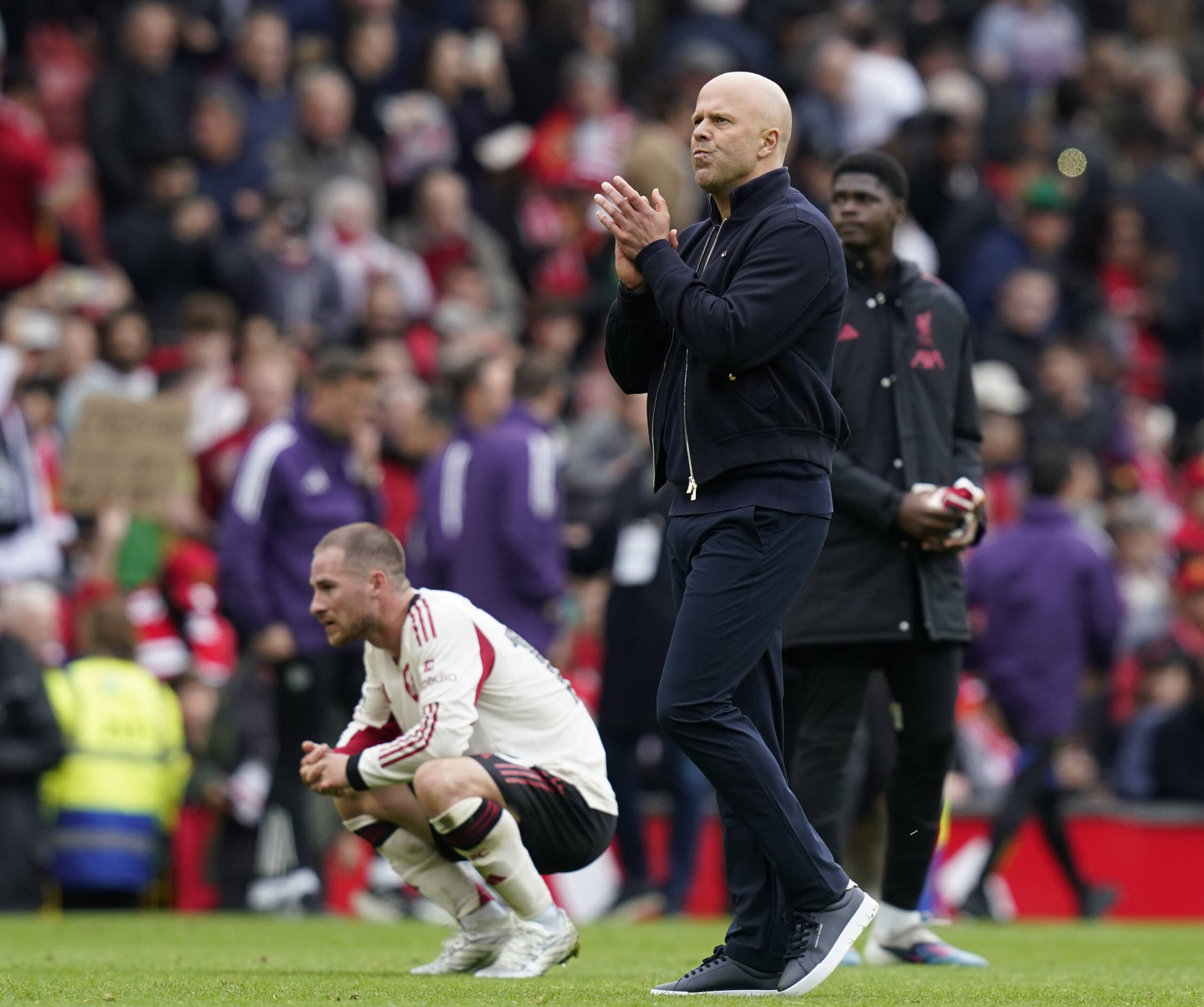
There are defeats that sting, and there are defeats that expose. Liverpool’s 3-2 loss to Manchester United at Old Trafford belongs firmly in the latter category. It was not merely the concession of three goals or the surrender of control in key phases, but the absence of a recognisable identity that has set alarm bells ringing.
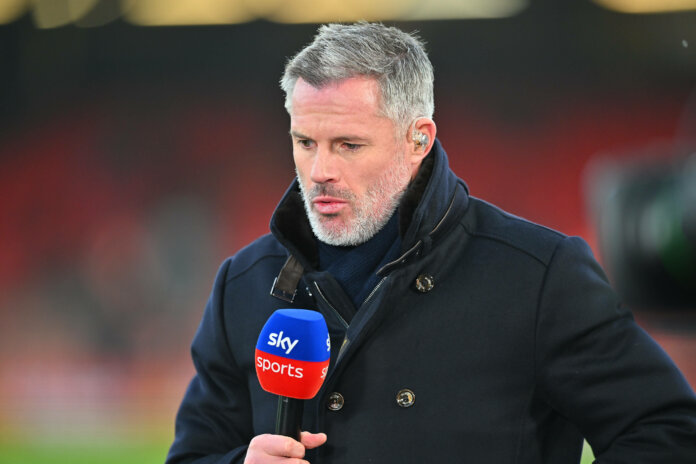
Speaking in the aftermath, Jamie Carragher did not dress it up. He described a side struggling to define itself under Arne Slot, questioning whether the current iteration has drifted too far from the blueprint laid down by Jurgen Klopp.
Liverpool once played with a ferocity that felt almost mechanical in its precision. Pressing triggers were automatic, transitions ruthless, and the structure unmistakable. Now, against Man Utd, those hallmarks appeared blurred. There were moments of promise, but they arrived in isolation rather than as part of a cohesive system.
Carragher questions direction and recruitment
Carragher’s critique cut deeper than a single result. His concern lies in the trajectory. “I look at this team and I’m not sure what they are trying to be,” he said, reflecting on a performance that oscillated between controlled possession and chaotic defending.
His comments extended to recruitment strategy, particularly around Florian Wirtz, a player long linked with a move to Anfield. Carragher noted, “Wirtz is a top talent, no doubt, but where does he fit into this Liverpool team right now? That’s the bigger question.”
It is a telling observation. Wirtz represents flair, creativity, and a certain continental elegance. Yet Liverpool’s historic strength has been rooted in intensity and collective structure. Integrating such a profile requires clarity of system, something Carragher suggests is currently lacking.
Tactical imbalance evident against Man Utd
Against Man Utd, the imbalance was clear. Liverpool controlled possession spells but lacked incision in the final third. Meanwhile, their defensive transitions were alarmingly open, allowing United to exploit space with relative ease.
The midfield, once the engine room of Klopp’s dominance, appeared caught between roles. Was it tasked with dictating tempo or pressing aggressively? The answer seemed to change from minute to minute. That uncertainty filtered through the entire side.
Man Utd, by contrast, played with a defined plan. They absorbed pressure, broke quickly, and capitalised on Liverpool’s disorganisation. It was not flawless, but it was coherent. And in elite football, coherence often trumps ambition without structure.
Questions facing Slot’s Liverpool evolution
Slot’s challenge is not simply to win matches but to establish a clear footballing identity. The transition from Klopp was always going to be complex, but the current ambiguity risks undermining the squad’s strengths.
Carragher’s warning should not be dismissed as nostalgia. It is rooted in tactical observation. Liverpool do not need to replicate Klopp’s system, but they do need a system that players and supporters can recognise.
The discussion around Wirtz encapsulates this dilemma. Is he the missing creative link, or another piece that does not quite align with the emerging puzzle? Without a defined framework, even elite talent can become miscast.
As the season unfolds, results will matter, but so too will the manner of performances. Liverpool supporters are accustomed to intensity, clarity, and purpose. Against Man Utd, those qualities were fleeting.
Slot has time, but not unlimited patience from a fanbase shaped by recent success. The coming weeks will reveal whether this Liverpool side can rediscover its identity or continue to drift in uncertain waters.