
Liverpool’s Academy Pathway Has Quietly Disappeared
One of the great strengths of Liverpool under Jürgen Klopp was never winning trophies. It was building value throughout the football club. Young players emerged from the academy, stepped into the first team environment, contributed when called upon, and in many cases either became squad assets or generated major transfer income.
That cycle mattered.
Liverpool became one of the smartest clubs in Europe at maximising academy production. Caoimhín Kelleher evolved into a high-value backup goalkeeper. Jarell Quansah rapidly rose from youth football into a first-team contributor. Harvey Elliott maintained strong market value despite fluctuating involvement. Even Tyler Morton, with very limited senior opportunities, still carried enough exposure and development to secure a substantial move abroad. That does not even touch on what was developed and sold for huge profit before Arne Slot arrived.
There was visibility. There was integration. There was trust.
Under Arne Slot, that pathway appears to have collapsed entirely this season.
This term, Liverpool’s youth structure has felt disconnected from the senior side in a way that is both alarming and financially damaging. At times, it genuinely feels like the current head coach has little awareness of what is happening beneath the first-team level. Players dominating under-21 football are barely acknowledged. Young talents are training without any realistic route upward. Opportunities have become so limited that stagnation now feels inevitable.
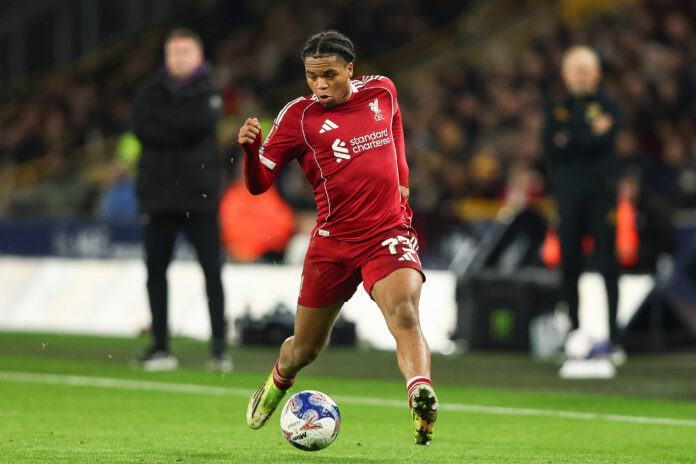
Rio Ngumoha is the one exception, but even that feels reluctant rather than intentional.
Despite his obvious talent and explosiveness, his minutes have still been heavily restricted. And when he has played, it has often felt driven more by injuries and necessity than by genuine developmental planning.
That is not sustainable for a club built around internal progression. Because youth integration is not charity. It is a strategy. And Liverpool is now paying the price for abandoning it.
https://twitter.com/anfieldwatch/status/1748009853627650084?s=46&t=rxgukmqdoXc4muVFLSx2EQ
A Financial Problem Created by Coaching Failure
This issue extends far beyond football philosophy. It directly impacts Liverpool’s financial model.
For years, Liverpool has relied on intelligent squad churn to maintain competitiveness without reckless spending. Developing academy players into sellable assets is a huge part of that strategy. It allows the sporting department to reinvest without constantly relying on ownership cash injections.
But that only works if players are visible.
A young player with ten senior appearances immediately carries more value than one hidden entirely within academy football. Exposure creates market confidence. Clubs buy potential when they see evidence that it can survive at the senior level.
This summer, Liverpool may find that several academy players have dramatically lower market value than expected simply because they have not been showcased under Slot.
That hurts Richard Hughes. It hurts Michael Edwards. And ultimately, it hurts Liverpool’s transfer flexibility.
When young players are frozen out, you do not just lose development time—you lose millions.
And this is where the criticism toward Slot becomes unavoidable.
Managers at elite clubs must operate in alignment with the wider structure. Klopp understood that. Even when chasing trophies, he consistently integrated young talent into the squad ecosystem. He created belief throughout the academic levels because players could see a pathway.
Right now, that pathway looks blocked.
Worse still, the disconnect feels cultural. There appears to be very little relationship between the first team and the academy structure. Fans notice it. Staff notice it. And internally, it creates frustration throughout the football club.
Liverpool’s academy remains one of the strongest in England, but its purpose is being diminished by a manager who appears unwilling—or unable—to utilise it properly.
That is another reason why this upcoming end-of-season review feels so decisive.
Because Liverpool is not just evaluating results. They are evaluating leadership, structure, and alignment across every layer of the club.
And when the first team becomes disconnected from the academy, disconnected from supporters, and disconnected from the wider sporting strategy, problems begin to spread everywhere.
This is no longer just about tactics or league position. It is about a football club losing internal cohesion. And the cost of that reaches far beyond the pitch.