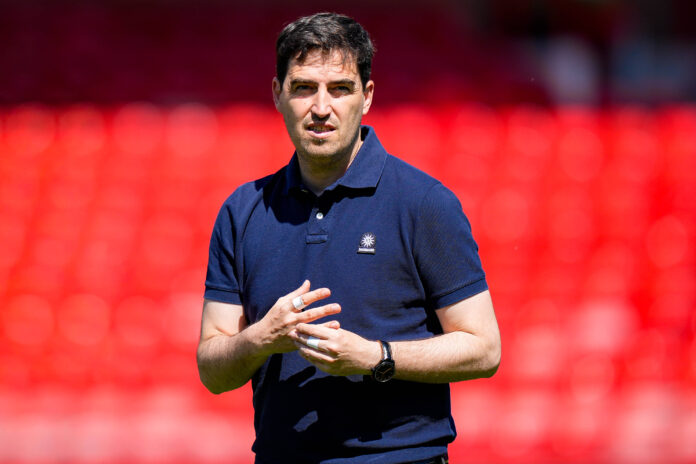

Liverpool do not need to pretend the Klopp years can be recreated. That would be the wrong starting point. The club has already moved through one version of that change with Arne Slot, who arrived after Jürgen Klopp and delivered success quicker than many expected, including a Premier League title in 2024/25. Now the next step is different again, with Andoni Iraola confirmed as Liverpool’s new head coach ahead of the 2026/27 season.
That does not mean Liverpool should become cold, slow or overly tidy. The best Liverpool teams have always had a bit of danger in them. The crowd feeds off it. A loose ball chased down near the Kop. A full-back winning a tackle he had no right to win. A forward pressing the goalkeeper until a simple clearance becomes a throw-in. That is the kind of football Anfield recognises before the scoreboard even changes.
There is always a temptation in a new era to talk about control as if it means removing risk. Liverpool cannot afford that. Iraola’s Bournemouth sides were not passive. They pressed high, forced hurried passes and were brave enough to leave space behind if it meant winning the ball closer to goal. That is one reason his move to Anfield makes sense. Liverpool fans can accept a new shape, new patterns and new voices in the dressing room, but they will not warm to football that feels safe for the sake of it.
That edge is also what makes Liverpool such a different club to cover, watch and debate. Whether supporters are arguing over the midfield balance, the next signing or even seeing Liverpool mentioned alongside brands such as Betwright casino in wider football media, the conversation around the club is rarely quiet. Liverpool do not exist in neutral. Every change is judged through emotion, memory and expectation.
Iraola Cannot Copy Klopp, but He Can Keep the Aggression
The biggest mistake would be trying to make Iraola sound like Klopp with a different accent. Klopp’s Liverpool was built on personality as much as tactics. The fist pumps, the touchline sprinting, the bond with the Kop and the sense that every home game could turn into a storm all belonged to him.
Iraola has to build something else. But he can keep the aggression that Liverpool supporters still want to see. That starts without the ball. Anfield has never needed every pass to be perfect. It does need to see players react quickly when they lose it. If Dominik Szoboszlai or Alexis Mac Allister gives the ball away, the next three seconds are as important as the pass itself. Do they stop? Do they complain? Or do they hunt it back?
That reaction is where Liverpool can keep part of their old identity without pretending nothing has changed.
The Midfield Has to Run the Game and Bite Into It
Liverpool’s midfield cannot just be neat. It has to carry some nastiness. Mac Allister gives the team calm in tight spaces. Szoboszlai gives running power and shooting threat. Curtis Jones gives press resistance when he is trusted to receive under pressure. Ryan Gravenberch has the frame and stride to break lines when he plays with confidence.
The balance is the key. Liverpool cannot become a side where three midfielders stand in polite positions and recycle the ball for the sake of possession. At Anfield, possession has to feel like pressure. The ball should move with a purpose. The third pass should drag the opponent somewhere they do not want to go. The full-backs should be arriving at the right time, not simply standing high and waiting.
This is where Iraola can put his own stamp on the team. Liverpool can be more structured than the most chaotic Klopp games, but the midfield still needs to feel like a trap. Let the opponent think they can play through, then close the door.
The New Liverpool Attack Needs More Than Pace
Liverpool have had some of the most frightening forwards in Europe over the last decade. The common thread was not just speed. It was timing, chemistry and the ability to make defenders feel rushed.
Cody Gakpo is not Sadio Mané. Federico Chiesa is not Mohamed Salah. Darwin Núñez, when used, brings a different kind of disorder. That is fine. The point is not to recreate the old front three. The point is to create a new attack that still makes Anfield lean forward.
Liverpool need forwards who attack the six-yard box, press centre-backs properly and make runs that open space for someone else. A winger who stays wide can be useful, but only if the opposite side is attacking the far post. A striker who drops deep can help, but only if runners go beyond him. Too many modern attacks look clean on a tactics board and harmless in real life. Liverpool cannot fall into that.
Anfield Will Accept Change, but Not Flat Football
Anfield is not difficult to understand. The crowd does not demand perfection. It demands honesty, speed and intent.
A misplaced pass after a brave switch will usually get patience. A backward pass made out of fear will not. A young player losing the ball while trying to drive through midfield will get encouragement. A senior player slowing the game down when the crowd can smell panic in the opposition box will hear the frustration quickly.
That is why the new Liverpool cannot be built only in meetings, data rooms and tactical sessions. It has to be built in the emotional rhythm of the stadium. The best Anfield nights do not feel rehearsed. They feel like the team and crowd have dragged each other into something.
The Defence Has to Defend Forward
Liverpool’s chaos only works if the defence is brave. Virgil van Dijk has been central to that for years, and even with questions around the long-term shape of the squad, his presence still gives Liverpool a reference point. Recent reports around Jérémy Jacquet’s arrival from Rennes also point towards a club trying to strengthen the defensive line for the next version of the team.
But defending for Liverpool is not just about centre-backs heading crosses away. It is about squeezing the pitch. It is about the goalkeeper being ready behind the line. It is about the full-backs knowing when to jump and when to hold. If Liverpool defend too deep, the whole feeling changes. The crowd becomes nervous. The forwards become isolated. The midfield starts running backwards instead of pressing forwards.
For Iraola, that will be one of the biggest tests. Liverpool can still play with risk, but the risk has to be organised. Chaos only works when the players know who is covering behind it.
The Next Big Nights Must Still Feel Like Liverpool
The new era will not be judged only by league position. It will be judged by feeling. That may sound unfair, but it is true at Liverpool.
Supporters will ask simple questions. Did the team go after opponents at Anfield? Did they make strong sides uncomfortable? Did the midfield tackle like it meant it? Did the forwards press when they were tired? Did the players look like they understood the shirt when the game became messy?
That is where Iraola can win people over. Not by copying Klopp. Not by talking about projects every week. Not by asking for endless patience. He can do it by giving Liverpool a team that still plays on the front foot, still makes Anfield loud, and still treats a loose ball in the 88th minute like it is worth chasing.
Liverpool’s new era does not need to be a tribute act. It just needs to keep the pulse.