
Late drama cannot disguise familiar flaws
Liverpool’s last-gasp equaliser at Newcastle United provided a moment of exhilaration, but it could not conceal the problem staring Andoni Iraola in the face.
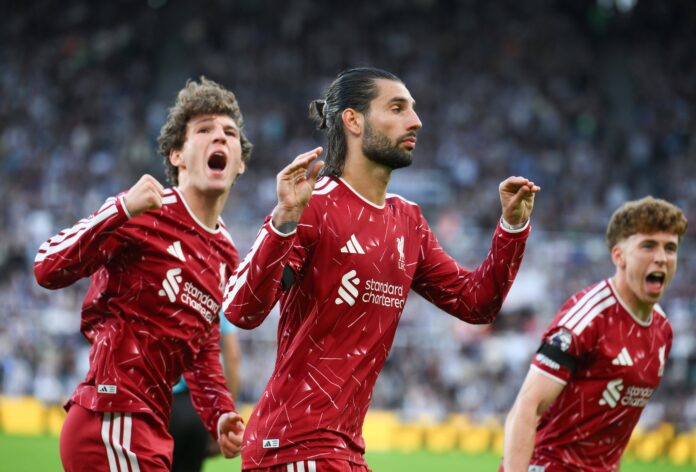
Dominik Szoboszlai’s late penalty secured a 2-2 draw at St James’ Park, allowing the travelling supporters to celebrate as they descended from the away end. Once the emotion subsided, however, the nature of Liverpool’s performance offered considerably less comfort.
Lewis Steele, reporting from St James’ Park for the Daily Mail, identified Liverpool’s “chief problem” as the “midfield, or lack thereof”. It was a blunt assessment, but an entirely reasonable one.
Newcastle’s two goals came from counter-attacks which Liverpool should have stopped long before their defence was left exposed. On both occasions, Ryan Gravenberch had possession near the Newcastle penalty area. Within seconds, Iraola’s players were retreating desperately towards their own goal.
Steele described Liverpool as being “cut through at ease”, with no natural midfield enforcer available to interrupt Newcastle’s transition. That vulnerability is not merely a tactical inconvenience. It is the sort of structural weakness capable of undermining an entire season.
Midfield balance leaves Iraola exposed
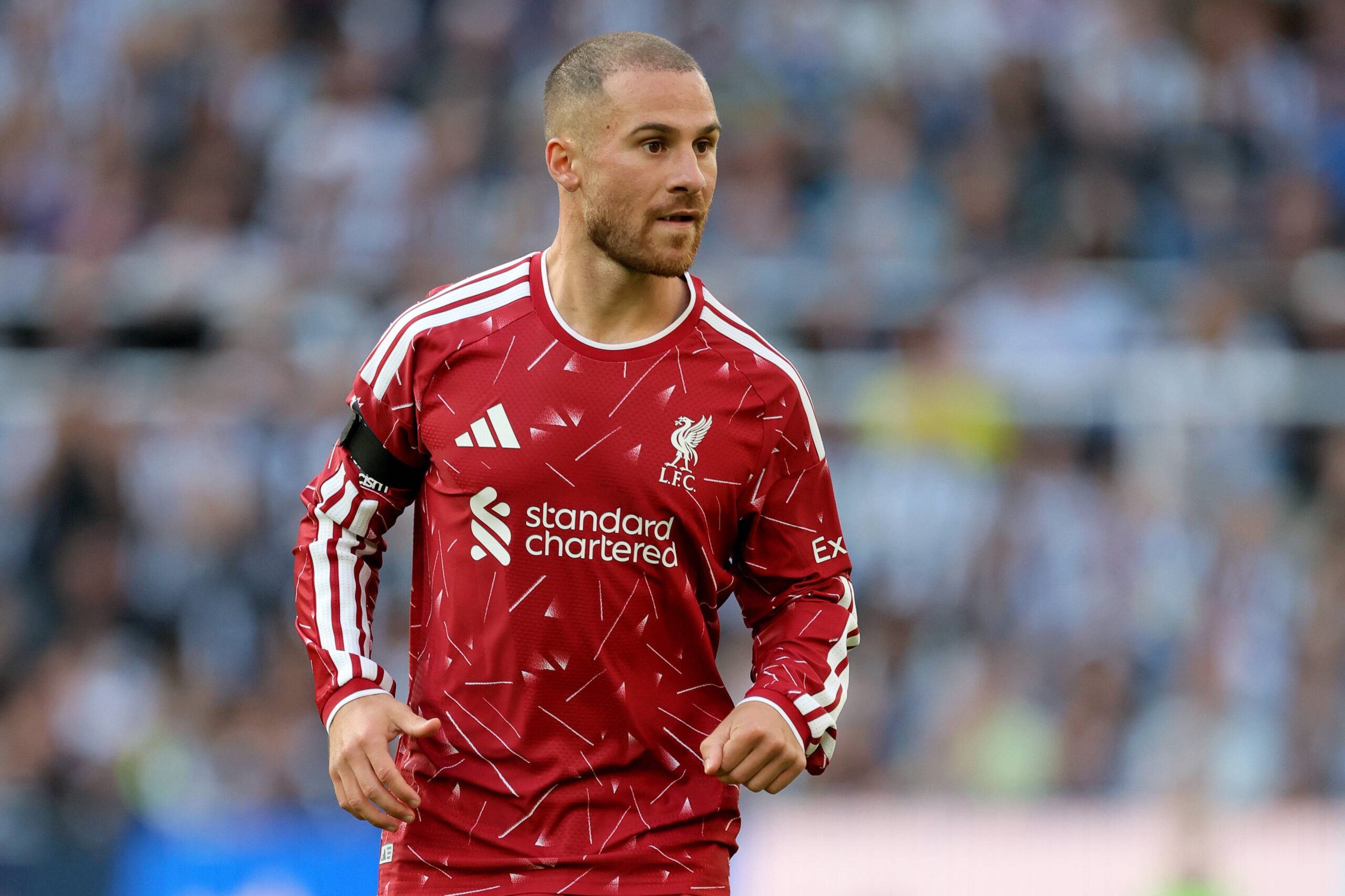
Gravenberch, Szoboszlai and Florian Wirtz are all gifted footballers. Each can carry the ball, create chances and influence matches in advanced areas. The question is whether they can operate together without leaving Liverpool dangerously open.
As Steele observed, all three are “more naturally inclined to be attack-minded”, meaning “the back door is left ajar” whenever Liverpool lose possession.
Wirtz is at his best between the lines, while Szoboszlai possesses the energy and imagination to affect matches closer to the opposition penalty area. Asking either player to provide the discipline of a specialist holding midfielder risks diminishing their attacking qualities without properly protecting the defence.
Gravenberch performed the deeper role impressively during Liverpool’s 2024-25 title-winning campaign, but his level has subsequently dropped. Alexis Mac Allister has also struggled to provide consistent control in that position.
Former Liverpool striker Daniel Sturridge believes the issue has been allowed to linger for too long.
“The team needs a defensive midfielder, we have been talking about this at Liverpool for three years,” Sturridge told Sky Sports. “Gravenberch changed that philosophy but if you analyse the midfield, they are all naturally more attacking players.”
His point cuts to the heart of Iraola’s dilemma. Liverpool have talented midfielders, but collecting accomplished individuals is not the same as constructing a balanced midfield.
Transfer priorities require immediate rethink
Liverpool’s summer recruitment has focused heavily on replacing Mohamed Salah and strengthening the wide attacking positions. Paris Saint-Germain forward Bradley Barcola remains a target, while the club have also considered another approach for Brighton’s Yankuba Minteh.
Those pursuits are understandable. Liverpool lack proven depth on the wings, and their options could become thinner if Cody Gakpo departs amid interest from Tottenham Hotspur.
Yet a defensive midfielder should now be treated with equal urgency.
Steele argued that Liverpool could possess “the best front three in the world” and still fail to win trophies if they remain so exposed on the counter-attack. History supports that view. The finest attacking teams have usually depended upon a disciplined player who understands danger, controls space and allows more creative colleagues to flourish.
Iraola used an energetic double pivot featuring Tyler Adams and Lewis Cook at Bournemouth. That partnership provided aggression, mobility and balance. At Liverpool, he has inherited a midfield rich in technical ability but lacking the same defensive certainty.
Recruiting a specialist number six would not solve every problem, but it would provide Iraola with a foundation. Liverpool need somebody capable of slowing transitions, winning second balls and recognising when an attack must be halted before it gathers momentum.
Attacking depth compounds Liverpool concerns
Liverpool’s midfield was not the only source of concern at Newcastle. Iraola’s substitutes illustrated how little experienced attacking depth he currently possesses.
Lewis Koumas has earned praise during pre-season and deserved his opportunity, but it was telling that Liverpool turned to a player whose recent experience has largely come in the Championship while chasing a result at one of the Premier League’s most demanding grounds.
Victor Munoz made a brighter impression from the bench and won the foul which led to Szoboszlai’s equalising penalty. Gakpo also took his goal superbly and was Liverpool’s most effective attacker.
Elsewhere, Alexander Isak endured a difficult return to his former club. He was jeered whenever he touched the ball and failed to convert the chances which came his way. Rio Ngumoha, meanwhile, struggled to influence proceedings from the right, a position which does not appear to suit his natural instincts.
Steele called the shortage of attacking alternatives “a real worry”, particularly with the transfer window approaching its conclusion. Liverpool clearly require another winger, perhaps two, but Iraola’s greatest concern should remain the space opening behind his attacking players.
A dramatic point at Newcastle may eventually prove valuable. For now, it should be treated as a warning. Iraola needs greater balance, Liverpool need more depth, and the midfield requires urgent attention before stronger opponents begin exploiting the same weakness with even greater precision.