

Slot’s Low-Block Dilemma: Lessons from Leeds and the Tactical Search for Solutions
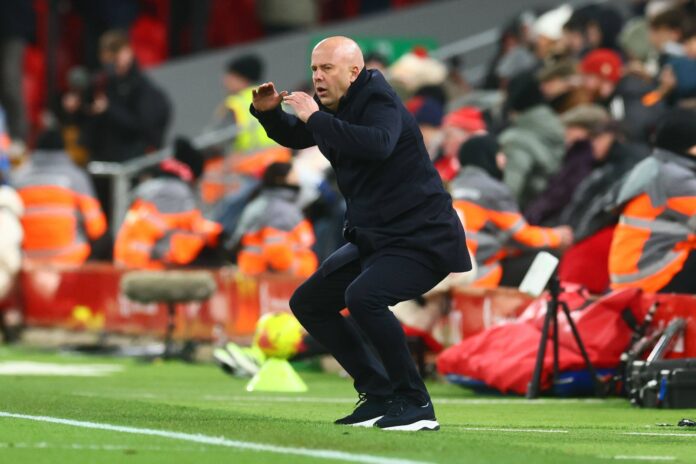
Liverpool’s goalless draw with Leeds was framed publicly as a frustrating blip, but internally it has prompted a broader tactical discussion. For Slot, the match was less about dropped points and more about diagnosing a familiar modern problem: how elite, possession-heavy sides consistently break down a disciplined low block. Against Leeds, that challenge was laid bare in ninety minutes of territorial dominance without reward.
The data told a familiar story. Heavy possession, sustained pressure, and repeated entries into the final third, yet few clear-cut chances. Slot’s post-match analysis reflected a manager already looking beyond the result, focusing instead on structural issues and long-term strategies to beat a low block rather than short-term frustration.
Slot’s assessment of control without incision
Slot was clear-eyed in his verdict. Control, he argued, means little without penetration. Liverpool circulated the ball well, recycled possession quickly and pinned Leeds deep for long spells, but the decisive moment never arrived. This was not framed as a failure of effort or intent, but of precision and variation.
Central to Slot’s thinking is the idea that low blocks are designed to concede territory while denying space. Leeds were content to defend their box with numbers, retreating quickly and forcing Liverpool to play in front of them. Slot acknowledged that this scenario is becoming increasingly common for top sides, particularly those who dominate possession metrics across a season.
Crucially, he rejected the notion that patience alone is enough. Endless passing sequences may exhaust opponents, but without specific mechanisms to disrupt defensive shape, they rarely lead to goals. Against Leeds, Liverpool found themselves moving the ball efficiently, but too often at a speed that allowed the defensive block to reset.
Width, bodies in the box and attacking occupation
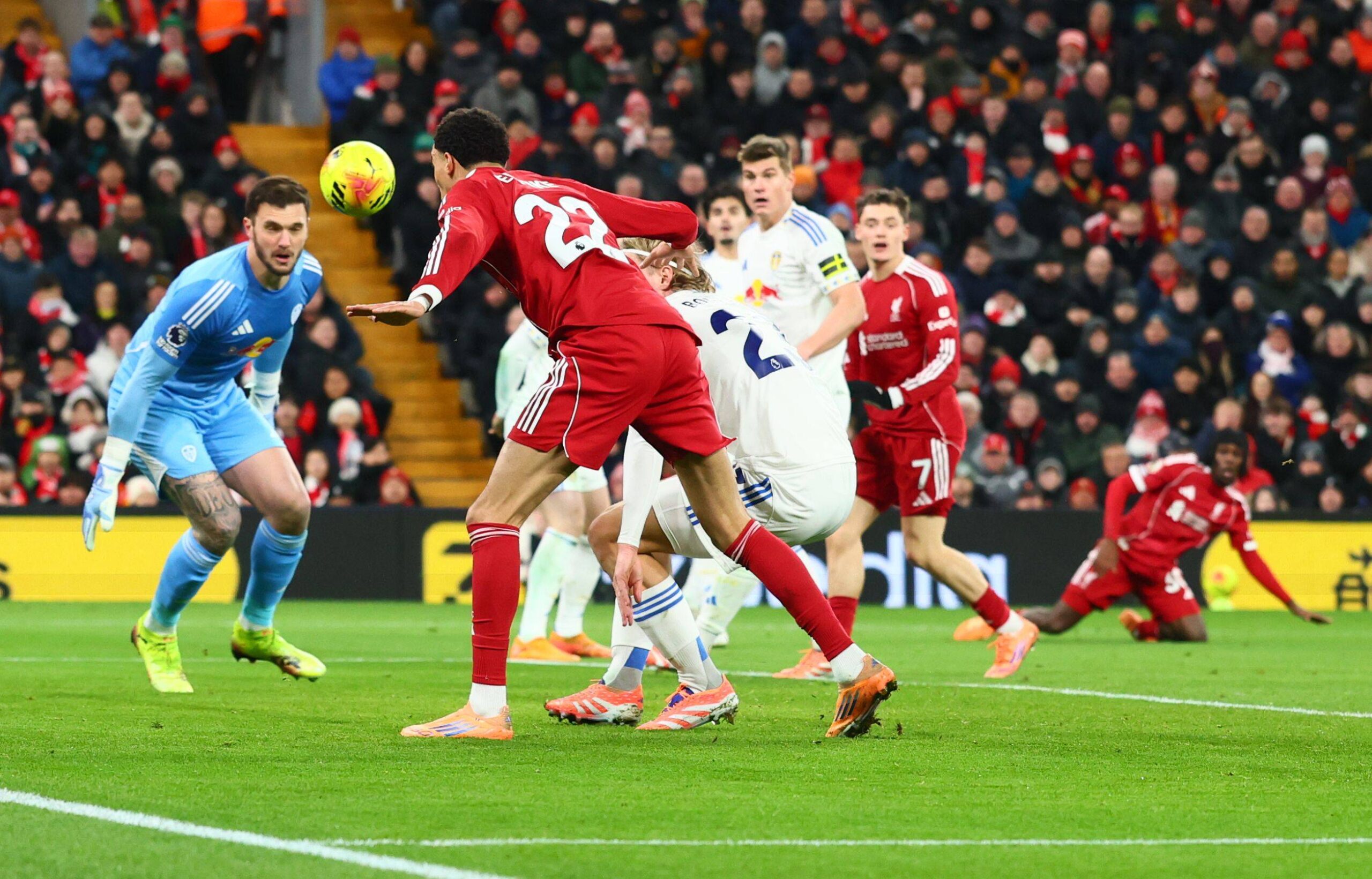
One of Slot’s more pointed observations concerned attacking occupation. Crosses were delivered, but too frequently into an area crowded with defenders and short of Liverpool shirts. The solution, in his view, is not simply to cross more, but to commit more bodies earlier and more aggressively.
This speaks to a wider tactical theme. Beating a low block is not about one single strategy, but about layering threats. Width stretches the defensive line horizontally, while late midfield runs and underlapping movements force defenders to make decisions they would rather avoid. Slot referenced moments where Liverpool did create overloads, but not with enough consistency.
The emphasis on numbers in the box also reflects a calculated risk. Committing players forward increases vulnerability to counters, but Slot’s philosophy accepts that trade-off. Against Leeds, the visitors rarely threatened in transition, making the lack of attacking commitment all the more frustrating in retrospect.
Individual moments as structural tools
Slot also highlighted the importance of individual quality within a collective framework. Against compact defences, one successful one-v-one can undo minutes of careful positioning. Quick changes of direction, sharp accelerations and disguised passes are often the triggers that open space where none appears to exist.
This is where Slot’s approach diverges from purely system-driven models. While structure is vital, he views individual initiative as an essential component of strategies to beat a low block. These moments are not random; they are encouraged, rehearsed and supported by positional discipline around them.
Against Leeds, those moments appeared sporadically rather than rhythmically. Slot’s analysis suggested that the balance between structure and spontaneity is still evolving, particularly as players adapt to his demands in the final third.
Set-pieces, second balls and marginal gains
Set-pieces were another avenue Slot identified as underutilised. Against deep-defending teams, dead-ball situations often provide the clearest route to goal. Liverpool came close, but the marginal gains that separate dominance from victory were missing.
Slot’s broader point was telling. Modern low blocks are designed to minimise chaos. Winning against them requires creating it in controlled ways, whether through second balls, quick restarts or aggressive positioning after initial deliveries are cleared. These moments are not glamorous, but over a season they accumulate into points.
The Leeds match, then, becomes less an anomaly and more a case study. Slot’s Liverpool are learning in public, refining their approach against opponents increasingly comfortable without the ball.
The frustration of a goalless draw remains, but the response suggests clarity rather than concern. Slot’s focus is firmly on adaptation, trusting that with sharper execution and refined strategies to beat a low block, matches like this will tilt in Liverpool’s favour more often than not.