
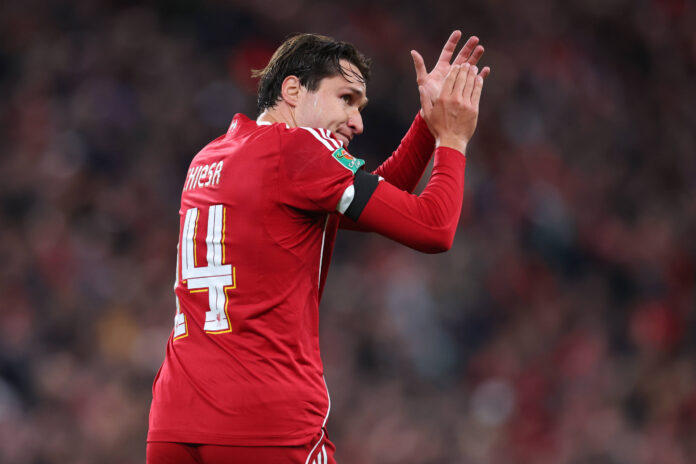

Federico Chiesa January Transfer: Why Liverpool Must Hold Firm
Liverpool enter the January window at a crossroads. Fourth in the Premier League table after a season of uncharacteristic struggle, optimism from Arne Slot’s title winning debut campaign has faded into a battle for stability, depth, and top four security. The squad is stretched, confidence fluctuates, and the timing of any exit decisions, particularly around attacking depth, could define the second half of the season.
Federico Chiesa, linked with renewed Juventus interest, has become a flashpoint. His limited minutes mask his importance, especially now. With Mohamed Salah away with Egypt at AFCON and Newcastle’s Alexander Isak recently suffering a leg break, Liverpool’s reliance on substitutes like Chiesa has intensified. The need for his skill set has never felt more urgent.
Why Chiesa Matters Now More Than Ever
Liverpool’s attacking ranks are thinner than perception suggests. Injuries, international commitments, and inconsistent form have reduced rotation options, placing greater responsibility on impact substitutes. Chiesa’s gradual integration has delivered meaningful contributions off the bench, and his profile, sharp, unpredictable, two footed, vertical, is distinct from others in the squad.
January is not a month for trimming, it is a month for reinforcing. Any departure without a ready made replacement would risk destabilising an already fragile rhythm. That risk appears even clearer through recent comments from David Lynch, speaking to Dave Davis for Anfield Index.
Lynch offered a candid assessment on Chiesa’s situation:
“I struggle to see Liverpool sanctioning an exit,” said Lynch. “I just think that they’d be leaving themselves short. He has played a decent amount of games as a sub so far this season, so for Liverpool to sanction that in January then they would need a replacement lined up and I don’t see that is the case.”
“I wouldn’t like to see it. Chiesa has played a role this season and will continue to until the end of the season.”
“I’d like to think that they will make him wait until the end of the season.”
His verdict reflects a pragmatic truth. Liverpool cannot afford to lose players who still carry tactical value, even if their role is rotational. Chiesa’s appearances as a substitute have not been ceremonial, they have been strategic, and his involvement is likely to increase rather than decrease over the coming weeks.
January Exit Risks Liverpool Cannot Take
Selling or loaning Chiesa mid season would contradict both squad logic and transfer timing. The club lacks a direct alternative ready to step in, and the market presents limited options for instant Premier League ready forwards who match his versatility. Depth is a requirement, not a luxury, especially in a campaign that demands resilience rather than reinvention.
Chiesa also represents optionality, a vital element when chasing multiple outcomes: Champions League qualification, domestic cup progression, and maintaining momentum through unpredictable injury cycles. His ability to influence games in short bursts has already proven valuable, and it is hard to dispute Lynch’s sentiment that patience is the most sensible strategy.
Liverpool must resist the temptation to prioritise sentiment or nostalgia, this is a month for caution and structure. Chiesa’s story this season is not finished, it is evolving, and the club should allow that evolution to continue unbroken until summer.
Liverpool Must Protect Depth, Protect Options
The January transfer window will test Liverpool’s resolve, not their ambition. The squad requires reinforcement, not reduction, and retaining players like Chiesa protects tactical flexibility at a time when it is needed most. Liverpool must think long term while acting short term, and sanctioning exits that weaken immediate capability would run counter to both priorities.
Holding Chiesa until the end of the season is not only sensible, it is necessary.