
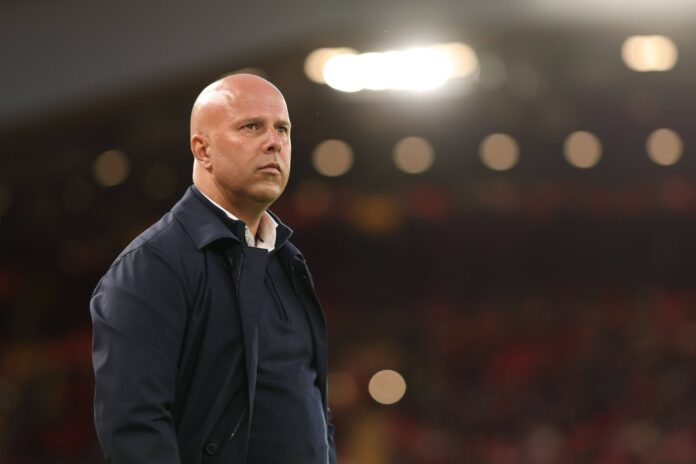

Analysing Liverpool’s Impressive Long-Term Defensive Planning
There is an obvious difference between backing a manager and preparing for the next one, and Liverpool’s activity in the winter window feels firmly rooted in the latter. The pursuit and signing of young, high-upside centre-backs is not the behaviour of a club desperate to rescue a faltering head coach. It is the behaviour of an executive group laying foundations beyond the current regime.
Arne Slot arrived on Merseyside and immediately delivered a Premier League title, initially benefiting from the afterglow of Jürgen Klopp’s legacy. That first season was a perfect storm: residual belief, familiar intensity, and a squad still wired to compete through chaos. The second season, however, has exposed the gaps. Slot’s own footballing identity has not landed cleanly, and rather than refinement, what we’ve seen is friction. Structural imbalance, defensive fragility, and an overreliance on rigid systems have replaced instinct and authority.
That context matters when you look at who Liverpool is choosing to invest in. They are not targeting established, peak-age defenders to steady the first team now. They are targeting teenagers and early-20s profiles who will peak in two to four years. That tells you everything. This is not about rescuing Slot’s season. It’s about future-proofing the squad for whoever comes next.
The message is subtle, but unmistakable: Liverpool are building an environment where the next coach inherits depth, competition, and technical quality in the defensive unit, rather than scrambling to retrofit a squad around another failing philosophy.
https://twitter.com/fabrizioromano/status/2009239178240999569?s=46&t=rxgukmqdoXc4muVFLSx2EQ
Youth, Friction, and the Signs of a Manager Losing Alignment
Slot’s handling of young talent has been one of the most quietly concerning aspects of his tenure. Rio Ngumoha arrived with genuine excitement, yet his involvement has been sporadic at best. Tyler Morton and Jarell Quansah were sold. Harvey Elliott was pushed into a loan that never made stylistic sense. These were not forced exits. They were choices made by my ma who would not use them. And they point toward a manager with firm preferences, even when those preferences undermine flexibility and long-term value.
That’s where tension creeps in. Richard Hughes and Michael Edwards are operators who believe deeply in development pathways, asset value, and internal competition. A head coach who marginalises youth in favour of comfort picks inevitably creates friction. The recruitment of multiple young centre-backs in one window only amplifies that disconnect. This is not Slot shaping the squad. This is the club shaping what comes after him.
By stockpiling young defenders, Liverpool is protecting itself against several outcomes at once. If Slot survives, he inherits depth he hasn’t prioritised. If he goes, the next manager walks into a squad rich with malleable profiles, players who can be coached, adapted, and moulded without ideological baggage. That is classic Edwards-era thinking.
It also suggests a lack of belief that Slot deserves senior reinforcement now. January is when clubs bring back managers they trust. Liverpool is not doing that. They are investing in tomorrow, not today.
Names like Xabi Alonso, Cesc Fàbregas, and even Simone Inzaghi continue to linger in the background, not because decisions have been made, but because options are being preserved. Young defenders fit every possible future system. Slot’s does not.
For me, that is the clearest signal yet. Liverpool are not planning with Arne Slot. They are planning beyond him.
https://twitter.com/anfieldindex/status/2008991624999919740?s=46&t=rxgukmqdoXc4muVFLSx2EQ