
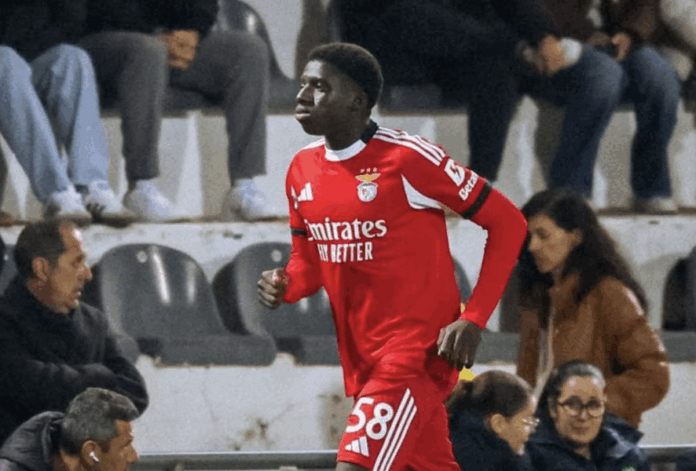

Liverpool’s Search for a Right-Back Leads to Daniel Banjaqui
Liverpool’s relationship with the right-back position has, for the better part of a decade, been one of comfort and certainty. It was a role redefined, expanded and elevated into something closer to an organising principle than a simple defensive post. Replacing that influence was never going to be straightforward, and the club’s recent months have reflected that reality.
With Conor Bradley’s undeniable promise tempered by recurring fitness concerns, and with short-term solutions offering only temporary balance, Liverpool’s recruitment team have been forced to look further ahead. According to reporting on TeamTalk, that search has now drawn attention to one of Europe’s most intriguing teenage defenders: Daniel Banjaqui.
At just 17, Banjaqui already represents the sort of calculated gamble Liverpool have become increasingly comfortable making. It is not about immediate replacement, nor instant stardom, but about trajectory, timing and potential.
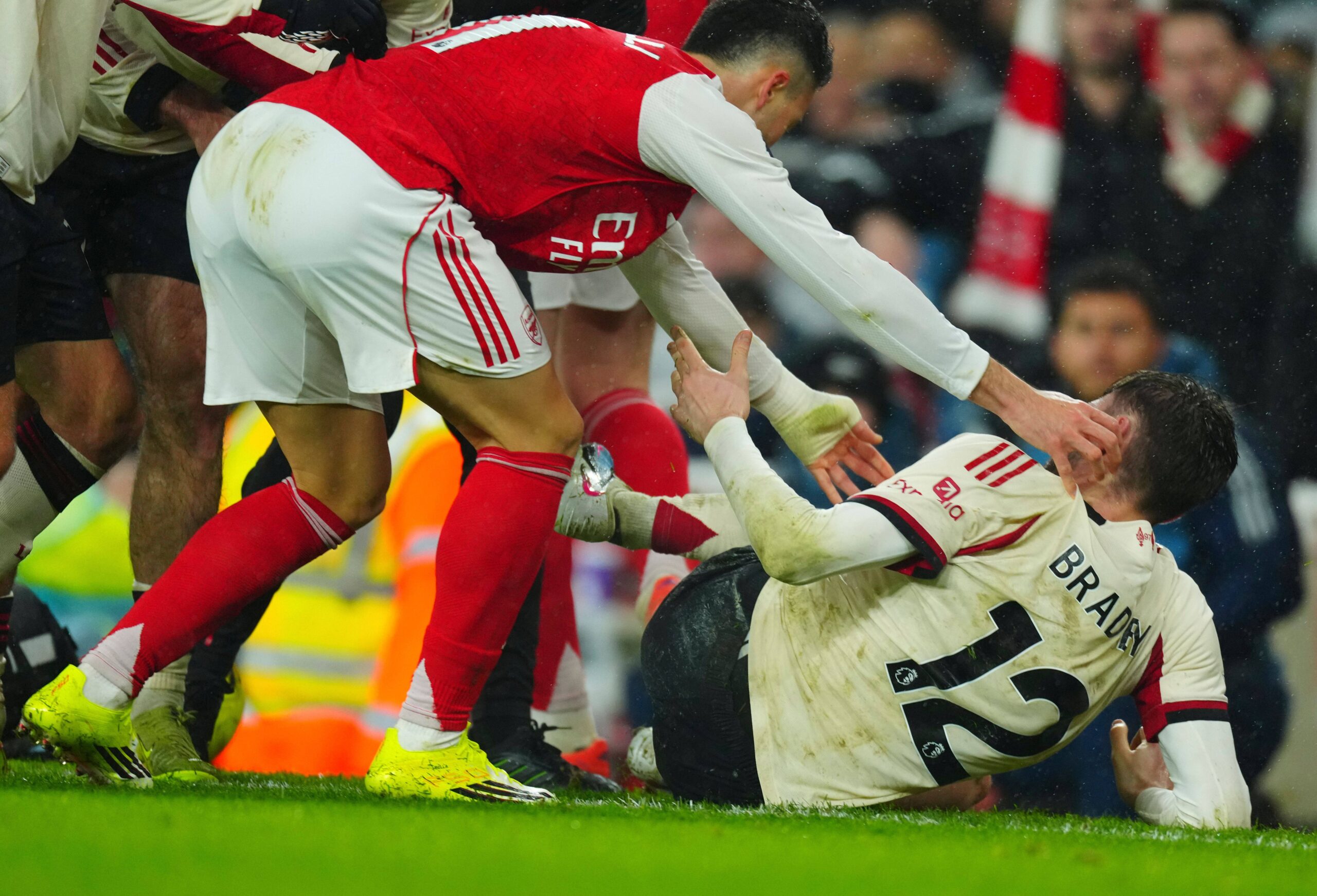
Right-back questions shaping Liverpool’s thinking
Replacing an era-defining player was always likely to require a rethink rather than a replica. Liverpool have experimented accordingly. Bradley has been trusted when available, offering intensity and positional discipline, but his injury record has limited continuity. Others have been used out of position to plug gaps, a sign less of confusion than of necessity.
What has become clear is that Liverpool require a long-term option who can grow into the role rather than inherit it fully formed. That thinking has pushed recruitment discussions towards profiles that prioritise athleticism, adaptability and development potential over immediate polish.
Daniel Banjaqui fits that model precisely.
Daniel Banjaqui’s rapid rise
Banjaqui’s emergence has been swift. Handed his senior debut at Benfica by José Mourinho, he has already crossed a psychological threshold that many prospects never reach. More significantly, his performances for Portugal at the Under-17 World Cup placed him firmly on the radar of elite clubs.
Used largely in a deeper role during that tournament, Banjaqui demonstrated a maturity that belied his age. He circulated possession calmly, progressed the ball intelligently and showed a willingness to engage physically. Statistically, he won 68 per cent of his defensive duels at the World Cup, an impressive return for a teenager operating against elite peers.
There is pace, certainly, and strength too. He attacks space aggressively and recovers ground quickly, traits that allow him to play on the front foot. As an attacking presence, he is direct rather than flamboyant, effective rather than showy. The comparison drawn by some observers to Nuno Mendes is instructive: not identical in style, but similar in profile and physical authority.
Tactical fit under Arne Slot
Liverpool’s interest also makes sense in a tactical context. Arne Slot’s system demands full-backs who can interpret space dynamically. At times they are required to hold width, at others to step inside and support build-up play. That tactical flexibility has become non-negotiable.
Banjaqui’s experience as a deeper full-back at youth international level suggests an ability to adapt to those demands. He is comfortable receiving under pressure, capable of progressing play through passing rather than purely through running. That balance is critical in a Liverpool side that often builds through controlled phases before accelerating suddenly.
For Bradley, the emergence of another young right-back prospect would not represent displacement but competition. Liverpool’s recent history suggests they value depth built through internal development rather than constant external fixes. In that sense, Banjaqui’s profile complements rather than contradicts Bradley’s place in the squad.
Why timing matters for Liverpool
There is a strategic logic to moving early. As Anfield Watch note in their original report, Banjaqui’s value is unlikely to remain static. Benfica’s track record with developing and selling elite talent is well established, and Liverpool are acutely aware of how quickly prices escalate once a player becomes indispensable at senior level.
Securing a player at this stage would not be about immediate returns. It would be an investment in structure, in succession planning, and in preserving flexibility. Liverpool have learned, sometimes painfully, the cost of waiting too long in the market.
Daniel Banjaqui represents possibility rather than certainty. But in a position defined by transition, that may be precisely what Liverpool require.