
Liverpool Made to Wait as Missed Penalty Sets Nervy Tone Against Burnley
Liverpool’s afternoon at Anfield was supposed to be routine. The context suggested as much: a team chasing momentum against one still searching for certainty, a dominant recent record against Burnley, and a stadium primed for inevitability. Yet football, as it so often does, chose complication. A missed penalty, a stubborn low block and a late equaliser combined to ensure this contest lingered long after the final whistle.
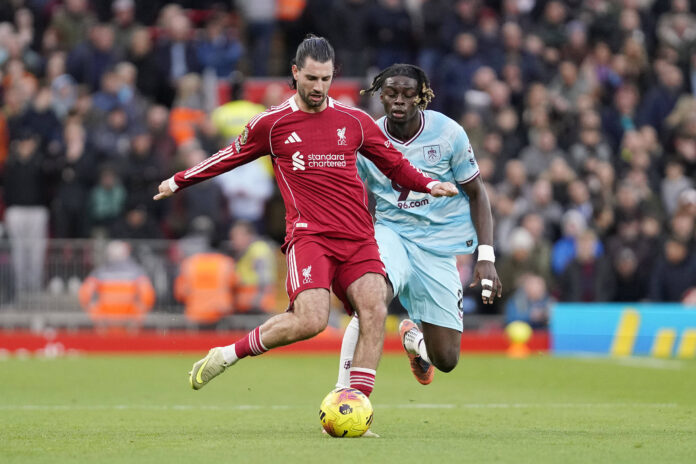
From the outset, Liverpool monopolised the ball, patiently moving Burnley from side to side as Arne Slot’s team sought rhythm and incision. The visitors, arranged in a compact 3-4-3, were content to absorb pressure and compress space. It was not pretty, but it was purposeful. This was a Burnley side intent on surviving first, believing later.
That belief was tested repeatedly in the opening half-hour, with Martin Dubravka emerging as an early protagonist. The goalkeeper repelled efforts from Cody Gakpo and Florian Wirtz, while Dominik Szoboszlai buzzed around the edge of the area searching for angles. Liverpool’s dominance, however, was not matched by a decisive blow.
Missed penalty changes momentum
The pivotal moment arrived on 32 minutes. Gakpo, cutting inside with intent, was clipped by a trailing leg from Florentino. The referee pointed to the spot without hesitation. Szoboszlai stepped forward, calm and assured, his record from 12 yards suggesting reliability. Instead, the strike thundered against the crossbar, Dubravka beaten but Burnley spared.
In a game defined by fine margins, the missed penalty altered the emotional temperature inside Anfield. What should have been release became tension. Burnley, emboldened by their escape, grew more resolute, retreating deeper but with renewed conviction that fortune might yet favour them.
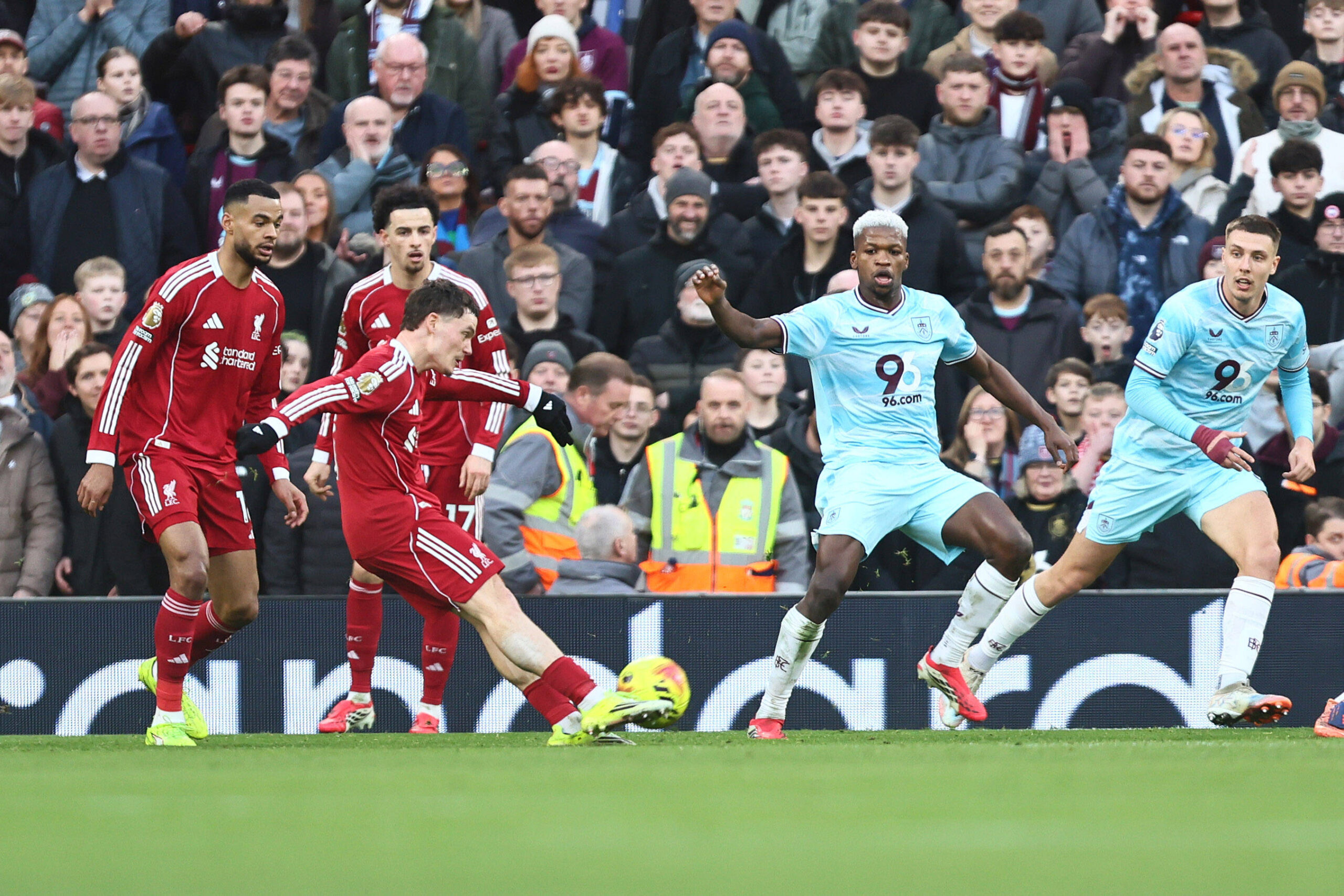
Liverpool continued to press, probing and recycling possession. Eventually, persistence was rewarded. Curtis Jones, alert to a loose ball following another Dubravka save, kept the move alive and fed Wirtz. One touch to steady himself, another to shoot, and the German powered an emphatic finish into the top corner. Relief washed around the stadium. The breakthrough had arrived.
Burnley belief after the break
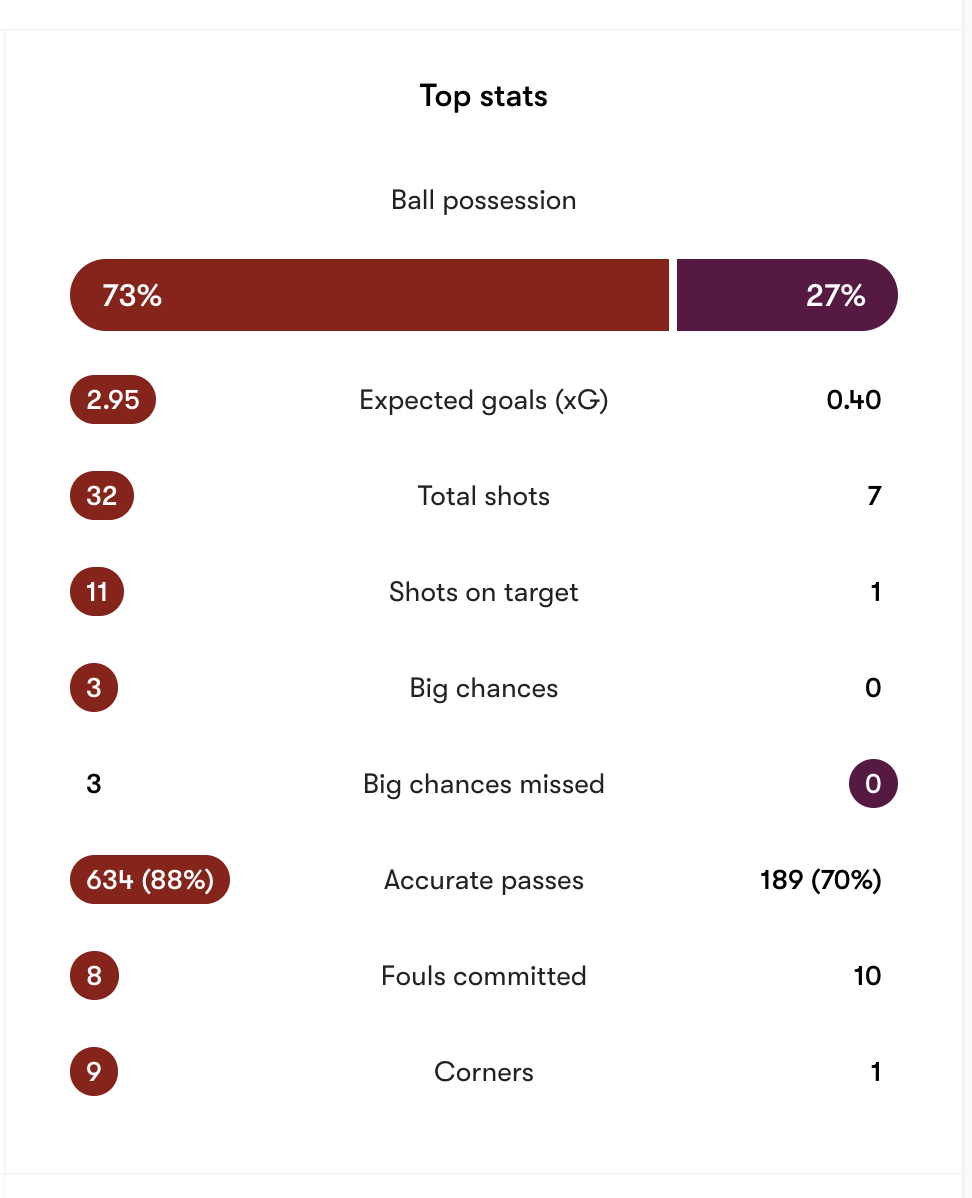
At half-time, the statistics told a familiar story: Liverpool ahead on the scoreboard, comfortably ahead on expected goals, Burnley barely registering an attacking threat. The Opta data suggested the contest was all but settled. Football, again, disagreed.
Burnley returned with greater intent, pressing selectively and springing forward when space allowed. Marcus Edwards, quiet for long spells, began to find pockets down the left. Liverpool still created chances – Gakpo, Wirtz and Szoboszlai all went close – but the second goal proved elusive.
That hesitation proved costly. On 65 minutes, Burnley struck. Florentino slipped a precise pass into Edwards, who drove into the box and finished low across Alisson with clinical precision. The shot carried a modest expected goals value, but its impact was seismic. Burnley were level, and suddenly belief coursed through their ranks.
Late drama and lingering frustration
The remainder of the match unfolded at a frantic pace. Liverpool pushed forward relentlessly, throwing on fresh legs and peppering the Burnley box with crosses, shots and set-pieces. A goal from Hugo Ekitike was ruled out for offside. Alexis Mac Allister saw an effort blocked. Szoboszlai tested Dubravka again. Burnley defended with desperation and discipline, bodies on the line and seconds carefully drained away.
Deep into stoppage time, the tension peaked once more as Federico Chiesa tangled with Josh Laurent in the box. Appeals were waved away. The whistle followed soon after, confirming a draw that felt significant for both sides, albeit for different reasons.
For Liverpool, this was another reminder that dominance does not guarantee comfort. The missed penalty loomed large, not just as a moment but as a symbol of an afternoon where control never quite became certainty. Burnley, meanwhile, departed Anfield with a point forged from resilience and opportunism, proof that even the most unlikely narratives can take hold when belief meets fortune.