
Arne Slot, Burnley and the Sound of Modern Expectation
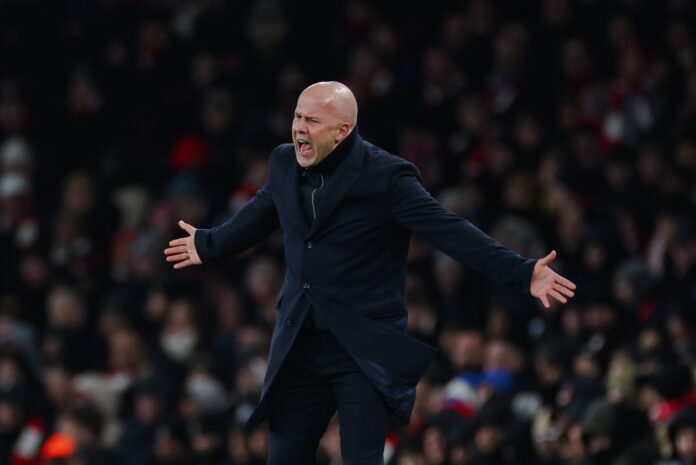
Liverpool’s draw with Burnley did not merely produce dropped points. It produced noise. Loud, impatient, digitally amplified noise. The reaction to that noise – rather than the scoreline itself – is what Arne Slot found himself addressing afterwards, in comments that felt less like a defence of a single performance and more like a short essay on modern football expectation.
This article draws from Slot’s post-match remarks following Burnley, as reported in the immediate aftermath of the game.
Burnley, possession and the tyranny of control
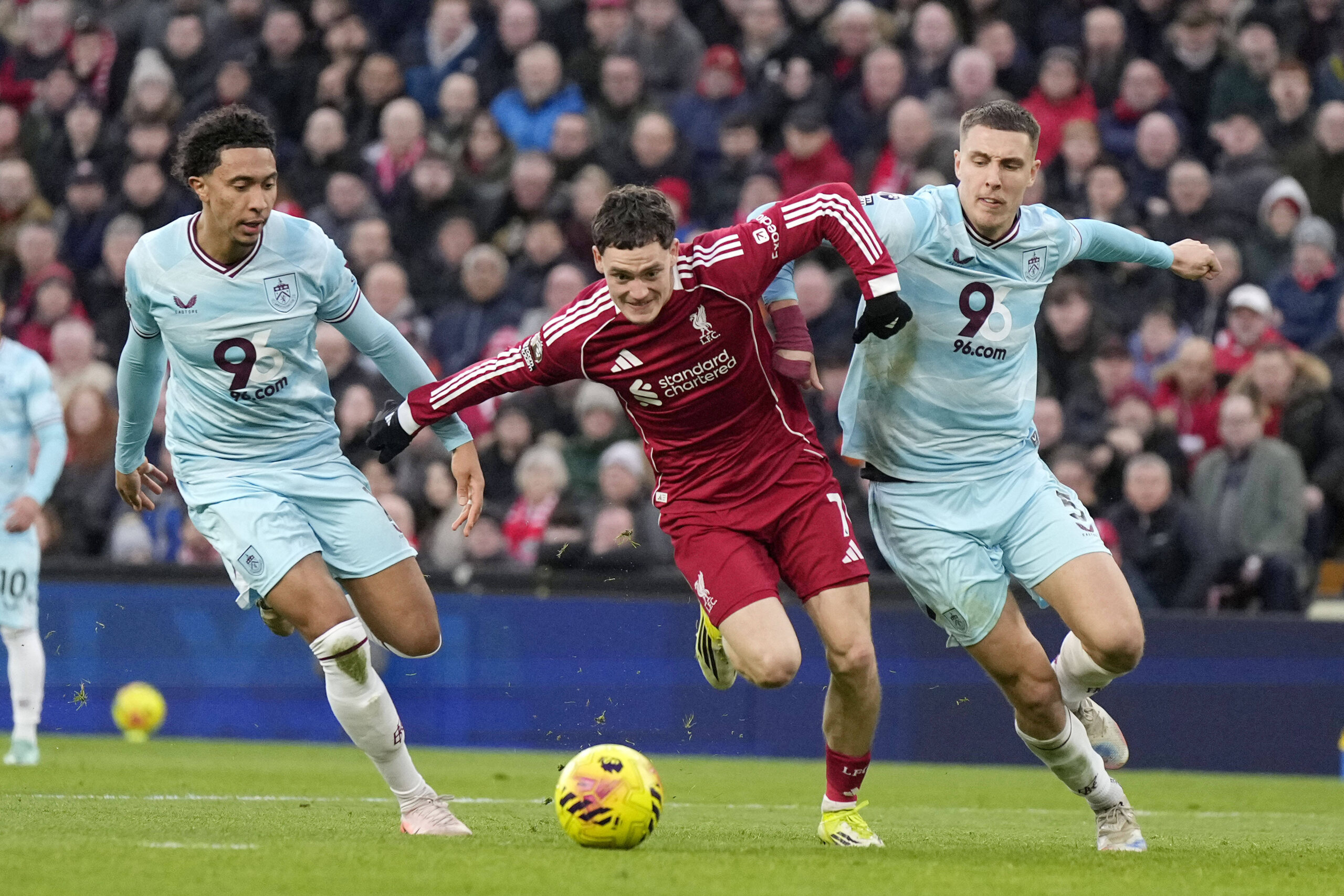
Slot’s Liverpool had the ball. A lot of it. Enough of it to make possession feel like a moral obligation rather than a tactical choice. Against Burnley’s compact shape, that control curdled into something heavier: expectation without release.
“You cannot play attacking football with the amount of ball possession that we have,” Slot explained. “Sometimes, it’s a disadvantage that we have that much ball possession, because then people expect more from the ball that you have.”
This is one of the paradoxes of the modern elite side. Control is no longer admired; it is assumed. What matters is not how often you have the ball, but how loudly the crowd – physical or virtual – demands that something happens with it. Burnley did not mind Liverpool having possession. They understood its limits. Low block, discipline, patience, wait for error.
Slot, notably, does not romanticise the problem. He frames it as a phase issue, not a philosophical crisis. “But the moment you don’t have it, you have to press really high, because with a low block, you don’t have ball possession.”
There is no nostalgia here. No appeal to chaos. Just the clear-eyed admission that domination without incision can become a trap.
Slot and the shock of winning early
What clearly irritated Slot was not tactical critique, but incredulity. The sense that success had somehow shortened the acceptable timeline for development.
“Do people not expect that to be possible for me? To be successful? It’s new to me, but if you’re one-and-a-half years in the job and have already won the Premier League, when the club has won it twice in 30 years, I’m surprised to hear that.”
There is something faintly absurd in a manager having to justify ambition after delivering the game’s ultimate prize. Yet that is the current climate. Win quickly, and patience evaporates quicker still. Slot appears genuinely startled by this reversal: that achievement accelerates dissatisfaction rather than softening it.
This is not arrogance. It is disbelief. A reminder that trophies are no longer punctuation marks in a story, but demands for a sequel delivered immediately.
Transition football and selective memory
Slot repeatedly returned to the word “transition”, a term often used lazily, but here with precision. Liverpool are not static. They are mid-process, reshaping how they attack settled defences while maintaining the intensity that made them champions.
“I’ve tried the same things as last season this time around,” he said. “Every time we’ve been a goal down, I’ve made offensive substitutions, and wherever I can, I am playing a team that is as offensive as possible.”
This matters. The accusation implicit in some reactions was conservatism. Slot’s answer is blunt: the intent is there. The structure is there. What is missing, at times, is efficiency against opponents who have decided that progress comes through obstruction.
“Everyone knows what we need to do in order to make the next step in this transition phase,” Slot added, “but sometimes a bit of patience is needed.”
Patience, of course, is the one resource football discourse no longer stocks.
Burnley reaction and modern football impatience
Burnley were not the story. They were the catalyst. The real issue exposed by this match was the widening gap between process and perception.
Slot’s comments were not defensive. They were explanatory. He was not rowing back on attacking principles, nor dismissing criticism outright. He was asking, reasonably, for time to exist alongside ambition.
In an age where possession is scrutinised, pressing is measured, and success is immediately recalibrated as baseline expectation, even a manager who wins early must still argue for space to build.
Burnley simply happened to be the evening when that argument became unavoidable.