
Fatigue, Wind, and Denial: The End of the Road for Arne Slot
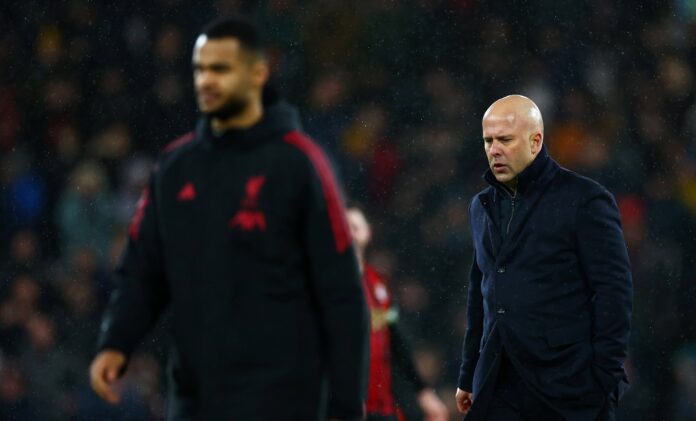
Following yet another disheartening result for Liverpool Football Club, the reaction from the head coach was as astonishing as the performance itself. Arne Slot’s post-match explanation, citing fatigue and the wind for a 3–2 defeat on the south coast, landed badly with a fanbase already pushed to breaking point. Bournemouth played in the same conditions. They adapted. Liverpool did not and lost a game they did not deserve to win.
What made the excuse even harder to swallow was the context. Just days earlier, Liverpool delivered a controlled, emphatic Champions League win away to Marseille. The players looked energised, structured, and decisive. Yet on the weekend, with a clear need for freshness and intervention, Slot again waited — and waited — before acting. No game-altering substitutions and the game already slipped through Liverpool’s fingers. It is no longer an anomaly. It is a pattern.
https://twitter.com/daveockop/status/2015377754242286039?s=46&t=rxgukmqdoXc4muVFLSx2EQ
Excuses, Stagnation, and a Squad Running on Empty
Slot’s unwillingness to rotate is no longer just frustrating — it is actively damaging. The same core group is wheeled out week after week with only cosmetic tweaks, while fringe players are starved of rhythm, confidence, and sharpness. When they are eventually called upon, they look exactly what they are: undercooked and disconnected.
Fatigue did not beat Liverpool at Bournemouth. Poor game management did. Tactical rigidity did, again. A failure to read momentum did. Wind does not explain why Liverpool repeatedly loses control of matches after taking the lead. Wind does not explain why teams continue to carve through familiar channels, exploiting the same structural weaknesses over and over again.
Liverpool increasingly looks like a side coached not to lose rather than built to win. Possession is sterile. Attacking patterns are predictable. And when adversity arrives — a goal conceded, a crowd stirred, a shift in tempo — there is no visible response from the touchline. No recalibration. No authority.
The excuses have now run dry.
https://twitter.com/lfctransferroom/status/2015370541796868607?s=46&t=rxgukmqdoXc4muVFLSx2EQ
Act Now or Accept the Slide
With only five Premier League wins since September and a points-per-game ratio that has collapsed since securing the 20th league title, this has moved beyond a rough patch. This is a prolonged decline. A season that began with authority is now drifting toward disarray, and Champions League qualification — once a given — is becoming a genuine concern.
The transfer window remains open, and with it an opportunity. Not to plaster over cracks for a coach whose message is no longer landing, but to begin the transition. Recruitment now should be about adaptability — players capable of functioning under a new tactical framework, one that is already looming on the horizon.
Xabi Alonso’s availability is no longer a background whisper. It is a growing inevitability. Whether through an interim appointment or by accelerating succession plans, Liverpool’s hierarchy must now act with clarity and conviction. Michael Edwards and Richard Hughes were not brought back to oversee stagnation.
This squad is not broken. It is mismanaged. The talent remains elite. But without leadership, clarity, and tactical bravery, Liverpool will continue to bleed points — and belief.
The time for patience has passed. The time for action is now.