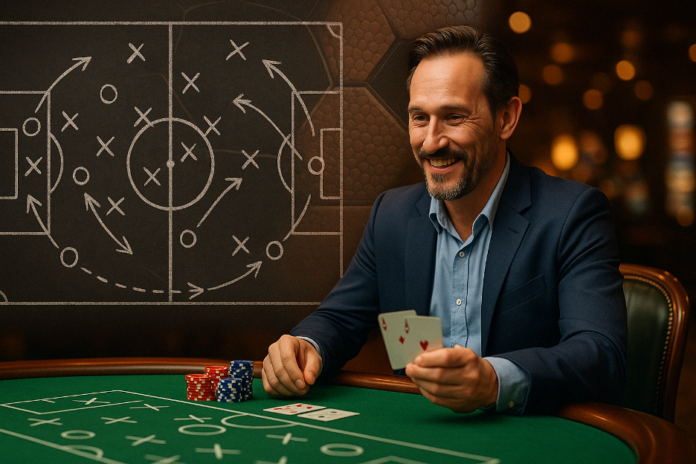

Spend enough time watching Premier League matches in 2026 and a pattern starts to emerge. Not a single formation, not one dominant system, but a shared sense that the league has entered a more thoughtful phase. The noise around transfers and results still exists, but beneath it sits a quieter conversation about control, spacing, and decision-making.
You notice it in small moments. Full-backs stepping into midfield without drama. Centre-backs carrying the ball a few metres further than they once did. Midfielders receiving under pressure and turning without panic. None of this feels radical on its own, yet together it marks a shift in how teams approach games.
Even fan behaviour reflects that change. Match discussions drift toward structure and shape rather than just goals. Between fixtures, supporters scroll through tactical breakdowns, line-up predictions, or unrelated distractions like happy jokers, before returning to debates about pressing triggers and defensive distances. Football no longer pauses between matchdays. It lingers.
The end of rigid systems
Formations still appear on team sheets, but they matter less than they once did. The Premier League in 2026 operates in layers rather than lines.
A team might start in a familiar shape, then shift three or four times during the match without anyone making a fuss about it. The change often comes from movement rather than substitution. A midfielder drops, a wide player narrows, a defender steps forward.
This fluidity reflects preparation rather than improvisation. Players train for multiple roles. They understand zones rather than positions.
That understanding reduces chaos without removing intensity.
Possession with restraint
Possession remains important, but its purpose has changed. Teams no longer chase the ball for its own sake. They value where possession happens more than how long it lasts.
You see longer spells of circulation in deeper areas, not as an invitation to attack, but as a way to reset shape. When the moment arrives, progression feels deliberate rather than rushed.
What stands out is patience without passivity. The ball moves, but always with an exit in mind.
Defensive lines think vertically
Defending in 2026 looks calmer. Back lines hold their position with confidence. They step up together, drop together, and rarely panic when space opens briefly behind them.
This discipline relies on communication and timing rather than raw speed. Teams accept that space will appear. They focus on limiting access to it.
Pressing still exists, but it appears in waves rather than constantly.
Midfield roles blur further
The traditional labels no longer help much. Defensive midfielder, central midfielder, attacking midfielder — these distinctions fade quickly during play.
Midfielders now switch tasks fluidly. One moment they shield the defence, the next they arrive late in the box. This flexibility complicates marking schemes and stretches opposition shape.
It also demands a high level of awareness. Players read situations rather than instructions.
The quiet importance of rest defence
One tactical idea surfaces repeatedly, even if commentators rarely mention it directly: rest defence. Teams think about defence while attacking.
When possession reaches advanced areas, several players remain positioned to control counterattacks. This choice limits risk without killing momentum.
As a result, matches feel more balanced. Counterattacks still happen, but fewer feel uncontested.
Wingers reconsider their space
Wide players no longer hug the touchline by default. Many operate in half-spaces, drifting inside to overload central zones.
This movement pulls defenders out of position and opens passing lanes from deeper areas. Full-backs then provide width instead.
The exchange looks simple, but it relies on timing and trust. One player’s movement only works if another fills the gap immediately.
Build-up play becomes collective
Playing out from the back no longer belongs only to defenders. Goalkeepers act as active participants. Midfielders drop closer. Forwards position themselves to receive rather than only press.
This collective approach reduces risk. No single player carries responsibility alone.
Mistakes still happen, but they feel shared rather than individual.
Data informs decisions, not style
Clubs use data extensively, yet it rarely dictates how teams look on the pitch. Instead, it shapes choices around match management, rotation, and recovery.
The tactical trends visible in 2026 reflect interpretation rather than instruction. Numbers support ideas already present.
That distinction preserves creativity.
Three ideas surface again and again
Across matches and analyses, three concepts appear repeatedly. They don’t arrive as slogans, but as habits. You could describe them simply as 1 -, 2 -, and 3 -.
- 1 – Control without domination
- 2 – Flexibility without confusion
- 3 – Structure without rigidity
These ideas guide behaviour more than any formation diagram.
Physical demands shift subtly
Players still run, press, and compete, but energy expenditure looks smarter. Teams choose moments rather than maintaining constant intensity.
Short sprints replace long chases. Recovery runs matter as much as attacking ones.
This shift supports longevity across seasons that grow ever more crowded.
Tactical coaching reaches the squad level
Preparation now extends beyond the starting eleven. Substitutes enter with clear instructions, often maintaining the same structure rather than altering it.
Changes feel incremental rather than reactive. Coaches trust systems to absorb pressure.
This trust reduces emotional swings during matches.
A brief comparison helps clarify the change
| Aspect | Earlier Approach | 2026 Approach |
| Pressing | Constant | Situational |
| Shape | Fixed | Adaptive |
| Possession | Dominant | Purposeful |
The contrast explains why matches feel different without appearing slower.
Fans adjust their expectations
Supporters adapt quickly. The appetite for instant drama gives way to appreciation of control. A calm spell no longer signals fear.
This adjustment changes how success feels. Dominance appears in organisation as much as scorelines.
Youth development mirrors senior tactics
Academy teams reflect senior principles. Young players learn to interpret space early, rather than memorise patterns.
This alignment smooths transitions and reduces adaptation time.
The league benefits collectively.
What defines influence in 2026
Influence no longer comes from introducing something entirely new. It comes from refining ideas until they feel natural.
Those shaping modern football in the Premier League do so quietly. Their impact shows in how players behave without instruction.
That subtlety marks maturity.
The future looks thoughtful, not chaotic
Nothing suggests a return to tactical extremes. The league seems comfortable with balance.
Attacking moments still thrill. Defensive organisation still frustrates. But both coexist without conflict.
Final thoughts
Premier League football in 2026 reflects confidence rather than obsession. Teams trust preparation, players trust structure, and supporters trust the process more than before.
The tactics shaping the league do not shout for attention. They reveal themselves slowly, match by match, movement by movement.
And perhaps that quiet confidence says more about modern football than any formation ever could.