
Five Key Takeaways from Liverpool’s Statement Win Over Newcastle
Liverpool’s 4–1 victory over Newcastle United at Anfield was one of the most compelling performances of the season, combining resilience, quality, and attacking fluency. More than just three points, it offered insight into where this side may be heading under growing pressure.
Speaking after the match, journalist David Lynch provided a detailed assessment of the performance, offering perspective on its wider meaning. As he put it, “you’ve got to kind of take each game on its merits,” while acknowledging that this result “felt significant and massive”.
Drawing on his analysis, here are five key takeaways from a night that may prove pivotal for Liverpool FC.
Liverpool Showed Resilience After Early Setbacks
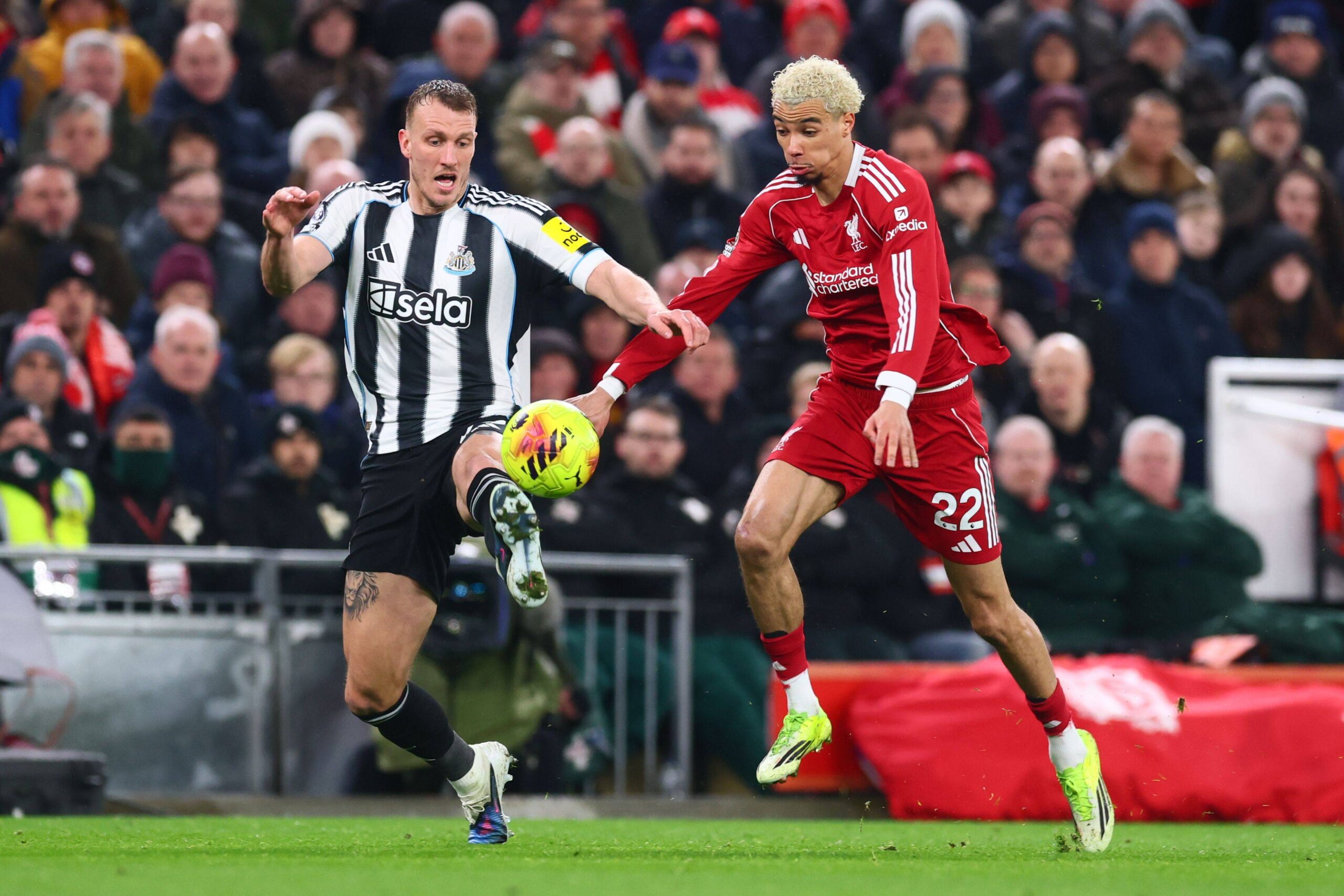
The opening stages followed a worrying pattern. Newcastle’s direct and physical approach disrupted Liverpool’s rhythm, slowing the game and limiting fluid passing sequences.
Lynch was critical of the early spectacle, noting that “the ball in play time was around 12 minutes… which is just absolutely awful to watch”. He highlighted how stop-start football and long set-piece routines have become a league-wide issue.
After conceding to Anthony Gordon, Liverpool looked vulnerable. Lynch admitted, “that was my real worry… Newcastle were probably going to sit in and hit on the counter”.
Instead of retreating into frustration, Liverpool responded with composure and intensity. The midfield pressed higher, the tempo increased, and the side began dictating territory. As Lynch observed, “we’re not going to be bullied out of a game like this”.
That mental shift proved decisive and demonstrated a maturity that has been inconsistent this season.
Ekitike Is Emerging as a Complete Premier League Forward
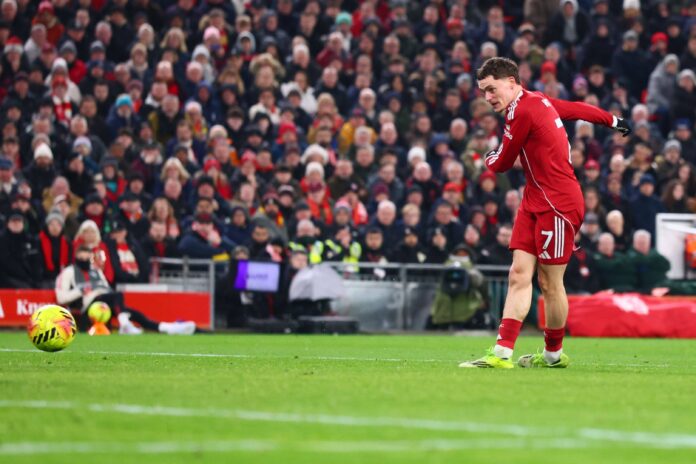
Hugo Ekitike was central to Liverpool’s revival. His two goals took him to 15 for the season, underlining his growing reliability in front of goal.
Lynch praised his efficiency, saying, “that’s the way you go about getting goals,” referencing his six shots, four of which were on target. His second strike, in particular, showed composure and confidence.
“He had so much time to think about it and just dispatched it completely ruthlessly,” Lynch explained.
Beyond scoring, Ekitike contributed physically and tactically. He dropped deep, battled defenders, and linked play effectively. His willingness to combine artistry with aggression makes him increasingly difficult to contain.
Lynch summed up his impact by stating, “he’s got everything you need to succeed here,” citing his personality, belief, and work rate.
For Liverpool, he is becoming the focal point of a more balanced and threatening attack.
Wirtz Provides the Creative Spark Liverpool Have Needed
While Ekitike delivered the goals, Florian Wirtz supplied imagination and control.
Operating between the lines, Wirtz repeatedly unlocked Newcastle’s defensive shape. His assist was a textbook example of his awareness and technical precision.
“That’s exactly what I imagined him doing when he came to Liverpool,” Lynch said. “Unpicking that low block through just quality of his feet.”
Wirtz also added a goal, calmly guiding the ball into the corner. Lynch noted, “he didn’t need to hammer it… his placement is unbelievable”.
His ability to manipulate space and tempo is increasingly vital against defensive opponents. As he adapts further to English football, Liverpool are beginning to see why they invested so heavily in his talent.
Together with Ekitike, he forms a creative partnership capable of transforming Liverpool’s attacking structure.
Statistical Dominance Reflected Tactical Control
Liverpool’s superiority after the opening half-hour was reflected clearly in the data. They registered 17 shots to Newcastle’s eight, seven on target, and an expected goals figure of 1.95 compared to 0.33.
These numbers supported Lynch’s view that the win was “fully deserved” and achieved “in style”.
He also praised the defensive platform behind the attacking display. Ibrahim Konaté’s composure and authority were highlighted, as was Ryan Gravenberch’s influence in midfield.
“The amount of times he got his body across his man and then coolly took possession,” Lynch said of Konaté, illustrated Liverpool’s improved control in transition.
Gravenberch, despite losing several duels statistically, was described as “sensational” for his positioning and press resistance.
The collective balance between attack, midfield, and defence allowed Liverpool to dominate territory and momentum.
This Performance Offers a Blueprint for the Season Run-In
Perhaps the most significant takeaway concerns the wider implications. Lynch questioned whether risk-averse football is becoming too dominant in the Premier League, arguing that elite sides must raise standards.
“If we’re going to win more games, we have to be better. We have to lead this league out of the dark ages,” he insisted.
Liverpool’s display showed how technical quality and intensity can overcome physical, defensive setups. The connection between players and supporters was also crucial.
“The fans and the team were just kind of synced up together,” Lynch observed.
With Champions League qualification the primary target, this performance provides a model: fast transitions, creative midfield play, clinical finishing, and emotional commitment.
If Liverpool can replicate this structure consistently, their season could yet be defined by momentum rather than frustration.