
Can Steven Gerrard Be the LFC Interim…?
Liverpool’s season continues to drift into uncomfortable territory and, after yet another damaging defeat at Anfield, the pressure on Arne Slot is no longer simmering quietly — it is boiling in full view. Manchester City’s 2–1 win on Sunday did not just dent league ambitions; it reinforced the sense of a team unsure of its direction, identity, and leadership. For a squad assembled at enormous cost and crowned champions not long ago, this ongoing stagnation feels alarming rather than transitional.
Slot’s tenure increasingly resembles survival rather than stewardship. Performances fluctuate wildly, in-game management is passive, and post-match rhetoric leans toward explanation rather than accountability. The belief that Xabi Alonso is being lined up for a summer return grows louder with every misstep, and with that comes a crucial question: what happens between now and then?
https://twitter.com/anfieldwatch/status/2020603595394097176?s=46&t=rxgukmqdoXc4muVFLSx2EQ
The Slot Problem and the Alonso Shadow
Arne Slot appears trapped between two realities. On one hand, he is managing elite players who expect clarity, authority, and conviction. On the other hand, he seems fully aware that his long-term future may already be decided elsewhere. That limbo rarely breeds confidence, and Liverpool’s body language reflects it.
A midweek trip to Sunderland now looms large. Once considered a routine assignment, it is now a fixture that carries genuine jeopardy. Sunderland are organised, physically robust, and tactically clear — everything Liverpool currently is not. A defeat at the Stadium of Light would no longer be labelled an upset; it would be confirmation of a downward spiral. Worse still, Slot’s habit of deflecting responsibility rather than confronting shortcomings suggests a disconnect with the club’s historic standards.
Behind the scenes, the likely succession plan is already written. Alonso’s anticipated arrival would usher in a structural reset — moving away from a rigid back four toward a flexible back three, redefining roles, and reshaping recruitment. That transition, however, requires time, preparation, and an emotional reset. The question is whether Liverpool can afford to wait until summer under the current stewardship.
Steven Gerrard has Liverpool return lined up as his Rangers revelation clears Arne Slot succession planhttps://t.co/Z7v6cpL2DX pic.twitter.com/u18JFm8JAU
— Daily Record Sport (@Record_Sport) February 8, 2026
Why Steven Gerrard Makes Sense as an Interim
If a change is enforced before season’s end, the interim route becomes not only viable but logical. Chelsea and Manchester United have both embraced internal solutions this season, injecting energy, clarity, and belief through familiar figures. Michael Carrick’s influence at United and Liam Rosenior’s impact elsewhere underline the power of connection as much as tactics.
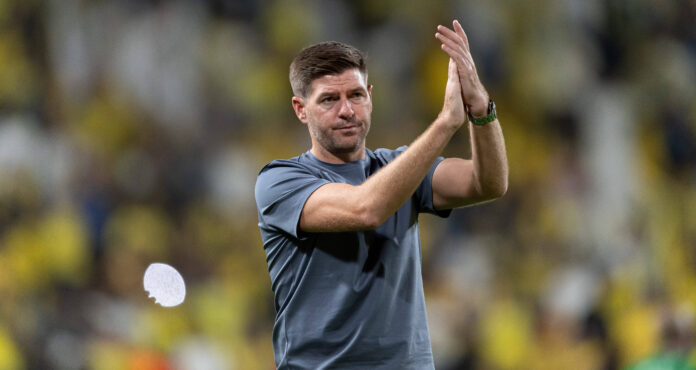
For Liverpool, Steven Gerrard stands apart as an option no spreadsheet could replicate. His tactical ceiling as a long-term elite coach may be debated, but as a short-term galvaniser, his credentials are undeniable. Gerrard understands the club’s demands instinctively. He would not need time to learn what Liverpool means — he embodies it.
What Gerrard would bring immediately is intensity, clarity of messaging, and emotional re-engagement. Players who appear hesitant or passive under Slot would be confronted by a manager whose expectations are non-negotiable. Desire, accountability, and aggression would return to the forefront, even if the football remained imperfect.
Crucially, an interim appointment could be safeguarded by transparency. Edwards and Hughes could publicly confirm that Gerrard’s role is temporary, with Alonso taking charge at season’s end following his sabbatical after leaving Real Madrid. That clarity protects all parties. Gerrard avoids being judged as a long-term solution, Alonso prepares without interference, and the squad regains direction.
There is understandable fear that a strong Gerrard run would complicate decisions. But a charge toward a title or Champions League triumph feels unrealistic at this stage. What Liverpool needs now is stability, identity, and belief — not miracles.
If the Sunderland result goes badly, the conversation may shift from speculative to unavoidable. In that scenario, Steven Gerrard as interim is not nostalgia-driven fantasy. It is a pragmatic, emotionally intelligent bridge toward the next era — one that may already be waiting just around the corner.