


Nico Schlotterbeck: The Left-Sided Conductor in a New Back Three
Liverpool’s continued links with left-sided defenders are no coincidence. They are a signal of what is being considered behind closed doors. A structural hint at regeneration. A tactical breadcrumb trail that leads toward one inevitable conclusion: a back three under the man many expect to succeed in the dugout next season — Xabi Alonso.
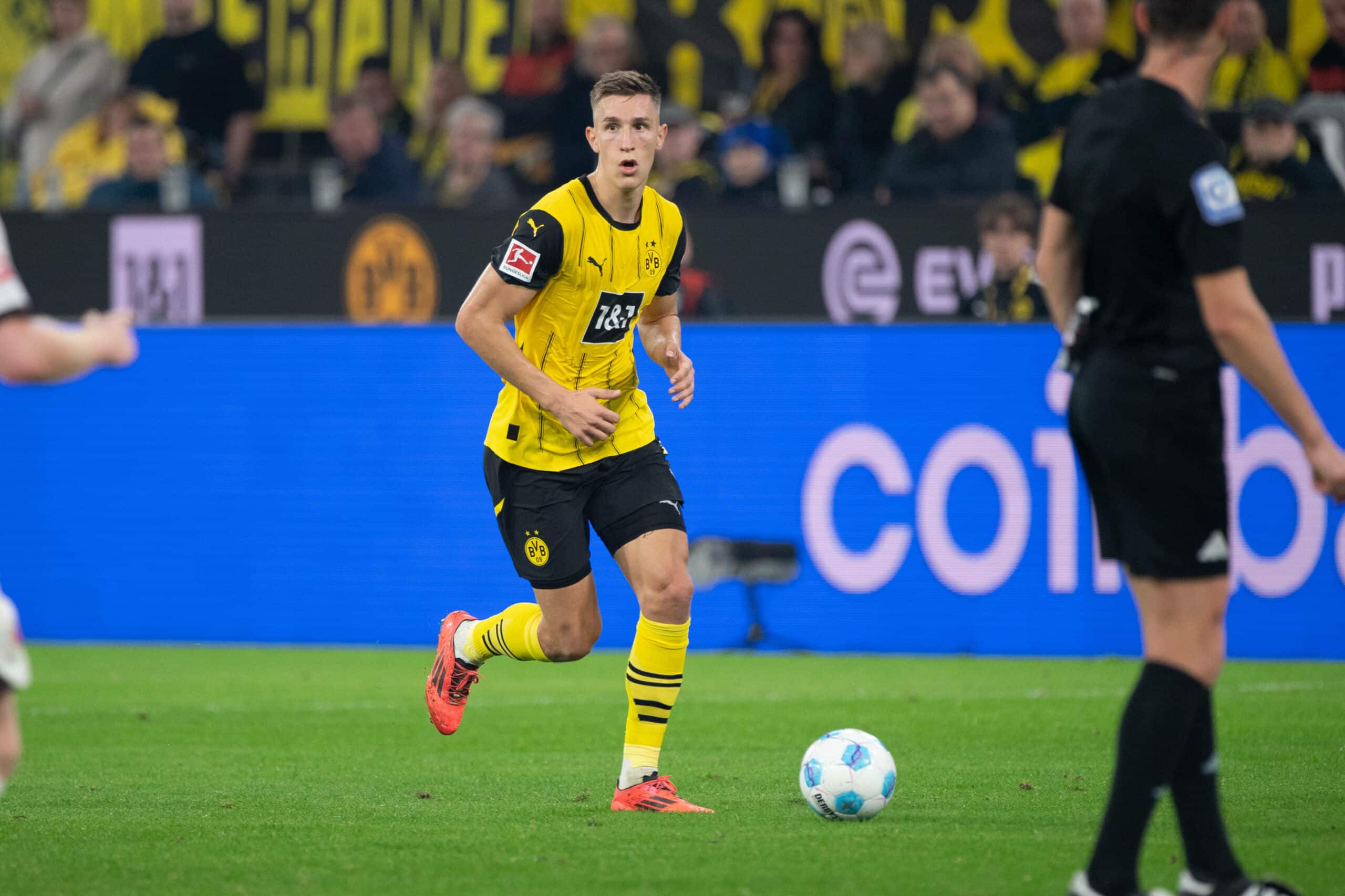
Among the names repeatedly surfacing is Nico Schlotterbeck, Borussia Dortmund’s defensive linchpin and one of the Bundesliga’s most progressive centre-backs. If the blueprint is a 3-4-1-2 or 3-4-2-1, then the left-sided centre-back becomes a specialist role. It demands more than defending. It demands orchestration and an immediate ease to allow a gas runway to succeed.
Schlotterbeck fits that brief.
At 6ft 2in, left-footed, comfortable stepping into midfield zones, he offers the variation that balances a back three perfectly. With Virgil van Dijk anchoring centrally, the left channel must be occupied by someone capable of carrying possession, breaking lines, and defending transitions in open space. Schlotterbeck is not merely a stopper; he is a facilitator who brings effortless discipline and experience.
His passing range is expansive, a requirement in this team where deep progression has stalled. His willingness to step forward is aggressive without being reckless, another must to navigate pressing situations. He can operate as a traditional centre-back or slide wider into a left-back role when the shape demands fluidity. That hybrid quality is invaluable in modern systems where defensive lines morph in and out of possession.
Liverpool has lacked that natural left-footed progression from deep, as fullbacks on that flank have tended to surge onwards or sit uncomfortably in a block. Too often build-up funnels through predictable lanes, especially since the departure of Trent Alexander Arnold from the rearguard. Schlotterbeck would alter that geometry immediately and allow comfort from wider lanes.
The price point makes sense. With just one year remaining on his contract at the end of the season, a fee in the region of £40 million represents a market opportunity rather than extravagance. For a 26-year-old entering his prime, experienced in Champions League football and comfortable in high-intensity systems, the risk profile is minimal.
And crucially, Alonso knows him. Having coached in Germany and built Bayer Leverkusen’s title-winning machine around intelligent defenders who initiate attacks, he understands precisely what profiles elevate his structure. Schlotterbeck is stylistically aligned with that philosophy — proactive, technical, assertive.
Structure, Succession and Squad Evolution
Assuming Ibrahima Konaté signs a new contract — which remains the logical expectation — Liverpool’s central defensive core retains elite athleticism. Jeremie Frimpong’s arrival strengthens the right-sided dynamic, offering vertical thrust as a wing-back or auxiliary defender. Van Dijk, though entering the latter stages of his peak, still commands central authority.
But a back three demands depth.
Six senior defenders become the minimum requirement. Rotation is inevitable. Injuries are unavoidable. Tactical variation requires specialists.
Behind the likely starting trio of Van Dijk, Konaté and Schlotterbeck, Liverpool would possess intriguing developmental layers. Giovanni Leoni represents future investment. Luke Chambers’ promotion from the Under-21 group offers natural left-sided balance. Giovanni Leoni provides right-sided adaptability. Add Jérémy Jacquet as an elite talent option and suddenly the defensive ecosystem feels sustainable rather than stretched. Joe Gomez should be granted a move and the transition should be completed.
Schlotterbeck’s presence would not merely strengthen the starting eleven — it would clarify roles. He becomes the progressive outlet on the left. Konaté provides recovery speed and physical dominance on the right. Van Dijk orchestrates centrally. Balance is restored.
There is also the psychological dimension. A new manager requires immediate reliability. Transition seasons are fragile. Installing an experienced defender familiar with German tactical demands reduces uncertainty. Alonso would not be gambling on potential alone; he would be integrating a player already versed in structured pressing, positional rotation, and build-up responsibility.
The modern Liverpool cannot afford stylistic stagnation. Evolution is essential. The shift toward a back three feels less like speculation and more like strategic inevitability.
If that is the direction, then Nico Schlotterbeck is not a luxury. He is a logical cornerstone.
Measured, progressive, tactically literate — and available at a market-aligned fee.
For a club preparing for systemic change, he may well be the ideal Alonso addition.