
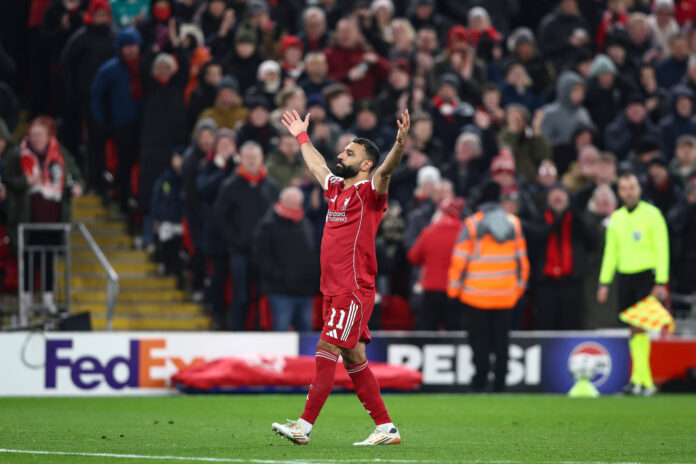

Salah, Form and Slot: Patience in a Season of Expectations
There is a curious thing about greatness. It becomes routine, and routine breeds entitlement. So when Liverpool’s talisman goes three, four, five matches without rippling the net, murmurs swell into headlines and form becomes a talking point. Yet, as Liverpool manager Arne Slot said in his pre-match press conference ahead of West Ham United: “He has set his own standards and they are so, so, so high that the moment he doesn’t score for a few games, people are immediately surprised, so that is the big compliment he can get.”
That line tells the story. Salah’s form is not judged against the league, or even Liverpool’s forwards, but against the ghost of his own brilliance. Seasons of relentlessness have warped perception. Nine league games without a goal is a drought only because he once made scoring look inevitable. Slot knows this, and he said so plainly: “You can change data and say it’s no goal in nine league games and that is the standard he set.”
Numbers Behind Recent Dip
Strip away emotion and you see context. Slot reminded observers that just three matches earlier, Salah produced “an assist and a goal against a Premier League side, Brighton, a very good team, in the FA Cup.” It is not the barren run the narrative suggests. It is a slight pause in rhythm.
Salah’s overall numbers still stack up in elite territory. Chance creation, progressive carries, expected goals involvement — metrics that matter in modern analysis — remain competitive. His movement pulls defenders, his positioning opens lanes for runners, and his decision-making under pressure still carries that ruthless edge. Form, in football, is rarely linear. Even the finest forwards drift in and out of scoring bursts.
Slot’s point about expectations cuts deeper. Liverpool are accustomed to their No.11 delivering in clusters. That habit has masked natural cycles. This season, the difference is not ability but perception. As Slot put it, “In the end, he always starts scoring again.” It was not bravado, just recognition of patterns.
Context in Slot System
Slot’s Liverpool are evolving. Pressing triggers are more measured, midfield rotations more fluid, and wide forwards asked to do different defensive work. Salah’s role has adapted with it. He still hunts goals, but he also stretches defences and links transitions.
Slot also noted that others are feeling similar droughts: “Hugo Ekitike and Cody Gakpo haven’t scored as many lately.” That matters. When multiple forwards dip together, it points to systemic adjustment rather than individual decline. Teams study Liverpool more closely now, doubling up, denying the inside channel, forcing play wide. Salah’s form must be read within that tactical chess match.
And yet, there is an inevitability about great scorers. They sense weakness, punish hesitation, and turn half-chances into match-winners. Slot trusts that instinct. Liverpool trust it too.
Future Path for Liverpool Attack
What happens next is rarely dramatic. There is no grand reset. Salah will score again, perhaps twice in one afternoon, and the noise will dissolve. Liverpool’s title ambitions depend on collective output, not panic over temporary dips.
Slot’s calm is instructive. Managers who understand form know patience is currency. The dressing room does not doubt Salah; they have seen too much evidence. Supporters should take their cue from the bench.
In truth, the conversation around Salah’s form says more about Liverpool’s ambition than any slump. This club expects excellence. It measures success by silverware and legends. Salah has been both.
Slot’s closing sentiment was simple, almost inevitable: “In the end, he always starts scoring again.” Liverpool will hope that moment comes soon, because when Salah rediscovers his finishing touch, form becomes momentum, and momentum wins titles.