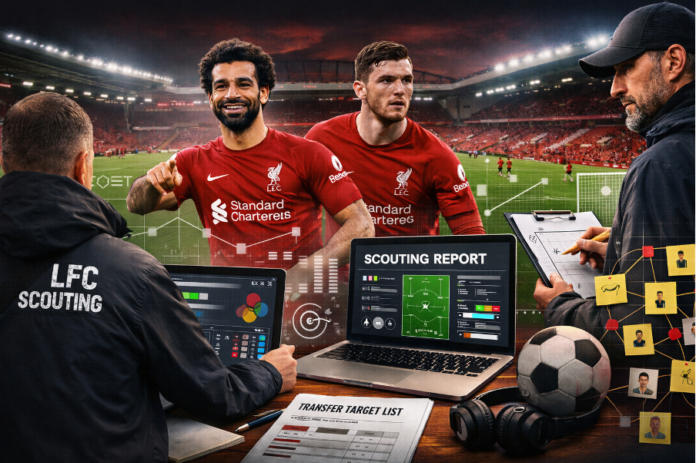

Recruitment shapes long-term sporting performance. Liverpool builds its scouting model around a clear principle: identify players whose real value exceeds the transfer fee requested at the time of negotiation.
The online betting market now influences the digital ecosystem surrounding professional football. The platform highflybet operates in the online casino and gambling sector, with visible presence in digital discussions linked to sport. This type of operator functions within regulated frameworks, depends on local licensing systems, and attracts an audience interested in statistical performance and match outcomes. Liverpool, for its part, focuses exclusively on internal measurable indicators and sporting projections, without integrating such platforms into its decision-making process.
This distinction clarifies the separation between peripheral commercial activity and the club’s sporting strategy. Liverpool bases its recruitment decisions on measurable output and tactical coherence.
Defining an Undervalued Asset
Liverpool treats each player as a structured sporting investment. The club defines an undervalued asset through precise criteria:
- Statistical production above average in a less exposed league
- Steady progression across multiple seasons
- Capacity to maintain high-intensity performance
- Transfer cost below market standards for a comparable role
- Immediate tactical compatibility
The staff rejects recruitment driven by reputation alone. Scouts search for measurable indicators: pressing volume, duel efficiency, passing accuracy under pressure, and consistency in physical output.
A player may compete in a modest team while demonstrating qualities transferable to a more demanding environment. Liverpool targets this type of profile.
The Central Role of Data
Liverpool strengthened its analytical department several years ago. Analysts process thousands of actions per season to anticipate a player’s future impact.
They examine:
- Expected goals (xG) and expected assists (xA)
- Progressive passes into the final third
- High recoveries and pressing sequences
- High-intensity running metrics
- Consistency over at least two full seasons
The analysts adjust raw figures according to team context. A defender operating in a deep block naturally accumulates defensive actions. The analytical team corrects for volume to evaluate efficiency instead of raw totals.
This approach highlights profiles that produce more than their environment suggests.
Direct Observation and Human Validation
Data guides the shortlist, but scouts complete the evaluation on the ground. They attend matches, analyze off-ball movement, and assess concentration levels.
They focus on:
- Immediate reaction after mistakes
- Communication with teammates
- Positional discipline
- Performance under pressure
- Continuous defensive involvement
Liverpool values players who maintain the same intensity in the final minutes as at kickoff. The staff prioritizes behavioral consistency.
Tactical Coherence Within the System
The club develops a clear identity built on coordinated pressing, rapid transitions, and structured width. Every signing must reinforce this framework.
Mohamed Salah illustrates this logic. At the time of his arrival, some observers questioned his suitability for the Premier League. Liverpool studied his depth runs, finishing accuracy, and defensive workload. The club identified a profile aligned with its attacking structure.
Andrew Robertson represents another example. He played in a relegated side but displayed high running volume and consistent crossing accuracy. The staff projected his integration into a demanding tactical system.
Liverpool does not recruit a name. It recruits a function.
Projection and Development Curve
The analytical department builds projection models to estimate future performance. These models evaluate:
- Age and total minutes played
- Year-on-year development of key metrics
- Injury history
- Stability across different competitive contexts
The club targets players positioned on an upward development curve. This strategy reduces financial and sporting risk.
A 23-year-old showing steady statistical growth presents a different outlook from a 29-year-old approaching peak performance.
Internal Recruitment Structure
Liverpool organizes its decision-making process with clear stages. Each phase serves a defined purpose.
| Stage | Action |
| 1 | Advanced statistical analysis |
| 2 | Detailed video assessment |
| 3 | Live scouting observation |
| 4 | Comprehensive medical evaluation |
| 5 | Final tactical validation |
This sequence limits impulsive decisions. The club aligns each transfer with a broader strategic plan.
Cost Control and Asset Appreciation
Liverpool integrates strict financial evaluation into every transaction. The staff calculates total transfer cost: fee, wages, contract length, and potential resale value.
An undervalued asset offers sporting growth that can also increase market value. The club maintains financial stability through this structured approach.
Sadio Mané and Georginio Wijnaldum embodied this principle upon arrival. They delivered strong metrics without carrying global superstar status at the time of transfer.
Liverpool prioritizes measurable performance over public image.
Psychological Assessment
The staff evaluates personality before final approval. Scouts consult former coaches and technical staff members.
They gather information on:
- Daily discipline
- Training commitment
- Acceptance of squad rotation
- Integration within a demanding dressing room
The club considers mental stability essential for sustained output. Talent alone does not guarantee collective balance.
Market Anticipation
The transfer market evolves rapidly. Many clubs now apply similar analytical tools. Liverpool maintains an advantage by acting early on identified profiles before price escalation.
The club explores:
- Less exposed leagues
- Players approaching contract expiry
- Versatile profiles
- Young talents with consistent progression
This diversification broadens the search field and reduces direct competition.
Risk Management
Every transfer carries uncertainty. Liverpool limits this uncertainty through information accumulation.
The club combines:
- Detailed statistical datasets
- Thorough medical examination
- Complete injury history
- Behavioral evaluation
- Precise tactical compatibility
This framework does not eliminate failure, but it reduces costly errors.
Competitive Impact
The pursuit of undervalued assets has allowed Liverpool to build a coherent squad across multiple seasons. The club has reinforced each line with profiles aligned to its playing model.
New signings sustain high intensity and integrate quickly into a structured collective. This continuity supports long-term performance.
The scouting model does not depend on isolated intuition. It relies on data accumulation, attentive human observation, and strategic clarity.
Conclusion
Liverpool has developed a structured system to identify undervalued assets before the market adjusts their price. The club combines statistical analysis, direct observation, and strict tactical coherence. It rejects decisions driven solely by reputation. It prioritizes measurable progression and system alignment.
In an environment where data circulates quickly and competition intensifies, this method requires discipline and anticipation. Liverpool maintains focus on real performance value rather than media visibility. This strategic consistency supports both sporting stability and economic balance over the long term.