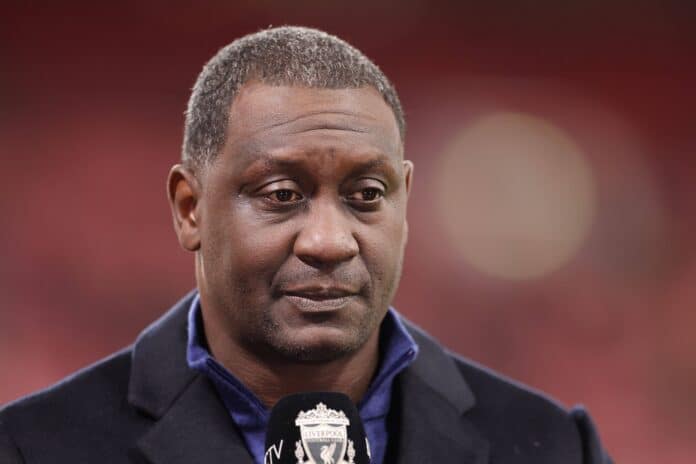

Former Liverpool forward opened up to Alison Bender about hospital nights, mental health and the pressure he carried in silence.
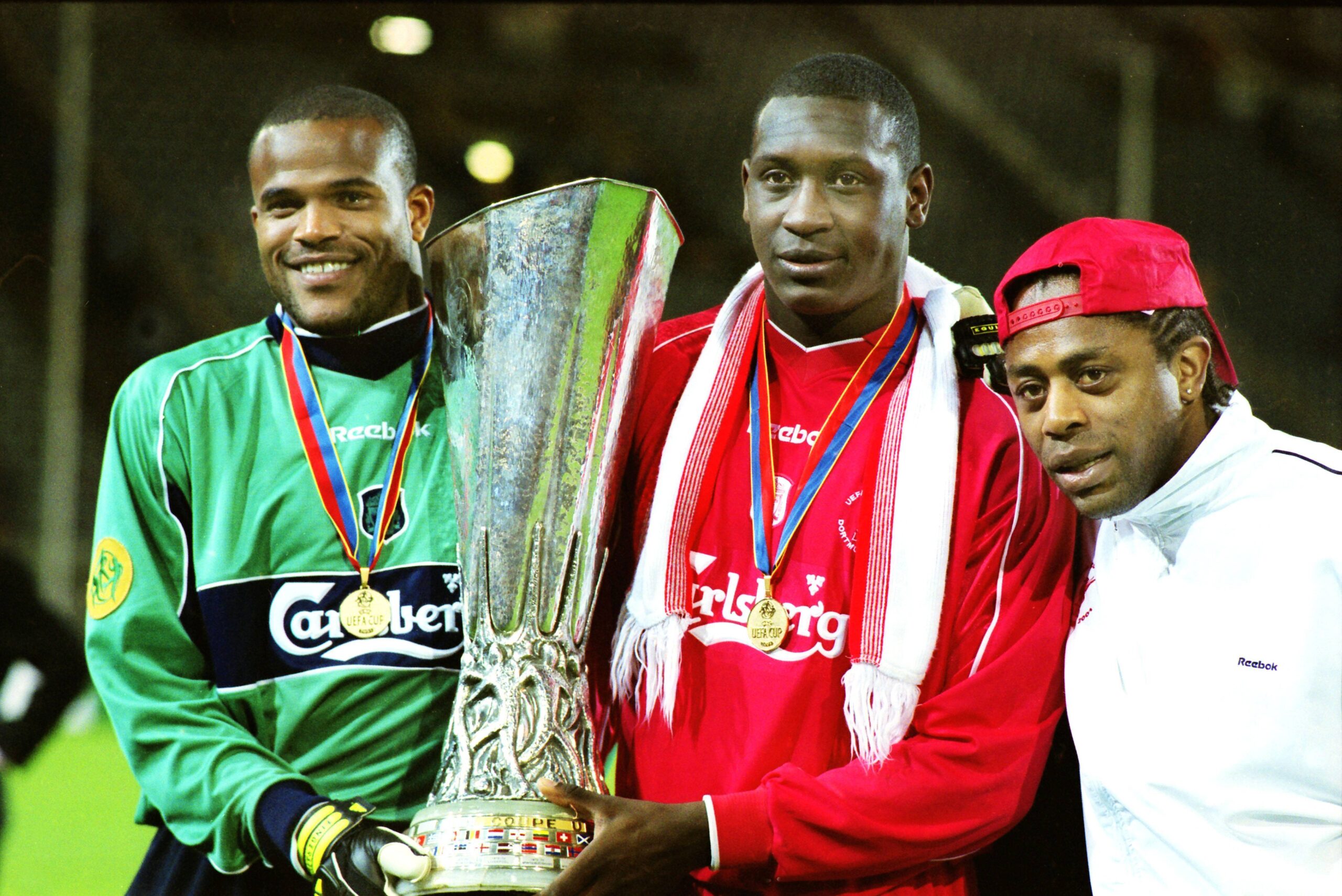
Emile Heskey’s Liverpool story is usually told through medals, goals and the 2001 treble. On After the Final Whistle, Alison Bender found the quieter version. The podcast, proudly supported by Samaritans, looks at “what happens when the game ends and the crowds go home.” With Heskey, that meant identity, mental health, racism, family and the parts of football people rarely see.
Bender said Heskey had already been “so open” about mental health and depression. His answer set the tone. “It’s never easy to talk about your feelings,” he said. “Never easy to talk about what you’re going through.” He added that footballers often speak only “possibly 30 years later” because “you never know what they’re going through.”
Liverpool move that changed everything
When Bender asked about his move from Leicester to Liverpool, Emile Heskey went straight to the scale of it. “I was 22 years old. And I moved to the biggest club in the world,” he said. He had gone from being a Leicester lad to being recognised in places such as Times Square, while being “judged on everything” he did.
He remembered his Liverpool press conference because of a detail that should have been small. “I go to a press concert in a Puma outfit,” he said. “Now, you get criticised because who do you think you are? You should be wearing a suit. How am I supposed to know that? It’s the first time I’ve ever done it.”
That line captures the trap. A young player arrives at Liverpool, unsure of the rules, and the noise starts immediately. “Little things like that would eat away at you,” Heskey said, “and you don’t know how to deal with it because I’ve never done it before.”
The distance from Leicester was short in miles. Emotionally, it was huge. “It’s only two hours drive,” he said, “but it felt like it was nine days away.” He had “only known Leicester” and “only known my parents’ house.” At Liverpool, he admitted, “I didn’t know if I’d made the right move.”
Training ground panic behind the smile
One of the strongest moments in the After the Final Whistle interview came when Heskey described forgetting how to get to the Liverpool training ground. It was not really about geography. It was pressure taking over.
“There was a time where, and it was 2000,” he said. “I couldn’t get to the training ground. And it wasn’t far. I just lost my memory in the sense of how do I get to the training ground?”
Bender noted that he was shy. Heskey agreed. “I wouldn’t. I’m not asking for help,” he said. The solution sounds simple now. Phone someone. Ask. Get there. Yet at the time, he did not feel able to do that.
Norman Gard, Liverpool’s player liaison, helped him. “He would show me, I think he showed me once or twice and then that was it,” Heskey said. “I only went to him once just to know where the training ground was. That was it.”
Heskey told Bender he “never realised it was depression until I finished playing really.” In the moment, he “just got on with it.” That phrase ran through football then. Turn up, train, play, laugh, cope.
Hospital nights while football carried on
Perhaps the most revealing passage came when Bender asked what the players around him might have been carrying. Heskey spoke about his first son, born in 1998, when he was 20.
“My first son was born in 98,” he said. “I stayed in hospital for three months when he was born.” Asked if his son was premature, Heskey replied: “No, he was born with a heart defect.”
Then came the image that stays in the mind. “I was in and out,” he said. “I was sleeping in the hospital and going training to come back.” Nobody at Leicester knew. When Bender asked if he told anyone, he answered, “No, no, no.”
His explanation was bleak in its simplicity. “Within work and football, it’s like turn up. It’s your job to be here.” He described the hospital chair he slept in as “probably like this maybe a little smaller than this.” A young father was sleeping in hospital, then reporting to training as though life had not changed.
Speaking after the final whistle
The interview also moved through racism, generational trauma, money and representation. Heskey said black men can feel they have to “tone everything down” and spoke about boardroom representation, saying it can “put you at ease” because “it just feels like you’re represented.”
Asked what positivity he wanted from the conversation, Heskey said “the openness to actually to speak.” He described trusted friends as people you can “dump a lot of the emotional baggage” with “and then go again.” If friends are not enough, he supported professional help “100.”
For Liverpool supporters, this After the Final Whistle episode adds depth to a familiar name. Emile Heskey was part of a great Liverpool side. He was also a young man learning, worrying, fathering, hiding pain and, at one point, unable to remember the way to training.
▶️ Watch the Full Episode on YouTube
https://youtube.com/@afterthefinalwhistlepod
🎙️ Listen on Spotify
https://open.spotify.com/episode/6gW81EEDQzvY2oZm48g3dq
🎙️ Listen on Apple Podcasts
https://podcasts.apple.com/us/podcast/after-the-final-whistle/id1893080400
📸 Follow on Instagram
https://instagram.com/afterthefinalwhistlepod