


Webb Defends Controversial Sesko Decision
Howard Webb has offered a detailed explanation for one of the most debated Premier League moments of recent weeks after Benjamin Sesko’s contentious goal against Liverpool was allowed to stand despite apparent handball claims.
The incident came during Liverpool’s dramatic 3-2 defeat at Old Trafford earlier this month when Sesko doubled Manchester United’s lead in the 14th minute. Replays appeared to show the striker making slight contact with the ball using his fingertips before it crossed the line, immediately sparking fierce debate among supporters, pundits and former referees.
According to the original source report, the Premier League Match Centre account stated there was “no conclusive evidence” to overturn the on-field decision. That explanation has now been expanded upon by Webb, who addressed the controversy during the latest edition of Match Officials Mic’d Up on Sky Sports.
The PGMOL chief acknowledged the difficulty of the decision while insisting VAR officials followed protocol correctly.
“I think it probably does hit the hand, but of course the VARs need that conclusivity. They need to be absolutely certain that it does, and it doesn’t matter what we think, does it? It matters what they think, and we do ask them to be sure that something needs acting upon.
“Clearly, Sesko doesn’t deliberately handle this. He doesn’t make himself bigger. It’s all very natural, but of course, the Laws of the Game require any goal that comes off the hand immediately, or where the player scores immediately after hitting the arm, then it has to be disallowed, and that means the VAR has no option but to start looking for that.
“Sometimes it looks like they’re being a bit too forensic, and you hear, in this situation, the VAR looking from various angles. They want to get it right.
“If it does conclusively come off the arm, but they don’t get to that level of certainty, they probably think it probably does as well, but they need to be absolutely categorical to get involved, and they weren’t able to find it, and hence the reason that the on-field decision stood.”
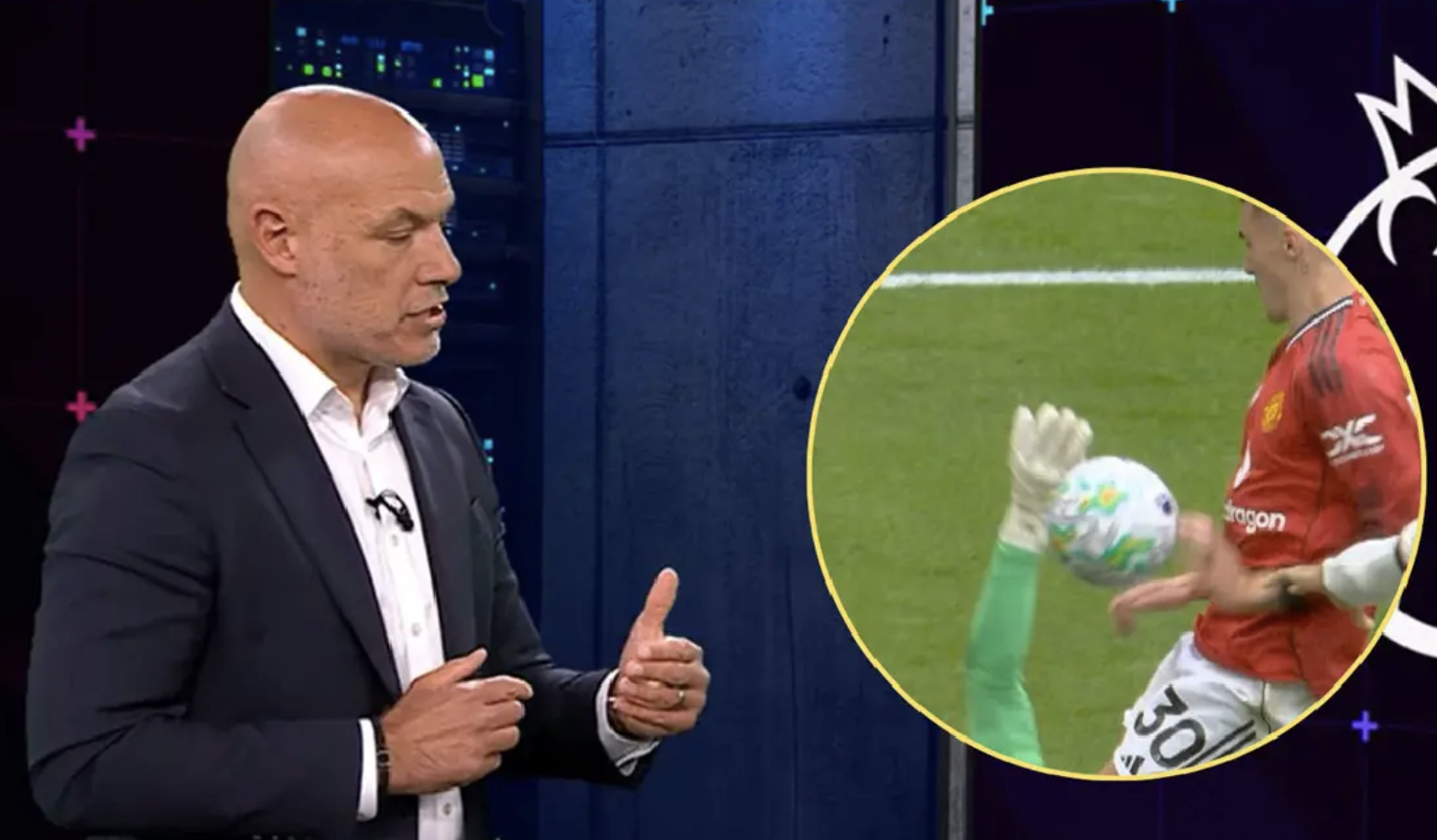
Sesko Handball Debate Continues
Webb’s explanation may clarify the process, but it is unlikely to silence the wider debate surrounding the Sesko handball incident. For many observers, the footage appeared convincing enough to warrant intervention from VAR.
Under current IFAB laws, intent is irrelevant when a player scores immediately after the ball touches their hand or arm. Even accidental contact should lead to the goal being ruled out. That point has become central to the frustration felt by Liverpool supporters following the defeat.
Former referees have also offered differing interpretations. Some believe the evidence was sufficient to overturn the goal, while others argue the lack of a definitive camera angle justified sticking with the referee’s original call.
The controversy once again raises broader questions about the threshold VAR officials use when reviewing incidents involving handball. Football’s technology era was introduced to remove clear and obvious mistakes, yet subjective interpretation still dominates many of the game’s defining moments.
For Liverpool, the frustration was amplified by the significance of the result. A point gained at Old Trafford could yet prove crucial in the race for Champions League qualification.
Liverpool Left Frustrated By Fine Margins
Arne Slot’s side were far from blameless on the day. Liverpool surrendered possession cheaply in the build-up to Sesko’s goal and looked vulnerable defensively throughout the first half. Yet the handball controversy has overshadowed much of the tactical analysis since the final whistle.
Football has always lived in the space between certainty and chaos. That tension only intensifies when microscopic VAR reviews determine massive moments in elite competition.
What makes the Sesko handball incident particularly contentious is that Webb himself admitted he believed the ball “probably” touched the striker’s hand. The distinction came down entirely to proof rather than probability.
For supporters, that nuance can feel impossible to accept when slow-motion replays appear persuasive. For officials, however, the burden of certainty remains paramount under VAR protocol.
The debate is unlikely to disappear any time soon. Incidents involving Webb, Sesko and handball decisions continue to dominate Premier League discussion because they expose the uneasy balance between technology, interpretation and human judgement.
VAR Scrutiny Growing Across Premier League
The Premier League’s relationship with VAR remains uneasy despite repeated efforts to improve transparency. Releasing referee audio through programmes such as Match Officials Mic’d Up is intended to build understanding among supporters, but it can sometimes deepen controversy instead.
Hearing officials openly discuss uncertainty during reviews highlights just how difficult these calls can be in real time. It also reinforces how fine the margins have become in modern football.
Webb has consistently defended the principle that VAR should only intervene when evidence is conclusive. In the Sesko handball case, officials believed they lacked the certainty required to overturn the original decision.
Whether supporters agree is another matter entirely.
Liverpool must now focus on finishing the season strongly rather than dwelling on a result that cannot be changed. Yet moments like this linger because they shape perceptions of fairness, consistency and accountability across the Premier League.
For Webb, Sesko and everyone involved, the handball controversy has become another defining chapter in football’s endless argument over VAR.