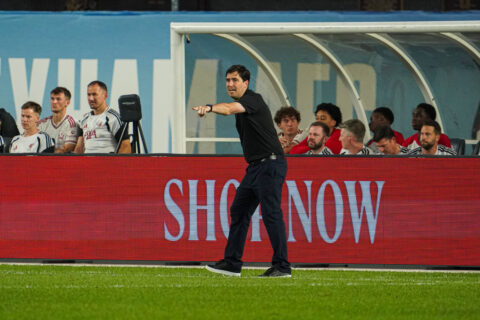







A Liverpool matchday has never been just 90 minutes. It starts with the fixture list, gathers pace through team news and tactical chat, then rolls into the familiar question: who starts, who sits out, and where might the game turn?
That’s where an Anfield Index matchday companion earns its place. Think of it as your organised route through the noise, bringing together the form guide, selection questions, football detail and supporter conversation without pretending there’s a single “correct” opinion. There rarely is.
For the confirmed kick-off time, opposition details and official squad updates, it’s always sensible to check Liverpool FC’s fixtures and results page alongside the discussion.
Start with the fixture, then find the real story
Every match has an obvious headline. A rivalry. A difficult away ground. A run of fixtures that leaves little room for error. Yet the more revealing story is often tucked beneath it.
Before settling on a prediction or even a preferred line-up, the fixture hub should answer a few useful questions:
- What has Liverpool’s recent form looked like, beyond the scorelines?
- Has the opposition changed shape or style in recent weeks?
- Which players are carrying heavy minutes?
- Is this a match where territory matters more than possession?
- Does the calendar make rotation likely?
Results can flatter or punish a side. A narrow win might have come with total control; a draw may have followed a performance full of good chances. That’s why the form guide is more helpful when it includes the manner of the display, not merely the result.
At Anfield, context carries extra weight. The ground has been Liverpool’s home since 1892 and remains one of English football’s defining venues, with the Kop, Main Stand, Sir Kenny Dalglish Stand and Anfield Road End forming its familiar shape. You can read more about the stadium’s history via Liverpool FC’s Anfield guide.
For supporters, the key is to arrive at the debate informed but not overcommitted. Football has a habit of making a sensible plan look daft by half-time.
The tactical lens: where the match might be decided
Tactical previews are at their best when they give you something clear to watch. Not an overload of arrows and jargon, but a handful of match-ups that may decide whether Liverpool can settle into their rhythm.
Pressing triggers and the first pass forward
Liverpool’s press can change the temperature of a match very quickly. Watch what happens when the opposition centre-backs receive facing their own goal, or when a full-back takes a loose touch near the touchline. Those are common moments for a team to close space, limit options and force play towards a crowded area.
The important question is not simply, “Will Liverpool press?” It’s where and when.
A high press needs the back line and midfield to move as one. If a forward jumps too early without support behind them, the opposition can play through the first line. If the midfield locks onto receivers and the defence is ready to squeeze up, a simple pass can become a turnover in a dangerous zone.
Keep an eye on:
- The distance between Liverpool’s front line and midfield.
- Whether the opposition goalkeeper is encouraged to play short.
- The spaces either side of Liverpool’s defensive midfield player.
- How quickly Liverpool reset after losing possession.
Midfield match-ups are rarely neat
Midfield battles aren’t always about one player marking another for 90 minutes. They’re often about numbers, timing and the ability to receive under pressure.
If an opponent packs the centre, Liverpool may need to create width through advancing full-backs or wide players holding the touchline. If the opposition leaves room between midfield and defence, the most valuable player could be the one who receives on the half-turn rather than the one who makes the final pass.
There’s also a balance to strike. Commit too many bodies forward and transitions become awkward. Hold too many players back and the attack can feel flat. That tension is why the midfield selection generates so much discussion each week, and fairly so.
Chance creation is more than crossing or shooting
When Liverpool are struggling to create, it’s tempting to ask for more crosses or more shots from distance. Sometimes that works. More often, the better route is cleaner access to the penalty area.
Look for recurring patterns:
- A wide player drawing a defender before slipping a runner through the channel
- A midfielder arriving late at the edge of the area
- Quick switches of play that isolate a full-back
- Cut-backs from the byline rather than hopeful balls into a packed box
- A forward dropping deep to create space for a runner beyond
The final pass tends to get the glory, but the earlier movement usually makes it possible.
Don’t treat set-pieces as an afterthought
Set-pieces can settle tight fixtures, particularly when open play is being squeezed. Corners, indirect free-kicks and long throw-ins deserve proper attention in a match preview.
Ask whether Liverpool are defending zonally, man-to-man or with a mixed approach. At the other end, watch for blockers, late runs and deliveries aimed away from the goalkeeper. Details that seem minor in the 12th minute can look rather significant in the 82nd.
Selection chat: form, rotation and the bigger picture
The team sheet is where thoughtful analysis meets firmly held opinion. Everyone has a preferred front three, a midfield combination they trust and a player they believe deserves a run.
A useful selection debate considers more than the previous match.
Form matters, but so do roles
A player can be in excellent form yet still be a poor fit for a particular opponent. Equally, someone who has not started recently may be suited to the job at hand: covering a quick winger, keeping possession under pressure or offering a more direct outlet.
The questions worth asking include:
- Who has performed well in the role, rather than merely looked sharp?
- Who needs minutes managed?
- Does the opponent make a particular profile more useful?
- What options are available from the bench if the game state changes?
Rotation is not a sign of indecision. Across a crowded season, it’s part of maintaining energy and avoiding predictable patterns. It can also be a chance for a squad player to make a very persuasive case.
Transfer discussion belongs here too, but it works best when linked to the football. Instead of naming targets for the sake of it, identify the need: more depth in a particular role, a different kind of creator, or another option against low blocks. That makes the conversation far more interesting than a list of names.
The supporter side: rituals, polls and keeping the chat useful
There are matchday habits that don’t need explaining. The same walk, the same meeting place, the same pre-match playlist, the same refusal to change seats when a run of results is going well. Many of us have our little routines.
A strong supporter hub gives those rituals room while keeping the conversation respectful. A poll can be simple and still useful:
**Which area will shape this match most?**
– Liverpool’s press
– Midfield control
– Wide combinations
– Set-pieces
The point isn’t to declare a winner before kick-off. It’s to give supporters a clear lens through which to watch.
Moderated talking points can help as well:
- Which selection choice would you make, and why?
- Where could Liverpool find the extra player in possession?
- What is the opposition’s strongest route into the match?
- Which tactical adjustment would you make after an hour?
There’s plenty of room for disagreement. There’s no need for it to become personal.
When the final whistle goes, the companion changes shape
Post-match coverage should do more than hand out instant verdicts. The first reaction has its place, of course, but it becomes more valuable once it is paired with footage, context and a calmer second look.
A practical post-match pathway could include:
- Reaction analysis: the turning points, tactical shifts and decisive moments
- Player pages: role-specific discussion rather than a single number beside a name
- Match archive: previous meetings, line-ups and results in one place
- Podcast picks: immediate reaction, detailed tactical review and supporter debate
Podcasts are especially useful because they make room for competing views. One listener might focus on the midfield spacing, another on a substitution, another on the emotional weight of the occasion. That’s not confusion. It’s football being football.
Editorial navigation for your matchday reading
If you’re building your own route through the coverage, these are the hubs worth keeping close:
- Liverpool’s official fixtures page for kick-off information and results
- Liverpool FC player profiles for official squad information
- The Anfield Index podcast archive for pre-match and post-match listening
- Liverpool FC news for club announcements and team updates
- The Premier League’s Liverpool page for league context
Use the fixture hub for the essentials, player pages for individual form and role discussion, tactical pieces for the why behind the performance, and podcasts when you want the longer conversation.
Sponsored
For verified UK users aged 18+ only
Virgin Games is an adult entertainment destination. Virgin Games — 18+ only. Play responsibly.
This sponsored section is separate from Anfield Index editorial coverage. Playing does not improve football insight, predict match results or support your club.
If gambling stops feeling enjoyable, take a break and seek support through GambleAware or use the safer-gambling tools available with the operator.