
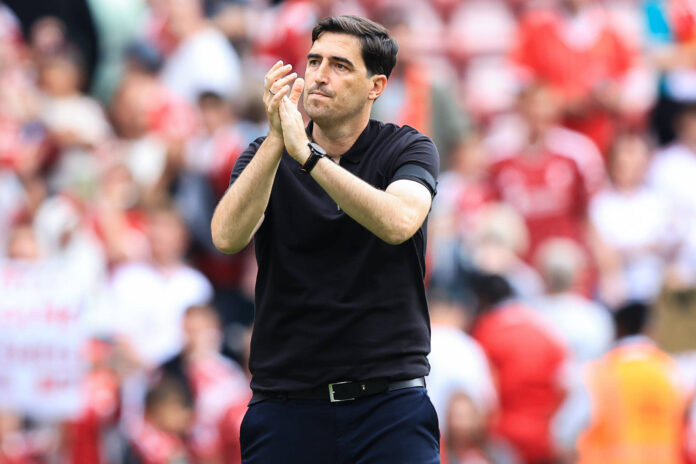

Andoni Iraola at Liverpool: Why the Change in Style Makes Perfect Sense
Liverpool fans can see the outline of something different under Andoni Iraola. The tempo is sharper, the pressing has more intent and the team look more switched on without the ball. That much is obvious. What is also obvious is that this is not yet the full version of the football he built his reputation on.
That has led to outside noise. Sean Dyche has questioned why Iraola appears to have stepped away from the aggressive, front-foot identity that defined his work before arriving at Anfield. Dyche said on The Overlap, “I’m surprised by him (Iraola),” and added, “I don’t know whether we’re gonna go on to Liverpool, but just quickly, I’m surprised, because I really liked what he was doing, playing hard, fast football, and he seems to have maybe changed. You know, sometimes, Carra [Jamie Carragher], I think managers are going to a new job, and they think, I can’t quite do that, and I think, ‘why?’”
It is a fair observation on the surface. It is also incomplete.
Iraola Liverpool shift is deliberate
Managers do not arrive at new clubs and press copy and paste. They inherit players, flaws, habits and limitations. Iraola has walked into a Liverpool side that badly needed structure after a damaging decline. Charging straight into all-out, high-octane football from day one would have been reckless, not brave.
His first job has been to stabilise the team. That means distances between the lines, better organisation in transition and a defence that can survive when the press is beaten. Those details are less glamorous than relentless attacking football, but they matter more in the opening phase of a rebuild.
There is already enough evidence that the principles remain. Liverpool are trying to recover the ball quicker, they are stepping forward more aggressively and there is more conviction in the work without possession. It simply has not yet reached the intensity people expected. That is a matter of timing, not surrender.
Liverpool pressing needs a stable base
Pressing is not about running around like lunatics. Good pressing starts with shape, trust and repeatable distances. If the back line is loose, the midfield disconnected and the forwards arriving late, the whole thing collapses. Iraola knows that. So he has started where serious coaches usually start, with the platform.
Liverpool’s defending had become too easy to expose. The team looked open, slow to react and far too easy to play through. Fixing that was not optional. It was the first step. A side that cannot defend properly will never sustain an aggressive style over a full season.
That is why the early weeks have looked more measured than many expected. The intention is still there. The volume has simply been lowered while the shape is repaired.
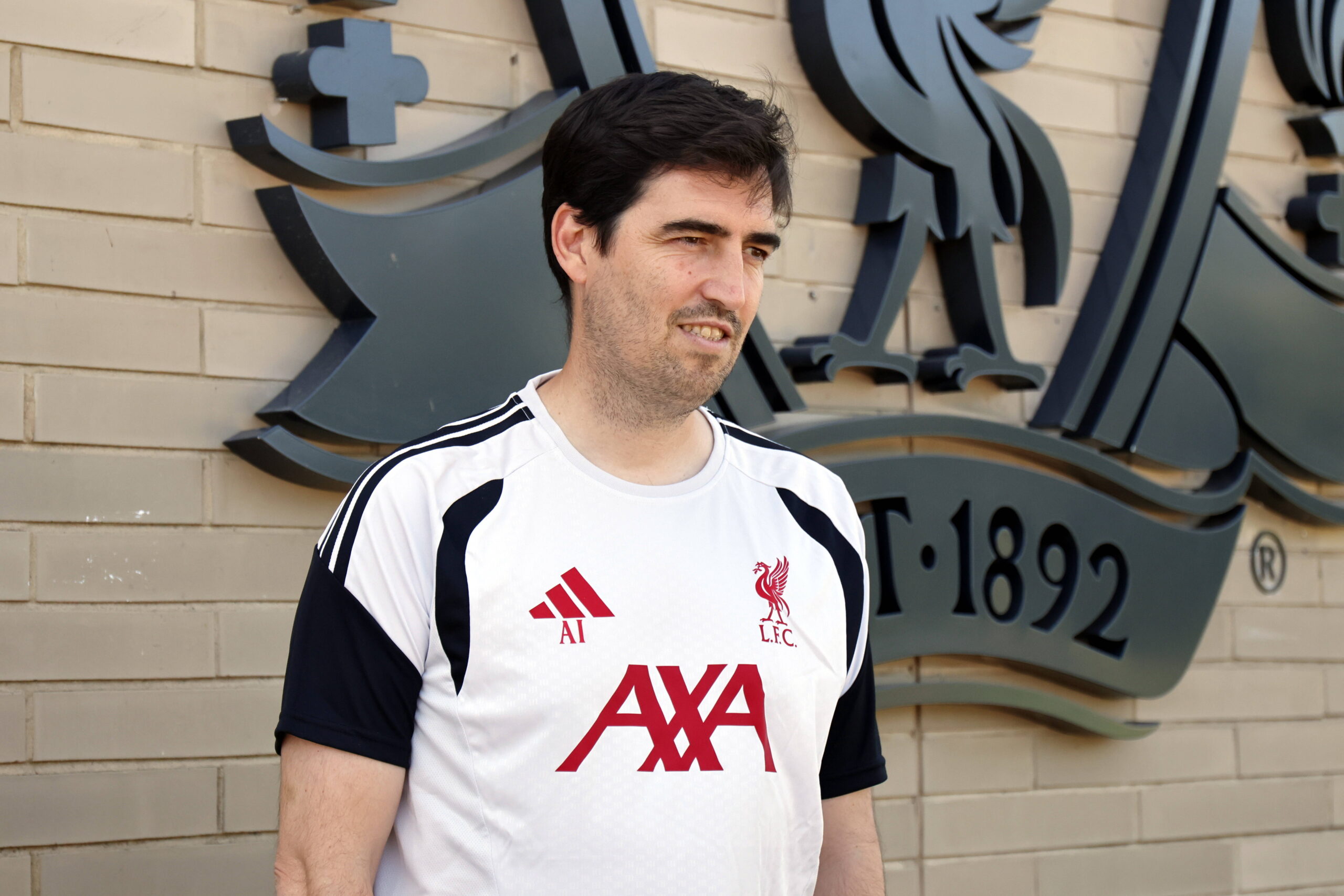
Liverpool rebuild will take time
Some supporters wanted instant transformation. That was never realistic. Systems take repetition, and demanding systems take even longer. Iraola’s best sides were drilled, aggressive and clear in every phase. They did not appear overnight.
This Liverpool squad also needs to adapt physically and mentally. Front-foot football requires constant commitment. Every player has to move together, react together and defend space with conviction. If one or two switch off, the whole structure suffers.
So yes, Liverpool do not yet look like the fully formed version of an Iraola side. That part is true. The idea that he has abandoned his identity is far less convincing. What he has done is adjust to the reality in front of him.
That is not weakness. It is coaching. And for a team that had lost direction, it is probably the only sensible way to begin.
Further discussion around Liverpool pressing, Andoni Iraola and the wider tactical shift will continue, but the central point remains simple. You build the structure first, then you raise the speed. Liverpool are still in the first part.