






Liverpool’s expected goals figures reveal attacking progress and room for improvement
Liverpool are finding more opportunities to shoot inside the penalty area, but their attacking output still leaves Andoni Iraola with work to do.
Anantaajith Raghuraman’s Expected Premier League Table analysis for The Athletic places Liverpool sixth for non-penalty expected goals across their past five league matches. Their total of 7.5 points towards an attack creating worthwhile opportunities without yet setting the standard.
There is encouragement in how their shooting profile has changed. There is also a clear warning from the defeat against Arsenal: getting into promising positions means little if the ball does not move quickly enough to unsettle an organised defence.
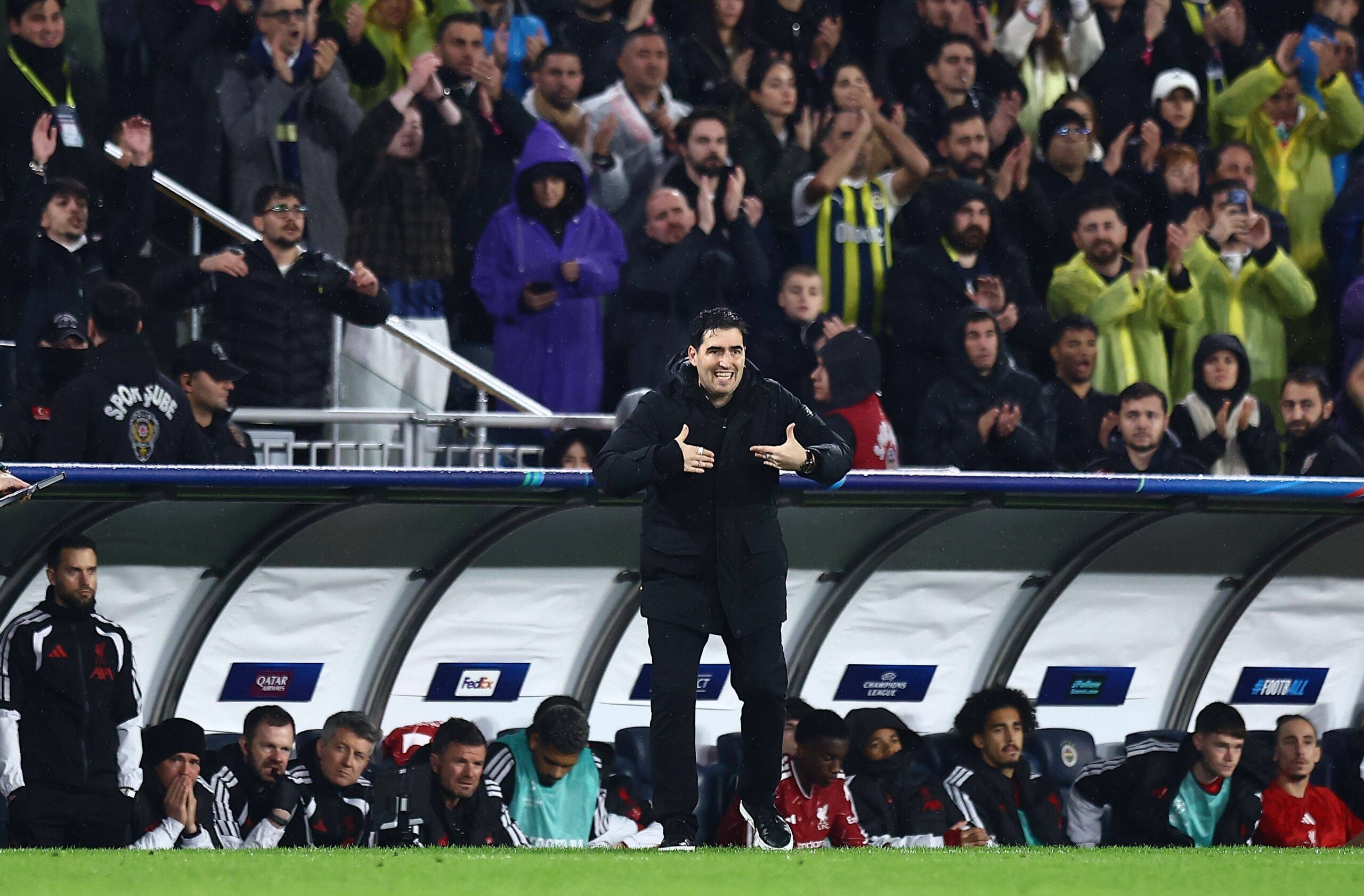
IMAGO
Liverpool rank sixth for recent chance creation
The Athletic’s analysis examines non-penalty expected goals created and conceded over each club’s most recent five Premier League matches.
For Liverpool, the 7.5 attacking total puts them close to Arsenal’s 7.7 and slightly ahead of Brighton’s 7.2 during that period. Nottingham Forest produced 8.4, while Bournemouth’s 11.4 set a considerably higher benchmark.
Those figures measure the quality and quantity of chances rather than simply counting goals. They help distinguish a team repeatedly creating good opportunities from one relying on exceptional finishing.
Liverpool’s position offers neither a reason for alarm nor grounds for satisfaction. Sixth is a respectable placing, but the investment in their forward line brings an expectation that they can produce more.
It is also important to keep the sample in perspective. These are figures from five league fixtures, not a definitive ranking of squad quality or a prediction of where Liverpool will finish.
Fewer long-range attempts suggest a useful change
One of the more encouraging details concerns where Liverpool are shooting from.
Their proportion of attempts taken from outside the penalty area has fallen from 41 per cent in the opening five league games to 31 per cent across the next five.
That is a ten-percentage-point reduction, suggesting Liverpool are relying less heavily on efforts from distance.
The shift does not automatically mean every remaining chance is a good one. An attempt inside a crowded penalty area can still be difficult, particularly when defenders are well positioned.
Nevertheless, it is a useful development. Liverpool want their attacking moves to produce opportunities closer to goal rather than repeatedly ending with speculative shots.
The next step is to ensure that improved positioning is accompanied by better angles, cleaner service and enough time for the player receiving the ball to finish.
Arsenal defeat exposes difficulty against compact defences
The clearest limitation identified in the report is Liverpool’s speed of circulation against opponents defending deep.
Raghuraman writes that Liverpool “have not moved the ball quickly enough against low blocks like Arsenal’s”.
The Anfield meeting supplied a stark example. Liverpool failed to register a shot on target, despite a match in which they needed to find a way through after falling behind.
That problem cannot be solved simply by asking players to shoot more often. The quality of the opportunity depends on what happens beforehand: the movement around the ball, the timing of the pass and whether defenders have been forced out of position.
For Iraola, the challenge is to create those moments more consistently. Liverpool have players capable of decisive contributions, but their collective attacking play must give that quality enough room to operate.
United fixture offers chance to turn promise into output
Liverpool’s recent league run has included defeats against Manchester City and Arsenal, alongside a 2-0 victory over Brighton. That range of results reflects a side still searching for consistency against different types of opponent.
The forthcoming Manchester United match offers another examination of their attacking progress.
According to The Athletic’s five-game analysis, United have allowed opponents an average of 0.15 expected goals per shot, the highest figure in the division over that period.
That suggests opportunities could be available, although a managerial change makes previous patterns an imperfect guide to the next fixture.
Liverpool’s task is to make their own improvements count. Fewer shots from distance and a competitive chance-creation total provide something to build on. Quicker, more precise attacking combinations would turn those encouraging indicators into a stronger case that Iraola’s forward line is beginning to fulfil its potential.