






Jordan Henderson to Chelsea: leadership, legacy and the latest turn in an extraordinary career
Jordan Henderson’s move to Chelsea has the feel of football circling back on itself. A player once flung into senior football by Roy Keane’s force of personality now joins a club where another former Liverpool great, Xabi Alonso, is in charge. Time passes, roles reverse, reputations shift, and yet certain football truths remain stubbornly intact. Coaches continue to see something in Henderson that compels trust.
As Simon Hughes for The Athletic highlights, Henderson has long carried himself with the energy of a player who believes there is always another argument to win, another doubt to answer, another standard to set. That quality has followed him from Sunderland to Liverpool, through England duty, on to Saudi Arabia, Ajax, Brentford, and now to Stamford Bridge.
The story from Sunderland still explains much. After a poor pre-season defeat for the club’s under-21 side, Roy Keane summoned the youngsters back and demanded they look into themselves. Neil Bailey recalled, “A lot of them shied away from the confrontation. But Jordan went: ‘Yeah, I do…,’ which impressed Roy.” The reward was immediate, a first-team debut against Ajax the following day. It was a glimpse into Henderson’s enduring currency. Coaches value conviction, especially when it is backed by industry.
It is easy, in the noise that surrounds modern football, to overlook how often Henderson has had to re-establish himself. He has rarely enjoyed the smooth ascent of a universally adored star. Instead, his path has been one of attrition, resilience and repeated self-reinvention.
Henderson leadership remains his strongest selling point
Chelsea’s interest makes sense when viewed through that lens. Their squad has often looked gifted but young, expansive but occasionally short of ballast. Henderson, now 36, brings a form of authority that cannot be manufactured in a meeting room or installed by tactical diagram. It comes from years spent enduring scrutiny, surviving dressing room hierarchies, and lifting the biggest trophies in club football.
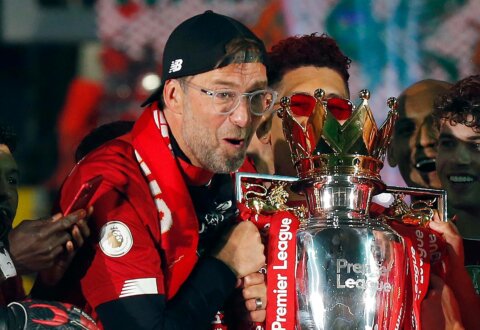
His Liverpool years established him as far more than a runner and organiser, even if those qualities became lazy shorthand among detractors. He captained Liverpool for seven seasons and led them through the most decorated period the club had enjoyed for a generation, lifting the Champions League in 2019 and the Premier League in 2020. Those achievements matter profoundly when assessing why elite coaches still call upon him.
There is, too, the matter of standards. Thomas Tuchel, who used Henderson with England at the 2026 World Cup, spoke warmly about what he offered away from matches. Francesco Farioli, his coach at Ajax, pointed to Henderson’s “mentality and professionalism”. Tuchel went further, describing him as a “serial winner” and saying he was “the glue in every team where he has played”. Such testimonials are not handed out lightly, especially in an era increasingly obsessed with youth, resale value and athletic upside.
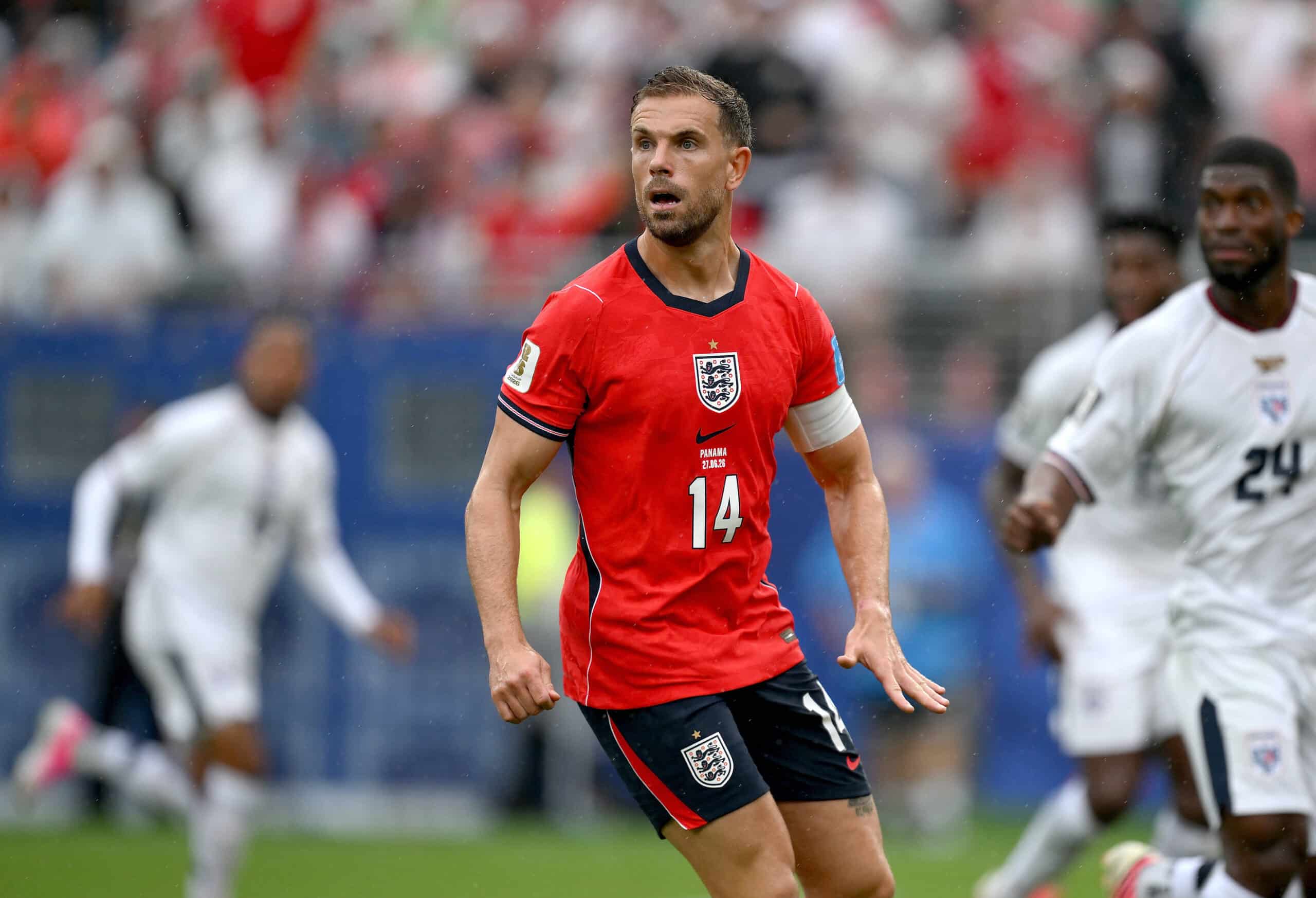
Photo IMAGO
At club level, the same debate persists. How much can Henderson still give on the pitch? It is a fair question. How much can he give around the pitch? That answer feels more certain. He sharpens habits. He stiffens culture. He makes complacency harder to tolerate. For a Chelsea side trying to accelerate its maturity, that has obvious appeal.
Liverpool legacy was built through resistance and recovery
For Liverpool supporters, seeing Henderson in a Chelsea shirt will stir mixed emotions, because his relationship with Anfield was never simple. He did not emerge as an instant darling. He arrived from Sunderland in 2011 and quickly became a target for criticism during Kenny Dalglish’s second spell. Then came the cold calculations of ownership and management. Fenway Sports Group were willing to move him on, and Brendan Rodgers agreed. Henderson’s response was not to sulk, but to stay.
That moment matters in any appraisal of his Liverpool legacy. Plenty of footballers speak about fighting for their place. Henderson actually did it. Even Sir Alex Ferguson doubted him, suggesting his running gait would hold him back. Supporters questioned his level. Team-mates took time to trust him. As Hughes notes, scepticism touched almost every layer around him.
The anecdotes are revealing. Henderson recalled of Luis Suarez, “Luis was waving his arms about all over the place after I didn’t pass to him quickly enough.” It was a harsh schooling, but also a marker of the intensity within elite football. Henderson absorbed it and improved. He became essential under Rodgers during the 2013-14 title challenge, then later inherited the captaincy after Steven Gerrard’s departure during a period in which injuries, especially that heel problem, repeatedly interrupted his rhythm.
His leadership style was often practical rather than theatrical. One famous story from the Klopp era captured this. Acting on behalf of team-mates unhappy with the scheduling of training sessions, Henderson approached Klopp to ask for change, assuring him there were “plenty” who felt the same. Klopp invited each player to come forward directly. “No one ever went up,” Henderson recalled. It is a small tale, but a rich one. Henderson was willing to carry the burden of representation. It also showed how lonely responsibility can be.
The defining five-week stretch in 2019 remains the best shorthand for his Liverpool life. He began it on the bench in the 3-0 Champions League semi-final first-leg defeat in Barcelona. He then drove himself through pain in the miraculous 4-0 return at Anfield. Weeks later in Madrid, he was in tears after lifting the trophy, embracing his father Brian during the family’s battle with cancer. It was football at its most human, triumph braided with private strain.
Chelsea move follows a career of difficult turns
The years since leaving Liverpool have done little to simplify Henderson’s public image. His departure in 2023 came amid uncertainty over his role and status. Klopp saw a reduced future for him, and Henderson made the deeply contentious move to Al Ettifaq. It proved a grave miscalculation. The football fit was poor, the optics were worse, and the reputational damage was severe, especially given his previous support for LGBTQ+ rights.
By the end of 2023 he was seeking a route back to Europe. Ajax offered one, and he was made captain. Brentford followed, where he helped the club to ninth place in the Premier League, although he was not a guaranteed starter. He made 22 starts and 10 substitute appearances, enough to keep him relevant and reinforce the perception that he still offered practical value. Then came England again.
At the 2026 World Cup, he became the first English player to be selected for seven major international tournaments. That is not an accident, nor mere sentimentality. International managers, often dealing with compressed time and fragile chemistry, prize trusted characters. When Henderson injured himself in celebrations after the win over Mexico, there was mockery outside camp but warmth within it. Morgan Rogers said: “To have him back as quickly in camp, and back to normal him, will be the best for the group.”
That phrase, “for the group”, returns us to the central point. Henderson’s value increasingly sits in how he shapes collective behaviour. Chelsea, for all their talent, have sometimes looked like a collection of assets rather than a fully formed team. Bringing in a figure with scar tissue, know-how and a fierce internal compass can help close that gap.
Yet there remains a tension that could define this move. One reason Liverpool came to feel a separation was necessary was that Henderson found reduced involvement hard to accept. For England, he has appeared to embrace a role broader than minutes played. In club football, that adjustment has historically been more difficult. At Chelsea, with Moises Caicedo and Romeo Lavia among those competing in midfield, game time will be contested and status will need careful handling.
That is why this transfer feels so intriguing. It is not merely sentimental, nor merely strategic. It is a test of whether Henderson can now reconcile instinct with circumstance, whether the competitor who has spent a lifetime proving himself can settle into a role where influence may be measured in sessions, conversations and dressing-room standards as much as starts.
Our View
From a Liverpool supporter’s perspective, this report leaves a faintly surreal taste. Henderson at Chelsea sounds like one of those footballing sentences that should not scan properly, yet somehow does. You can already picture the reaction, a shake of the head, a muttered word about timelines, and then a reluctant admission that there is logic to it.
He was never universally adored at Liverpool in the way some star names were, but he earned respect the hard way, and perhaps that lasts longer. Salah saying Henderson was “One of the best players at this club… without him being there in the dressing room, we wouldn’t have achieved what we achieved” carries real weight. So does the memory of him lifting the European Cup and the league title. Those moments are part of Liverpool history, full stop.
There will still be supporters who cannot quite get past Saudi Arabia, and that is understandable. It felt wrong at the time and it looks worse in hindsight. But football supporters are complicated creatures, capable of disapproval and gratitude at once. The applause he received on his return to Anfield suggested exactly that.
As for Chelsea, the bemused view is simple. If they think they are getting a decorative veteran, they have misread the man completely. Henderson has spent his whole career barging back into relevance whenever people decide his chapter is over. If he plays enough, he will compete. If he does not, he will agitate. Either way, he will leave a mark.