





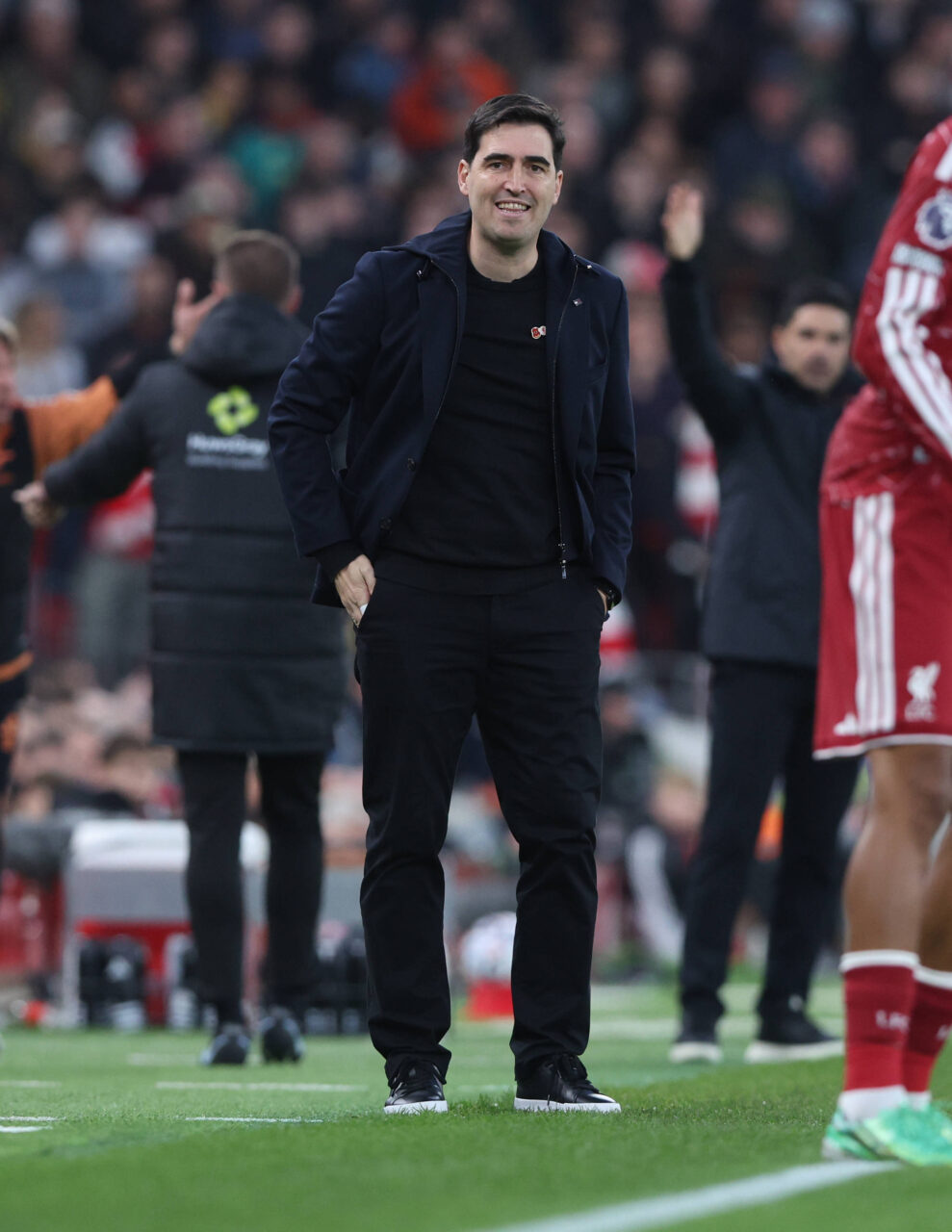
Andoni Iraola Pinpoints Slow Start and Penalty Flashpoint After Liverpool’s 1-0 Arsenal Defeat
Liverpool lost 1-0 to Arsenal at Anfield, and the decisive moment came early. Kai Havertz scored in the 16th minute, the game settled into its pattern, and Liverpool spent most of the afternoon chasing what they had handed away in the opening spell.
That was Andoni Iraola’s main point afterwards. He did not dress it up. Liverpool were poor at the start, they paid for it, and in games of this level that tends to be enough. Once behind, he felt his side did more than enough to salvage something. The problem was simple, pressure without a finish counts for nothing.
On the game, Iraola said: “Overall, I think we have to blame especially the start of the game and until we conceded the goal. I think the start hasn’t been at the level of the game. But from that 1-0, I think it’s [after] 15 or 16 minutes, I’ve loved the reaction of the team. Even in the first half, I think we reacted really well and put Arsenal under big pressure.”
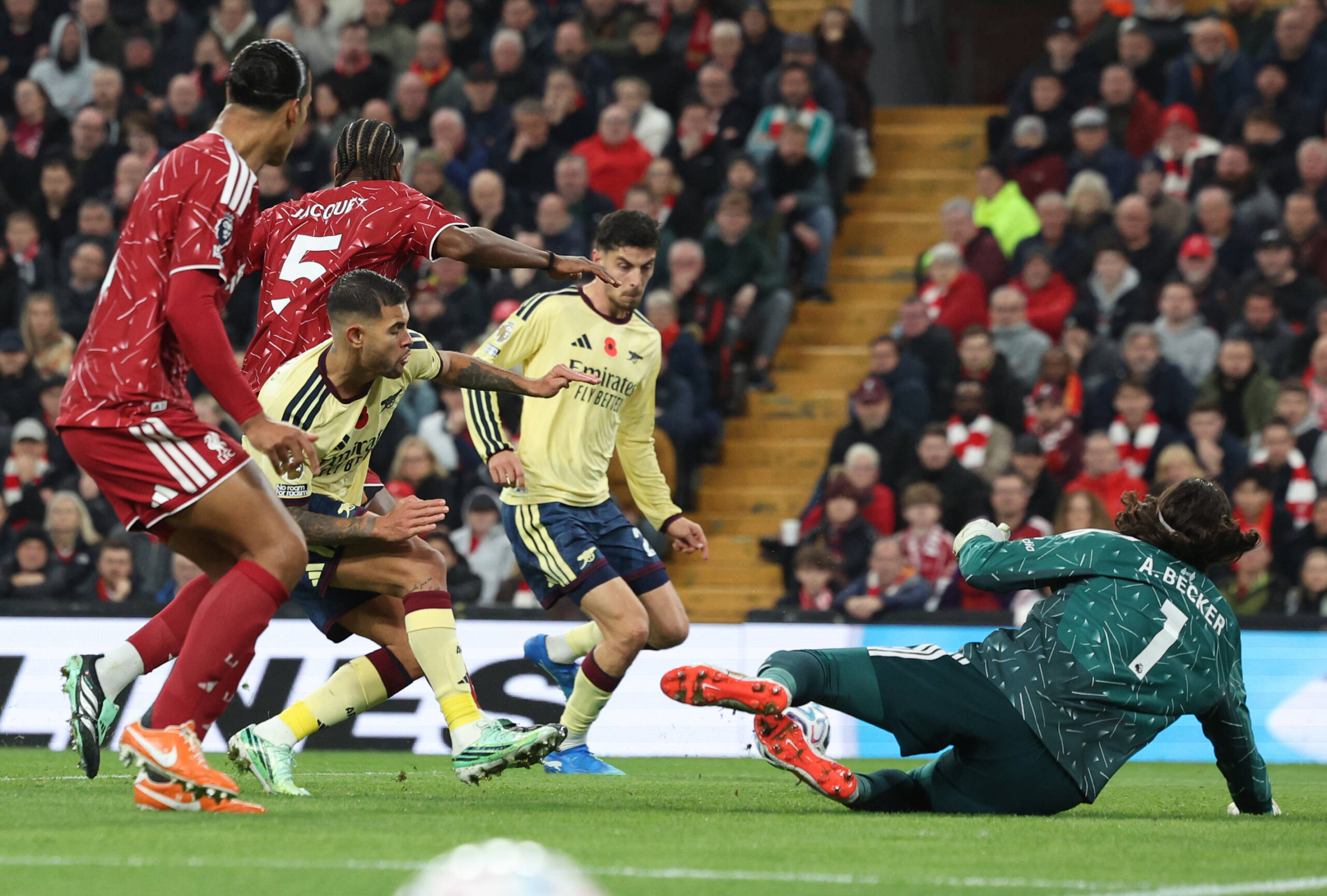
Photo: IMAGO
That is the match in a nutshell. Liverpool started slowly, conceded, then improved. They created enough danger to argue they should have scored. They did not. Arsenal, for their part, defended properly and gave little away in clear terms after going in front.
Slow Start Cost Liverpool Against Arsenal
Iraola’s frustration was not built around one isolated moment. It was about the opening phase, the general lack of sharpness, and the sense that Arsenal were more likely to strike even before the goal arrived. By his own admission, Liverpool were second best until the setback forced a response.
He said: “Probably what we need to correct is the beginning of the game until we conceded. It’s true we conceded when we mess up a goal-kick, but the feeling I had before was that their goal was closer than ours and from that moment I think the game has changed to our favour.”
That matters because it strips away any convenient excuses. Liverpool were not ambushed by some freak effort from distance or a refereeing error out of nowhere. They invited trouble. The goal may have come from a mistake in the build-up, but the warning signs were already there.
After that, Liverpool did respond. Florian Wirtz hit the bar. Alexis Mac Allister had a headed chance that Iraola clearly viewed as a big opening. There were repeated deliveries and second balls inside the Arsenal area. There was pressure. There was territory. There was no equaliser.
As Iraola put it: “I think we’ve done enough to score but obviously we haven’t. But we had the crossbar [hit by Florian Wirtz], we had the header of [Alexis] Mac Allister that, for me, is a very clear chance. I think we had a clear penalty also for us and I think we’ve had a lot of situations inside the box, not even around the box, inside the box, that definitely we haven’t finished properly.”
Alexander Isak Penalty Claim Dominates Debate
The main flashpoint was Liverpool’s appeal for a penalty involving Alexander Isak. Iraola was clear, blunt and consistent. In his view, it was a penalty. No ambiguity, no hedging.
He said: “I think the [Alexander] Isak one is a clear penalty. He is going to head the ball in front of the goal and they grab him where everyone sees the shirt. You don’t need a lot just to avoid Alex because the ball just goes in front of him and I don’t see the reason why [it is not given]. Probably because he doesn’t dive or he doesn’t go to the floor, it shouldn’t be a reason not to concede a penalty.”
That is a fair complaint. Shirt pulling in the box remains one of the game’s most inconsistently judged offences. If the shirt is stretched and the attacker is impeded, the case is obvious. The trouble is that obvious and given are often two different things.
Iraola also referenced a separate Cody Gakpo incident, although he accepted why that one could be debated because of the flight of the ball. Still, his central argument remained that the Isak challenge was the stronger case and should have been enough on its own.
He added: “And then after, the [Cody] Gakpo one, I think it’s sustained holding but I understand the argument and I think they are right that they say the ball was too long and Cody wouldn’t have arrived to the ball. But then you’re basically accepting that the first one is a pen, no? So, you cannot use the argument in both ways differently. So, I think it’s a pen, the Alex one is.”
Fine Margins and Familiar Frustration
Liverpool have now lost two league games this season, and Iraola sees a pattern. Small moments, small calls, small errors. That is not self-pity, it is the reality of matches between strong sides. Details decide them.
He said: “Definitely it is very important because we had the same feeling against [Manchester] City a little bit [with] the first yellow of Ryan [Gravenberch]. Small things in these kind of games that are so, so close and every detail matters. They haven’t gone for us this season but we will see. The season is long and probably the next day it goes for us.”
That is reasonable enough, but Liverpool also need to be honest about the bigger picture. Fine margins matter more when you fail to convert your better spell. They matter more when you begin the game half-asleep. And they matter more when one goal against feels fatal because your finishing lacks conviction.