
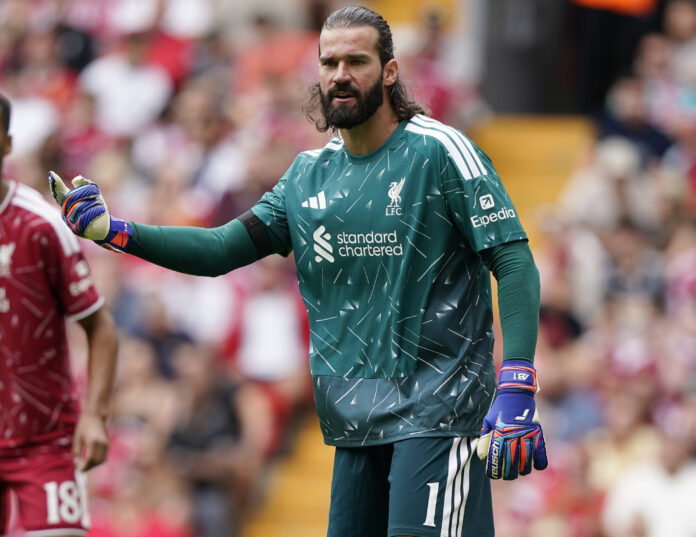

Alisson Becker Demands More After Liverpool and Fulham Play Out Frustrating 0-0 Draw
There are goalless draws that carry a pulse, and there are goalless draws that leave a stadium rubbing its eyes and wondering where the spark went. This was the latter. Liverpool’s 0-0 draw with Fulham at Anfield felt like an afternoon where ambition kept running into fog, where urgency was dulled, and where one of the few men in red to emerge with real credit was the goalkeeper.
Alisson Becker did not hide from it afterwards. In a team performance that lacked rhythm, incision and bite, he offered a verdict stripped of comfort. “We didn’t play well and are not happy with that.” It was the kind of line that tells the truth quickly. No dressing it up, no searching for soft excuses, no attempt to pass off a flat display as a point gained.
Liverpool had come into the match chasing a third consecutive victory, but instead found themselves smothered by a Fulham side that arrived organised, disciplined and clear in their plan. The home side had spells of possession and moments of pressure, but too often they looked like a team trying to force music from an instrument out of tune.
Alisson Becker fronts up after Liverpool draw
Alisson’s own contribution was significant. He made important saves and stood tall during one of the game’s most anxious moments after Liverpool were caught playing dangerously in their own area. Yet even then, his response was not to point fingers. He turned the spotlight back on standards, on collective responsibility, on the need to react better when the original plan starts to fray.
He admitted there were poor moments from him as well as from the side as a whole, and that honesty mattered. Liverpool were loose in possession at times, uncertain in their press and unable to convert intent into sustained pressure. They chased the game without ever really taking hold of it.
That was especially true in the first half, when too much energy appeared to be spent trying to press in the right way and too little reward came from it. Fulham played through enough of those situations to unsettle the crowd and remind Liverpool that effort alone is not structure. Running hard is one thing, running smart is another.
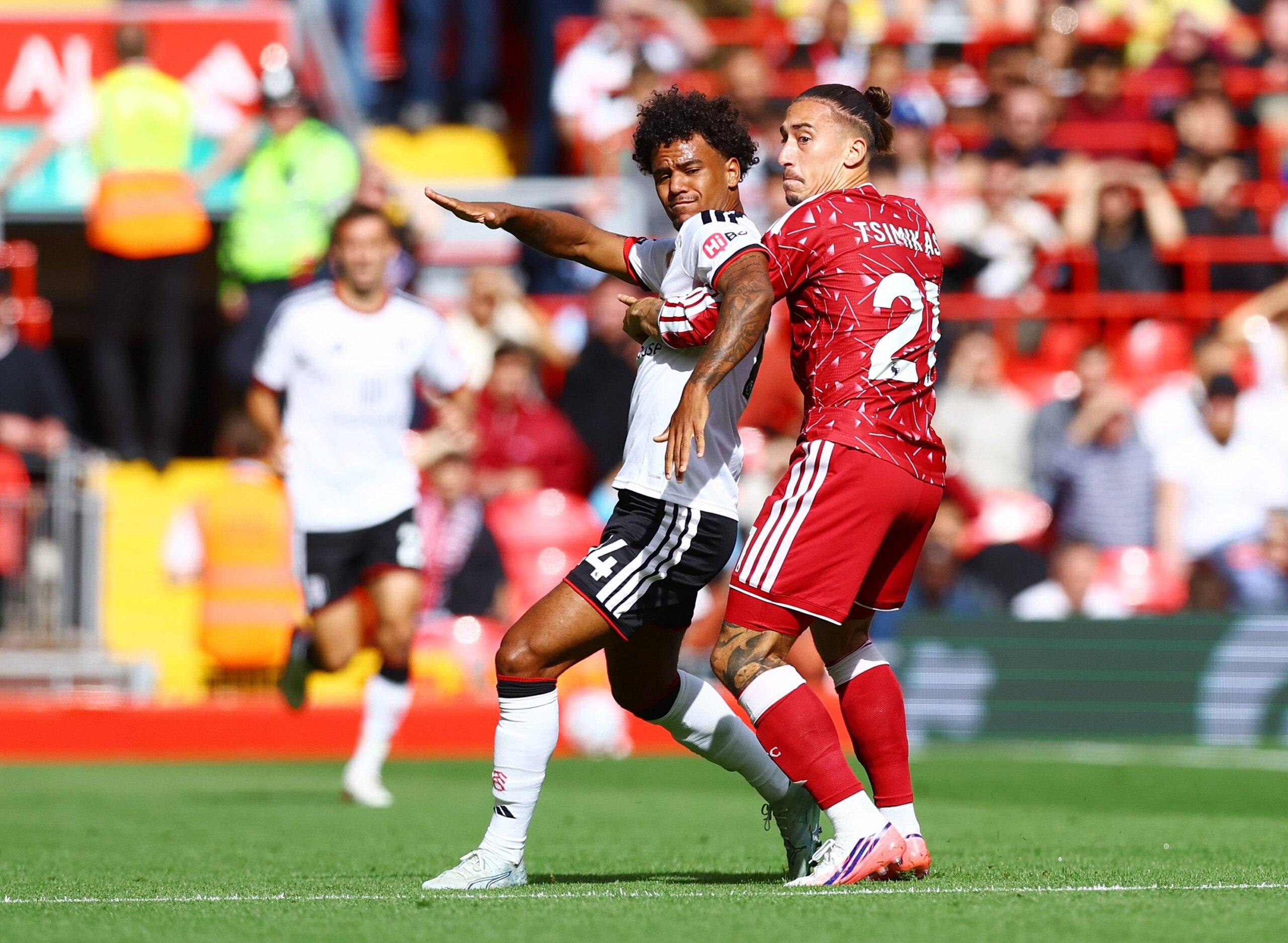
There was also frustration over the shortage of clear chances. For a side with Liverpool’s resources and attacking ambition, this was a blunt showing. The expectation at Anfield is not simply to dominate territory, it is to turn territory into danger. Too often, the final ball was missing, the movement was mistimed, or the tempo dropped just when it needed to rise.
Andoni Iraola faces familiar Liverpool challenge
It is early in the Andoni Iraola era, and that context matters. A change of manager always brings a period of adjustment, even at clubs who demand instant coherence. Systems shift, distances alter, habits are challenged, and players must absorb new instructions while results continue to be judged with old impatience.
Alisson made clear that Iraola retains the belief of the squad. He spoke warmly about the head coach’s influence, his work on the training ground and his ability to correct issues in-game, referencing the way Liverpool responded after the break in midweek. That support is important, because this team is still in the process of learning what it wants to be under its new leadership.
But sympathy has a short shelf life at Liverpool. Alisson knows it, the dressing room knows it, and Anfield certainly knows it. Adaptation may take time, but time is the one commodity elite football rarely grants. Three draws while staying unbeaten will satisfy some clubs. At Liverpool, it tends to invite scrutiny.
Premier League schedule offers no breathing space
There was acknowledgement, too, of the strain of the schedule. A major European tie in midweek, a Premier League fixture on Saturday evening, another game on Tuesday, then another on Sunday, this is the rhythm that tests not just fitness but mentality. Alisson did not deny that these matches take something out of players. He simply insisted that coping with that burden is part of the bargain for any side with serious ambitions.
That felt like the key point. Liverpool can talk about fatigue, but they cannot hide behind it. If they want to compete across every front, they must find a way to summon quality and intensity with relentless regularity. The goalkeeper’s message was clear enough, the mindset shown against Fulham did not match the standards required.
There is, however, no sense of panic. More a sense of irritation, of impatience, of a group aware it has left something behind. A clean sheet was a small positive, but it was not presented as consolation worth lingering over. The bigger issue was the absence of the edge, the authority and the conviction that separate a decent afternoon from a winning one.
Liverpool must turn frustration into response
Liverpool remain a side with deep quality and renewed hope under Iraola. The squad is talented, the environment is healthy, and there is excitement around the direction of travel. Yet all of that must eventually be reflected where it counts, on the pitch, in difficult league games like this one, when opponents are compact and the route to victory has to be carved rather than offered.
Anfield has always admired honesty almost as much as excellence. Alisson delivered the first after Fulham. Now Liverpool must rediscover the second. The next fixture arrives quickly, as they always do, and with it another chance to prove this stalemate was an irritant rather than an omen.
For now, what lingers is the goalkeeper’s blunt assessment, “We didn’t play well and are not happy with that”. Liverpool supporters will agree. They will also expect the response to be swift.